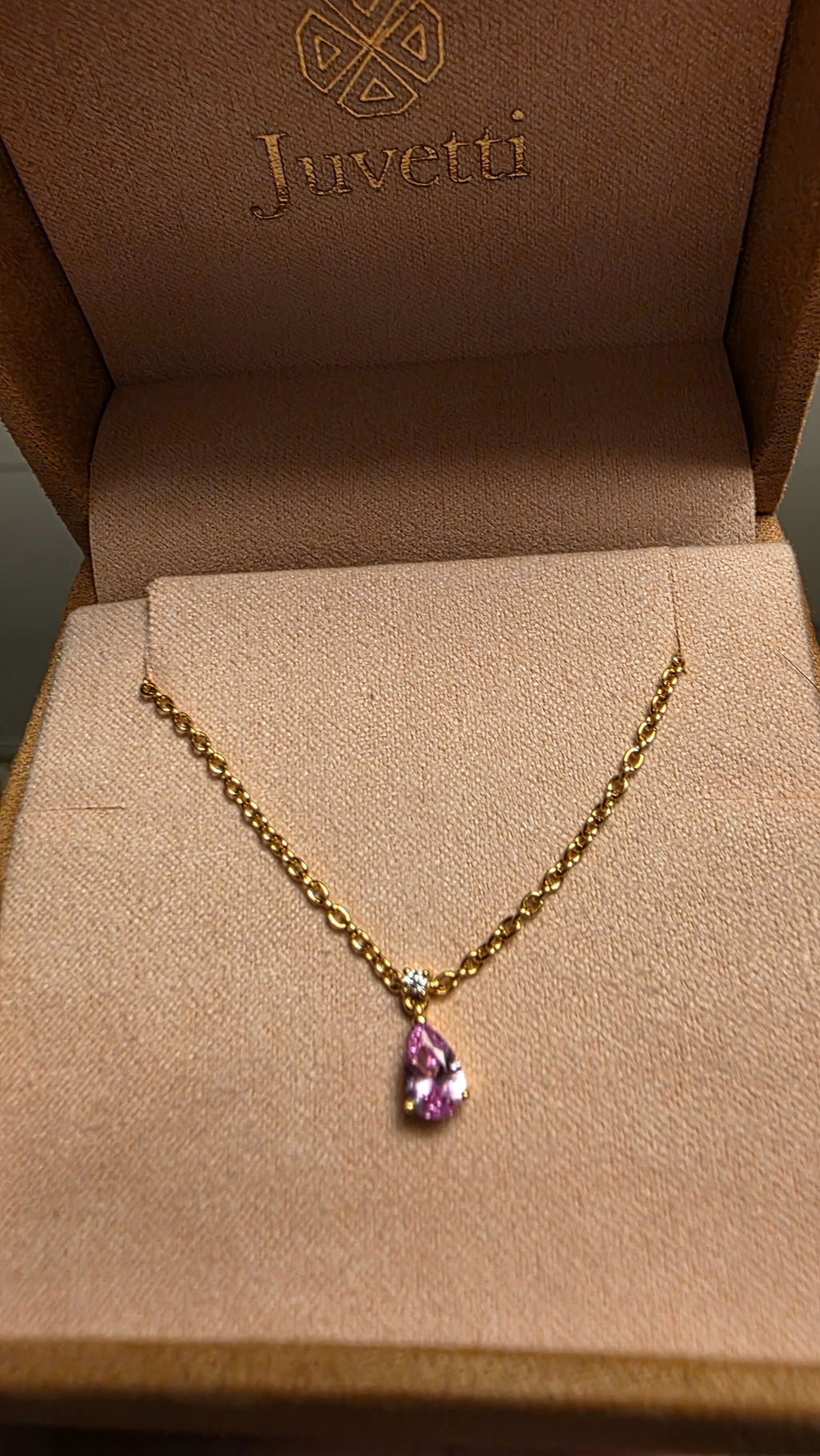
Article: Coloured Lab Grown Diamonds: The Complete Guide
Coloured Lab Grown Diamonds: The Complete Guide
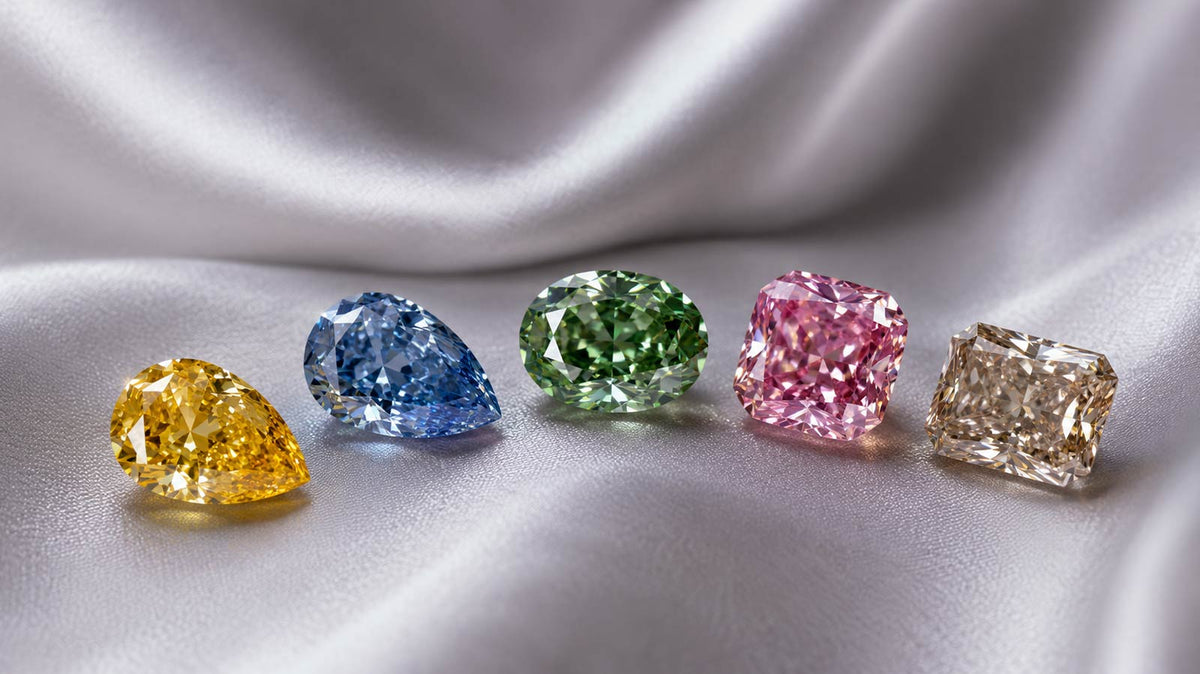
A diamond does not have to be colourless, and the laboratory is where that stops being a billionaire's observation.
The short version: Juvetti stocks lab grown diamonds in five fancy colours today, yellow, blue, green, pink and champagne, with certified stones starting at £340. Every stone carries an IGI report, the certificate system our lab grown diamond certifications guide explains in full, and the colours are graded on the fancy colour scale rather than the D to Z scale that governs colourless stones.
This guide is the map of the whole colour family: what each colour is like, what it costs to start, how fancy colour grading works, and where the rarities sit. Each colour has its own collection, linked in its section, so the route from reading to choosing is one click.
The short answer, before the detail
- Five colours are in stock now. Yellow from £340, blue from £410, green from £460, pink from £510 and champagne from £590, every figure taken from a live product page.
- Coloured diamonds use a different grading language. Terms like Fancy Intense and Fancy Vivid come from the fancy colour scale, not the D to Z scale, and the two do not translate into each other.
- The colour is the point, so buy with your eyes. Two stones with the same grade can wear their colour differently, which makes viewing the specific stone even more important than it is with colourless diamonds.
- Black and red exist in the family but not on the shelf today, and this guide says so plainly rather than linking you to an empty page.
How a lab diamond gets its colour
In nature, colour arrives by accident: a trace element in the crystal, a twist in the lattice, a spell of natural radiation. The laboratory arranges the same accidents on purpose. The scale of cause and effect is startling: the GIA notes that less than one boron atom per million carbon atoms is enough to turn a diamond blue. Nitrogen plays the equivalent role in yellows, and structural effects during growth and treatment produce pinks and greens.
How lab diamonds are grown in general is a subject this page deliberately leaves to our oval lab diamonds guide, which owns it. What matters here is the consequence for the buyer: colour that is vanishingly rare underground is repeatable in the laboratory, which is why a vivid blue stone can sit on this page at £410 rather than at auction.
The fancy colour scale, in one paragraph
Coloured diamonds are graded on their own scale. GIA's sequence runs Faint, Very Light, Light, Fancy Light and Fancy to Fancy Intense, Fancy Vivid, Fancy Dark and Fancy Deep, and the grade describes how strong and how saturated the colour is. The stones in this guide carry Fancy Vivid and Fancy Intense grades on their IGI reports, the upper reaches of that scale. The D to Z scale, by contrast, measures the absence of colour in white diamonds, and how those grades work is the business of our F colour lab diamonds guide.
A colourless diamond succeeds by disappearing into pure light; a coloured diamond succeeds by being unmistakably seen.
Yellow: the proven one
Yellow is the coloured diamond Britain already buys, and the yellow diamond collection is the deepest colour range we hold. Fancy Vivid yellows read like bottled sunlight, warm without being brassy, and they flatter both yellow gold and contrast settings in white metal. The entry point is the lowest of any colour in this guide, which makes yellow the natural first coloured diamond: a colour with royal history, bought at a price that leaves room for the setting around it.

At the next step up in size, the radiant cut below shows what the vivid grade does with more facets to play across.

Blue: the deep one
Blue is the colour boron builds, and the blue diamond collection runs from ocean-deep stones to brighter vivid blues. Blue lab diamonds carry the most famous pedigree in the colour family, and the laboratory has made the shade wearable rather than mythical. Blues also photograph with unusual discipline, holding their colour in pictures the way pinks sometimes do not, which is worth knowing if the piece will be worn for occasions that end up in frames. The pear below is the collection's current starting point.

A step along the same shelf, the radiant below trades a touch of clarity grade for a broader flash of the same vivid blue.

Green: the rare one on the shelf
Green currently has a short collection: the green diamond collection is a considered list rather than a wall of options. A Fancy Vivid green is a genuinely uncommon thing to see in person, which is precisely its appeal, and the oval below shows why. Green is also a shade few people expect a diamond to be, and explaining that it genuinely is one becomes part of the pleasure of wearing it.
Pink: the romantic one
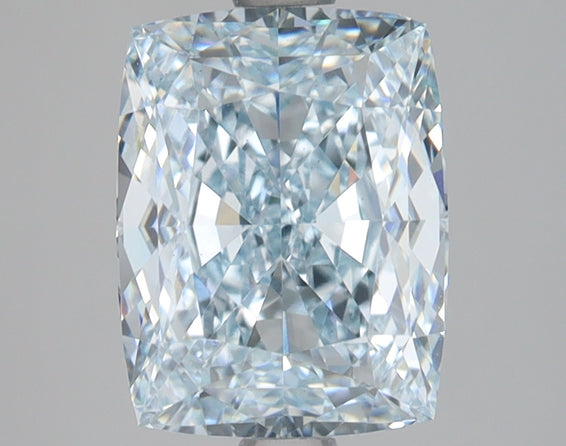
Pink diamonds carry more emotional freight than any other colour, and the pink diamond collection is one of our largest colour ranges. Natural pinks became famous through auction records; lab grown pinks put the same blush within an engagement budget. Pink is also the colour where the grade language earns attention: the difference between a Fancy Intense and a Fancy Vivid pink is visible warmth, and the report states which one you are holding. The cushion below opens the range.

Beside it, the radiant below carries the same Fancy Intense grade.
Champagne: the warm one
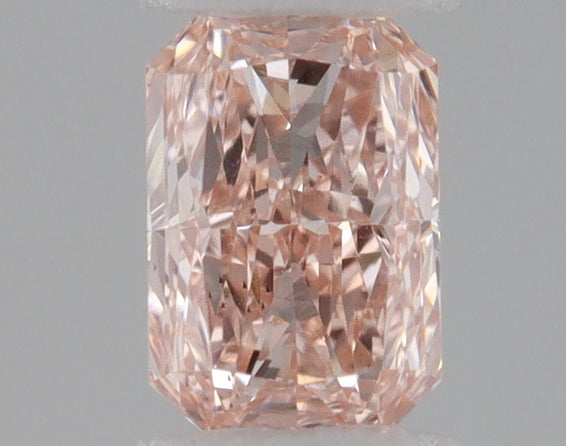
Champagne covers the warm family from golden brown into brownish pink, and the champagne diamond collection holds both. Champagne offers an understated warm colour that pairs naturally with yellow gold, the shade that reads as luxury before it reads as colour. The radiant below shows the brownish pink end of the family.

Black and red: the rarities
Black and red are two additional colours worth noting, although neither is shoppable from Juvetti today. Red diamonds are exceptionally rare, and Juvetti's red collection is currently empty. For the natural benchmark, the GIA puts it plainly: "Red diamonds are so rare that only a handful are known to exist." If either colour is the one you want, speak to us about a bespoke commission so we can discuss the colour and piece you have in mind.
What the colours cost to start
Every figure is the lowest-priced stone visible in its collection on the day this guide was checked, and every one links from its section above. Prices move as stones sell, so treat the table as a map of relative entry points rather than a quotation.
Choosing your colour, honestly
If the sections above have not already decided it, three questions usually do. Who is it for? Pink carries romance whether you intend it or not, yellow reads as warmth and optimism, blue as depth and seriousness, green as individuality, champagne as quiet luxury; choose the story the wearer would tell about themselves. How loudly should it speak? A Fancy Vivid stone announces itself; a Fancy Intense one converses; the grade is a volume control as much as a value marker. And how will it live? A stone worn daily may suit a quieter colour; a stone kept for occasions can afford to be the green that stops a conversation. There is no wrong colour on this page, only wrong matches, and matches are exactly what a viewing settles.
What moves the price inside a colour
The table above maps the doors into each colour; the movement beyond each door follows the same readable factors as every diamond, worn openly on the product pages. Take the two yellows in this guide: the 0.16 carat pear at £340 and the 0.24 carat radiant at £480 are both Fancy Vivid Yellow, and they differ in weight, cut and clarity grade all at once, which is why the price differs and why no single factor can honestly be given the credit. That is not a complication; it is the buying method. Read the report, then look at the stone, and let the two agree before the price enters the conversation.
With coloured stones one factor deserves special respect: the colour grade itself. A step from Fancy Intense to Fancy Vivid is a step in saturation you can often see across a room, which is not something the clarity grades of colourless diamonds can claim. When comparing two stones of the same colour, compare their grades first, their carats second, and their prices last.
How to view a coloured diamond
Three habits make the viewing worth more than any amount of reading. See the colour in daylight, because shop lighting flatters every stone and daylight tells the truth. See it against skin, not against black velvet, because that is where it will live. And see it next to a neighbour, another stone of the same colour one grade apart, because colour is easier to judge as a comparison than as a memory. We set up exactly this kind of viewing in the showroom. Bring the certificate with you and read it against the stone itself: ten minutes with both in hand settles more than an afternoon of scrolling ever could, because the report tells you what the stone is and your own eye tells you whether it belongs with you.
The certificate, briefly
Every stone in this guide carries an IGI report stating its fancy colour grade, clarity and carat weight, and the report number travels with the stone. How the certificates work, and how the laboratories differ on lab grown stones, is covered in full in our certifications guide, linked in the introduction above.
When colourless is the point
Colour is a choice, not an upgrade or a downgrade, and some buyers want the opposite of everything on this page: the total absence of colour, certified. That path leads to the top of the D to Z scale, and our D VVS1 lab diamonds guide walks it properly as the certainty case. The two philosophies meet in the same place: see the stone, then decide.
Frequently Asked Questions
Are coloured lab grown diamonds real diamonds?
Yes. They are carbon crystal with the same hardness and optical behaviour as any diamond, grown in a laboratory with the colour introduced deliberately. Every stone in this guide carries an independent IGI report stating exactly what it is.
How do lab grown diamonds get their colour?
Through the same causes that colour natural diamonds, arranged on purpose: trace elements such as boron for blue and nitrogen for yellow, and structural effects during growth and treatment for colours such as pink and green. GIA notes that less than one boron atom per million carbon atoms is enough to make a diamond blue.
What does Fancy Vivid mean?
It is one of the upper grades on the fancy colour scale, which GIA sequences as Faint, Very Light, Light, Fancy Light and Fancy through to Fancy Intense, Fancy Vivid, Fancy Dark and Fancy Deep. Vivid describes strong, saturated colour, and it is the grade most of the stones in this guide carry.
Which coloured lab diamond is the cheapest?
In our current stock, yellow opens the family at £340 for a Fancy Vivid Yellow pear, with blue from £410, green from £460, pink from £510 and champagne from £590. Every price is on its product page.
Are coloured diamonds graded like white diamonds?
No. Colourless diamonds are graded on the D to Z scale, which measures the absence of colour. Fancy coloured diamonds are graded on the fancy colour scale, which measures the presence, strength and saturation of colour. The two languages do not translate into each other.
Can I buy a black or red lab grown diamond?
Not from the shelf today: neither black nor red is currently shoppable from Juvetti, and red diamonds are exceptionally rare. Both can be discussed as bespoke commissions, and we would rather say that plainly than link you to an empty page.
A colourless diamond asks to be judged against perfection; a coloured one asks to be recognised. Five colours are on the shelf now, each with its own collection linked above, and the honest way to choose between them has not changed since diamonds began: see the colour on the skin, in daylight, next to its neighbours.
Prepared by the Juvetti editorial team and reviewed by Nanon of Juvetti. Product details were checked against the verified Juvetti catalogue, and grading information was checked against GIA. Prices and availability change, so please check the current product page before deciding.