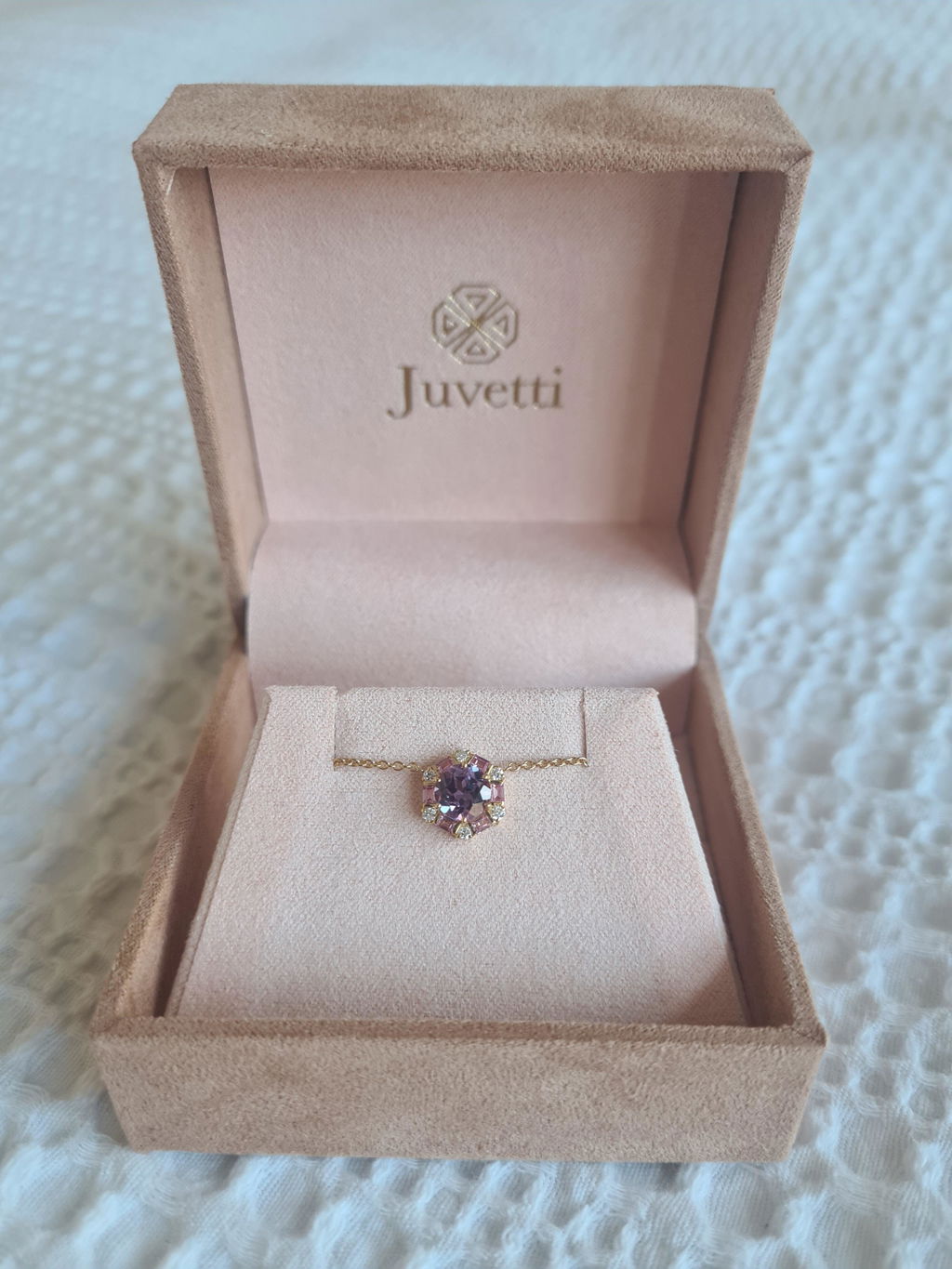
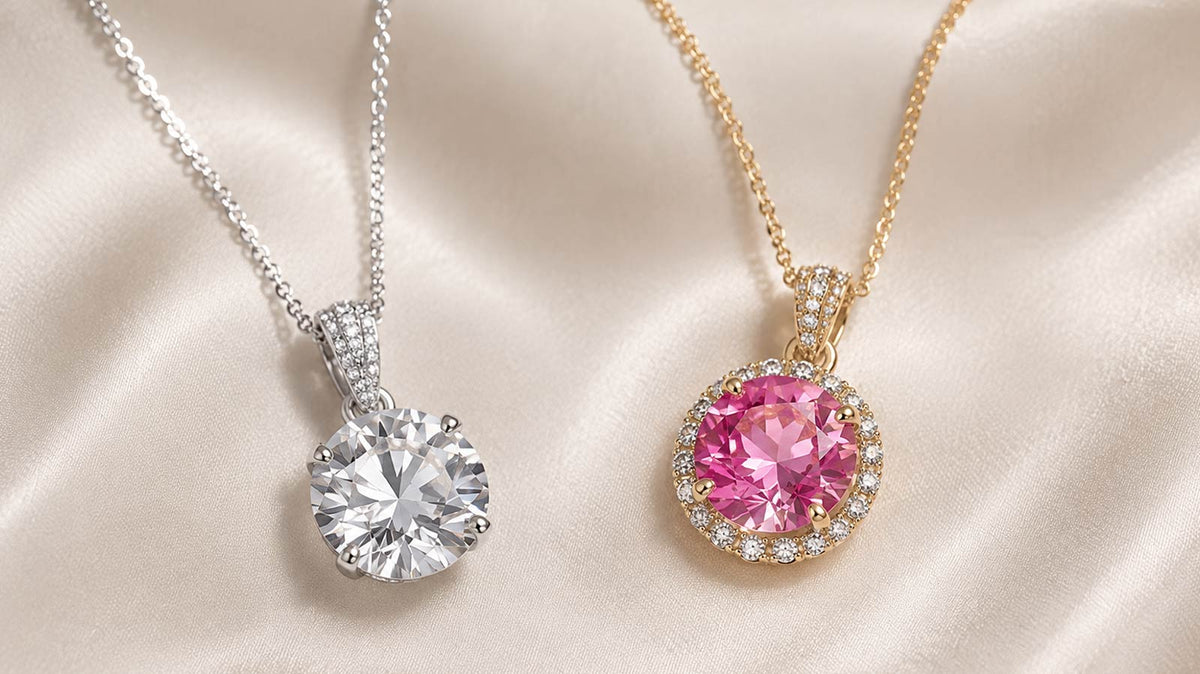
Pink Sapphire vs Diamond Necklace: Which Is Better?
You are standing between two beautiful options: one you have been told to want, and one you find yourself wanting anyway. That tension is exactly why pink sapphire vs diamond is one of the most searched jewellery comparisons there are. Both stones are exceptional. Both have earned their reputation. And the honest answer to "which is better" depends entirely on what the person wearing it values.
As you read, keep this in mind: diamond speaks the language of tradition, and pink sapphire speaks the language of personality. Neither is wrong. The real question is which one speaks to you.
This comparison looks at sparkle, colour, durability, price, meaning, and how each stone feels to wear every day, especially in necklace form, where it sits at eye level, against skin, in conversations and in photographs, unlike a ring. By the end, you will know which stone belongs at your neckline and why.
The Real Question: What Do You Want Your Necklace to Say?
A necklace is the most visible piece of jewellery a person wears. It appears in every conversation, every photograph, and every first impression, long before anyone thinks to look at your hands.
Diamond communicates continuity. It speaks of heritage, formality, timelessness, and belonging to a long tradition of celebration. It is the stone your grandmother wore, the stone that never has to explain itself.
Pink sapphire communicates individuality. It speaks of warmth, confidence, and a refusal to default to the expected. It is the stone people ask about.
So ask yourself honestly: when someone compliments your necklace, do you want them to say "how classic," or do you want them to say "where did you find that"?

Pink Sapphire vs Diamond: The Side-by-Side Comparison
| Pink Sapphire | Diamond | |
|---|---|---|
| Hardness (Mohs scale) | 9 | 10 |
| Brilliance character | Coloured fire; a saturated, glowing brilliance | White fire; colourless flashes and rainbow dispersion |
| Colour range | Delicate blush through vivid magenta | Traditionally colourless, graded D to Z |
| Rarity in fine colour | Vivid, untreated natural stones are genuinely rare | Fine white diamonds are widely available; fancy pink diamonds are extraordinarily rare |
| Typical necklace price range | A fraction of the diamond equivalent for comparable visual impact | Commands a significant premium per carat |
| Symbolism | Love, compassion, warmth, quiet strength | Endurance, permanence, commitment |
| Best suited to | The individualist, the modern romantic, the colour-lover | The traditionalist, the milestone gift, the classic wardrobe |
Numbers never tell the full story. Here is what they leave out.
Sparkle and Brilliance: Two Different Kinds of Light
How Diamonds Handle Light
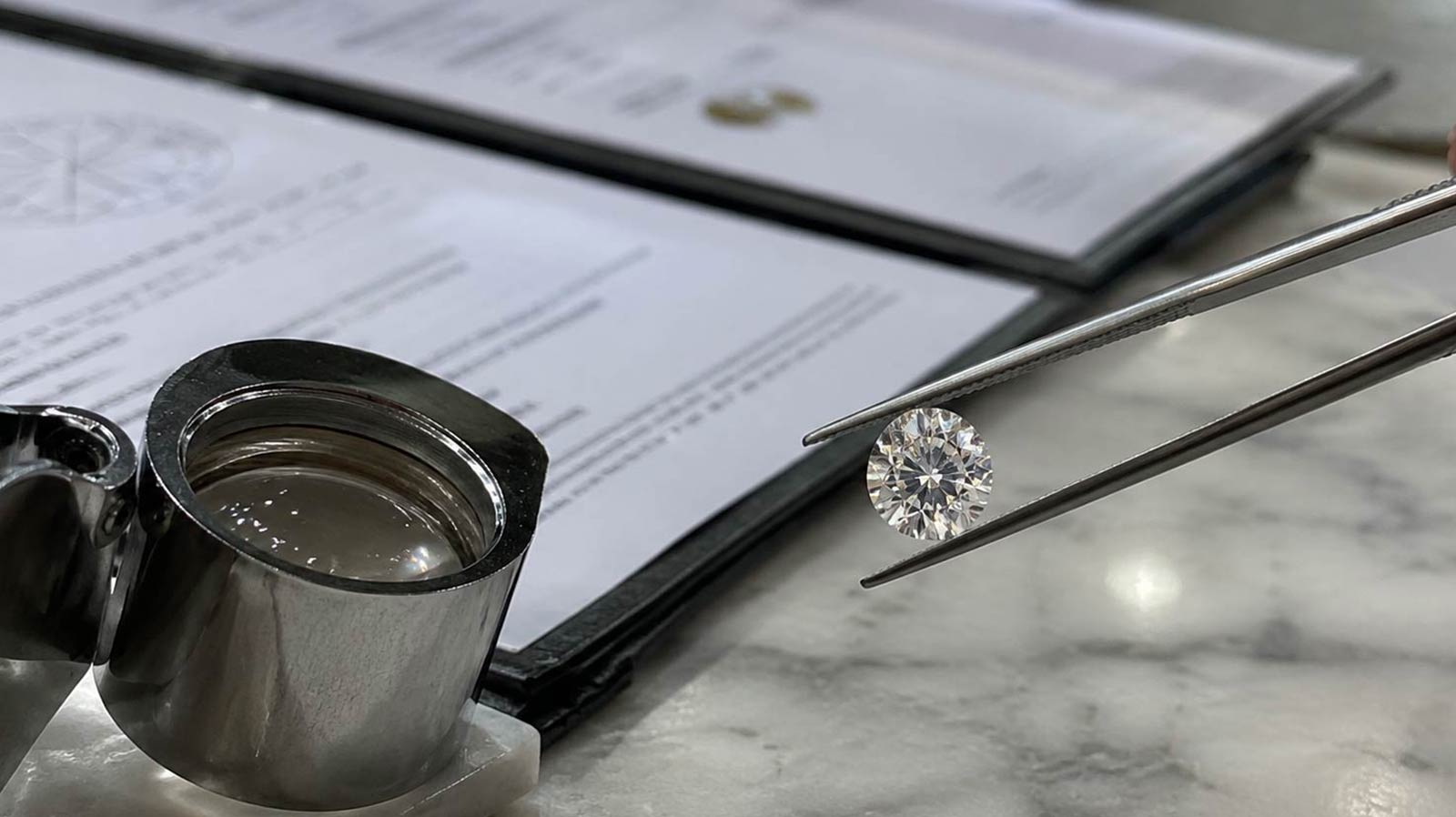
Diamond earns its reputation honestly. Its refractive index and dispersion are unmatched among commonly worn gemstones, which is why a well-cut diamond produces the white fire and rainbow flashes it is known for. Light enters the stone, bends sharply because of that high refractive index, and splits into flashes of spectral colour as it exits, the effect jewellers call dispersion.
That performance under light, more than anything else, is the foundation of diamond's centuries-long reputation, and it is precisely why cut quality matters so much when buying one: a shallow or overly deep cut can let light leak out of the sides rather than back up towards the eye, dulling even a high-clarity stone. Any fair comparison has to start by giving diamond its full due here, because nothing else does quite what it does.
How Pink Sapphires Handle Light
A pink sapphire performs differently, not less. Instead of white fire, it offers colour-saturated brilliance, a glow of living colour that intensifies with movement. Corundum, the mineral family sapphire belongs to, has a lower dispersion than diamond, so it will never throw the same rainbow flashes. What it does instead is carry hue through the stone itself, so that every facet becomes a small window of colour rather than a small window of white light.
A well-cut pink sapphire returns light beautifully, with a warm, almost luminous quality that shifts subtly as the wearer moves, and at the distance from which a necklace is actually viewed, that saturated colour often draws the eye more powerfully than colourless sparkle ever could. Cut still matters here too; a poorly proportioned pink sapphire can look dark or "windowed" in the centre, so the same craftsmanship considerations that apply to diamonds apply to sapphire as well.

Which Reads Better at the Neckline?
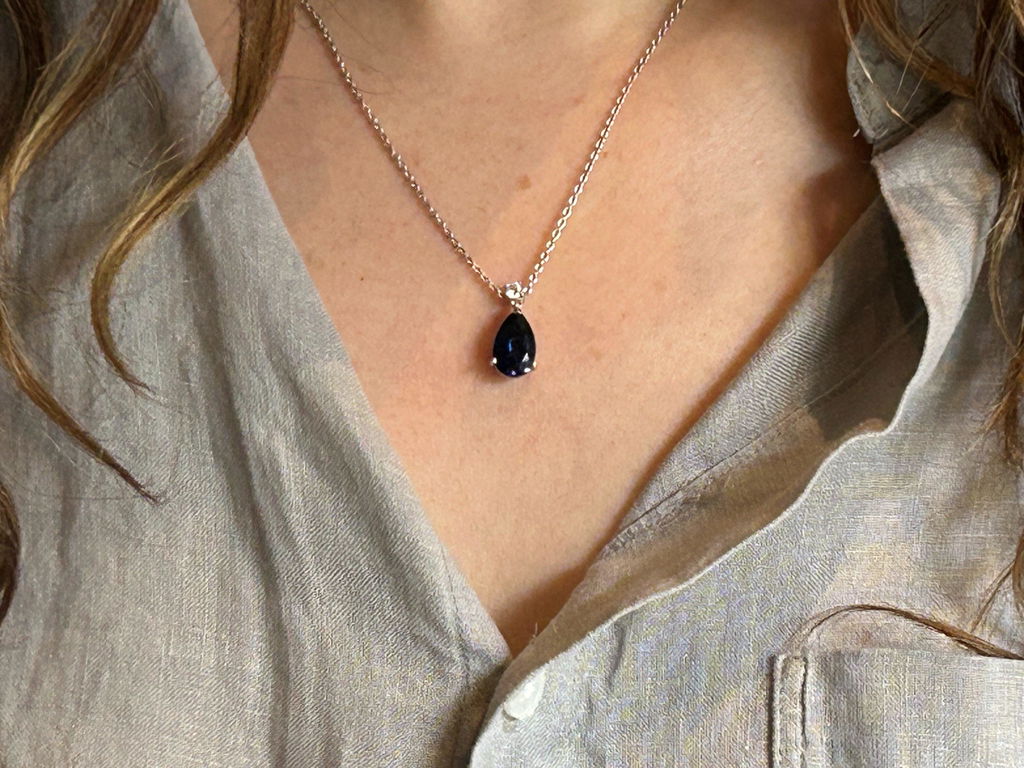
A necklace is not viewed up close the way a ring is; it is viewed at conversational distance, across a table or a room. That changes the comparison entirely. White diamond brilliance can read as subtle, or even disappear, against certain necklines, skin tones, or lighting. Pink sapphire's colour, by contrast, reads clearly across a room and against nearly every skin tone and wardrobe palette. Neither is better. One whispers and one speaks. Which voice is yours?
Colour and Character: The Case for Personality
This is where the emotional heart of the decision lives. Pink sapphire spans a genuine spectrum, from delicate blush and dusty rose to vivid hot pink and magenta, and each tone carries a different mood: soft and romantic at one end, bold and unapologetic at the other.
Here is the quality no diamond necklace can offer at a comparable cost: colour. Natural pink diamonds are among the rarest and most expensive gemstones on earth, often commanding many times the price of a comparable pink sapphire carat for carat. A fine pink sapphire necklace is, in effect, the accessible route to the pink diamond look, and that is worth saying plainly, because it is exactly the aspiration many readers arrive with.
What does the jewellery you wear every day say about who you are? For a growing number of buyers, the answer they want to give is "something no one else in the room is wearing." Juvetti's pink sapphire necklace collection is built around exactly that instinct, pieces designed to carry colour with the same craftsmanship a diamond setting would demand.

It also helps to understand where that colour comes from. Pink sapphire gets its hue from traces of chromium within the corundum structure, the same element responsible for the red in ruby; sapphire and ruby are, in fact, the same mineral, and a sapphire with enough chromium to shift fully red is reclassified as a ruby. That shared chemistry is part of why fine pink sapphire has such presence: it carries a whisper of ruby's saturation without ruby's intensity, landing somewhere between delicate and bold depending on the exact tone. Most pink sapphires on the market today are heat-treated, a widely accepted and stable process that improves colour and clarity; untreated stones exist but are genuinely rare and priced accordingly. None of this affects durability or day-to-day performance, only how the colour arrived.
Durability: Can a Pink Sapphire Necklace Handle Daily Life?
This is the practical objection, and it deserves a factual answer rather than a reassuring one.
Diamond, with a Mohs hardness of 10, is the hardest natural gemstone. That is uncontested. Pink sapphire, with a Mohs hardness of 9, is the second-hardest widely worn gemstone family, harder than emerald, topaz, morganite, and nearly every other gemstone a buyer might realistically consider as an alternative.
In necklace form, specifically, the gap between 9 and 10 is close to irrelevant. Necklaces do not take the daily knocks a ring does against door frames and worktops; they simply hang and move with the body. Mohs 9 comfortably withstands normal wear, weather, and decades of use. One honest caveat: sapphires can scratch if stored loose against diamonds in the same jewellery box, so store pieces separately. For full cleaning and storage guidance, see Juvetti's jewellery care page.

Price and Value: What Your Budget Actually Buys
The Price Gap, Honestly Stated
A quality diamond necklace commands a significant premium per carat, particularly once you move into finer colour and clarity grades. A pink sapphire necklace of comparable visual impact typically costs a fraction of the equivalent diamond piece. That gap only widens once colour enters the conversation: a fine pink sapphire can run from roughly $200 to $3,000 per carat depending on saturation and treatment, while a natural fancy pink diamond of meaningful size can run into the tens of thousands per carat and beyond. The practical result is simple. The same budget that buys a modest diamond buys a larger, more vivid, more distinctive pink sapphire, or a finer setting and heavier metal around a smaller one.
The Lab-Grown Advantage
Lab-grown pink sapphire is the value-and-value sweet spot in this comparison. It shares the identical chemical composition and hardness of natural sapphire, since it is genuinely corundum grown under controlled conditions, not a simulant like cubic zirconia. What it adds is superior colour consistency, full traceability, and meaningful savings over its natural counterpart.
This is where Juvetti's approach is worth naming directly. Juvetti specialises in fine jewellery set with lab-grown diamonds, rubies, sapphires, and emeralds, each cultured to share the same optical properties and physical structure as the mined original, handcrafted using recycled gold and silver, in a Responsible Jewellery Council-certified workshop. It is a values-led way to buy either stone in this comparison, not only pink sapphire, and it means the choice between diamond and pink sapphire never has to come at the expense of a sustainable, traceable supply chain.
That values-led angle matters for a simple reason: it takes away one of the more awkward questions buyers often have before making either purchase, namely, where the stone actually came from. Mined diamond and mined sapphire supply chains have both faced scrutiny at different points over sourcing and labour practices. Lab-grown gemstones remove that concern altogether, since they are grown rather than extracted, while still offering the same hardness, brilliance, and wearability a buyer is paying for.

Resale, Heirloom Value and the Investment Question
Being honest here matters more than being reassuring. Diamonds have a more established resale market, largely due to standardised grading and a century of trading history. Fine, vivid natural pink sapphires have appreciated strongly in recent years as demand for colour has grown. The most useful framing for either stone is heirloom first, investment second. No promises, no price-list thinking, just a piece worth passing on.
Meaning and Symbolism: Tradition vs Expression
Diamond carries the inherited language of milestone gifts: endurance, permanence, commitment. It is the symbol you already know, because generations before you agreed on what it means.
Pink sapphire carries a different, quieter symbolism: love, compassion, warmth, and quiet strength. Its meaning is chosen rather than inherited.
Here is the gifting insight that makes this section worth remembering. A diamond says, "I did the right thing." A pink sapphire says, "I thought about you specifically." Both are loving messages. They are simply different messages, and the right one depends entirely on which message you are trying to send.
Which Should You Choose? Four Buyer Profiles
The Traditionalist
You value heritage, formality, and pieces that never date, that will look exactly as appropriate at a fortieth anniversary as they did on the day they were given. A diamond necklace is the natural home for you, and there is no reason to hedge on that.
The Individualist
You want jewellery that no one else in the room is wearing. Pink sapphire is the clear recommendation here: it has a distinctive colour, starts conversations, and carries a personal meaning that a colourless stone cannot in quite the same way.

The Modern Romantic
You are buying with emotional intent, a gift meant to say something specific about the person receiving it. Pink sapphire's symbolism of love and warmth, paired with its unexpectedness, makes it the more memorable choice. Consider pairing it with a piece from Juvetti's earrings collection for a coordinated look.
The Value-Conscious Perfectionist
You want maximum beauty per pound spent. Lab-grown pink sapphire offers the strongest ratio of visual impact to price of any option in this entire comparison, full stop. For the same budget that buys a modest solitaire diamond pendant, this buyer can walk away with a substantial, richly coloured pink sapphire centre stone in a setting that does not feel like a compromise at all.
None of these profiles is a fixed category, and plenty of buyers will recognise themselves in more than one. Someone can be a traditionalist about engagement jewellery and an individualist about everything else they wear; the point of the profiles is not to box you in, but to give you language for a decision that often feels harder to explain than it actually is.
The Answer Most Buyers Miss: Pink Sapphire and Diamond Together
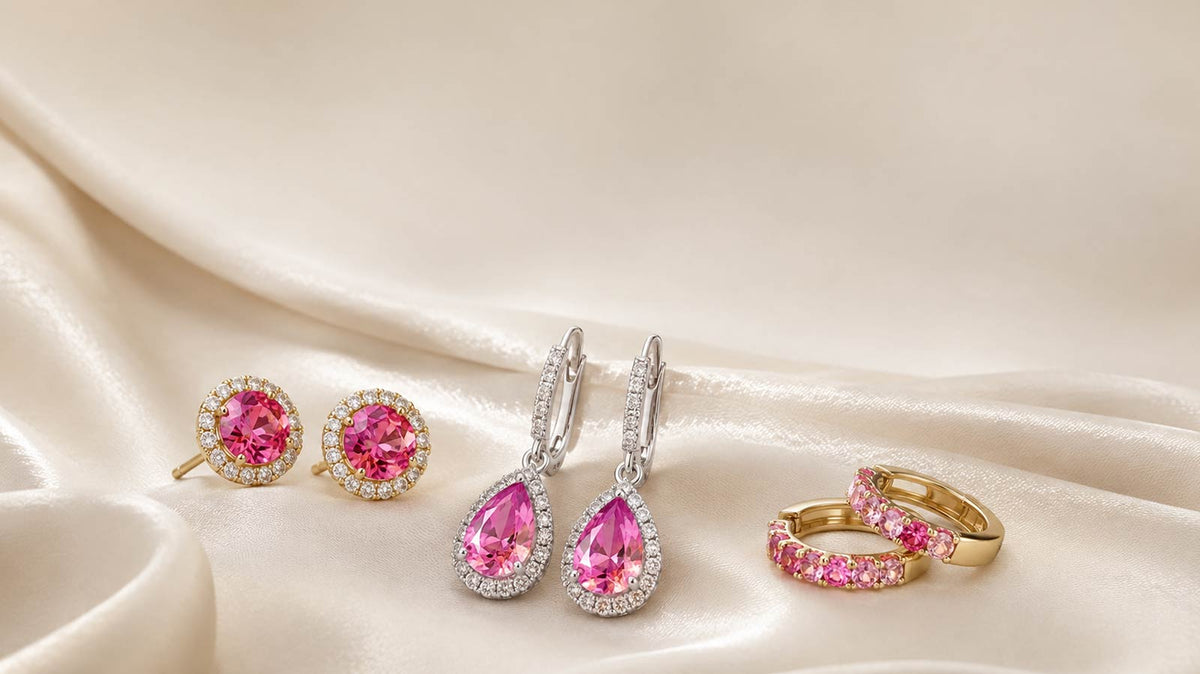
The most satisfying resolution to this comparison is not choosing one stone over the other. It is combining them. A pink sapphire centre stone framed by diamond accents or a diamond halo delivers the personality of colour and the fire of diamond in a single piece, and it works optically as well as symbolically: white diamond brilliance amplifies the perceived saturation of the pink centre stone, making the colour read even more vividly than it would alone.
This is exactly where Juvetti's necklace collection lives, with combination pieces designed around that pairing. For anyone building a fuller look, the bracelet collection makes it easy to layer the same palette from wrist to neckline.

The Verdict: There Isn't One, and That's the Point
There is no universally better stone here, only a better stone for the person wearing it. Diamond will always be the language of tradition, and it speaks beautifully, honestly, and without needing to prove anything. Pink sapphire is the language of personality, and more buyers than ever are choosing to speak it, not as a compromise, but as a statement. The right necklace is the one that feels like you on your best day.
Explore Juvetti's collection of pink sapphire and diamond necklaces, ethically crafted in London and designed for the buyer who knows exactly what they want to say.
Frequently Asked Questions
Is a pink sapphire cheaper than a diamond?
Yes, significantly. A fine pink sapphire typically costs a fraction of a comparable diamond, often in the range of $200 to $3,000 per carat, depending on colour and treatment, while diamonds of similar visual impact command a considerably higher price per carat. Lab-grown pink sapphire further lowers the cost without changing the stone's hardness or composition.
Do pink sapphires sparkle as much as diamonds?
Not quite, but not in the same way. Diamonds throw off bright white light and rainbow flashes thanks to their exceptional refractive index. Pink sapphires offer a different kind of beauty: a rich, glowing colour rather than colourless sparkle. From necklace-viewing distance, that colour can often stand out even more than a diamond's sparkle.
Is a pink sapphire necklace durable enough for everyday wear?
Yes. Pink sapphire sits at Mohs 9, just below diamond's 10, making it the second-hardest widely worn gemstone. In necklace form, which faces far fewer knocks than a ring, that hardness is more than sufficient for daily wear, travel, and decades of use with normal care.
Are lab-grown pink sapphires real sapphires?
Yes. Lab-grown pink sapphire shares the identical chemical composition, crystal structure, and hardness of natural sapphire. It is genuine corundum, grown under controlled conditions rather than mined, and it should not be confused with simulants such as cubic zirconia, which are chemically distinct materials.
Can you wear pink sapphire and diamond together in one necklace?
Absolutely, and it is one of the most popular ways to buy either stone. A pink sapphire centre stone with diamond accents or a diamond halo combines colour with white fire in a single piece, and the diamond brilliance actually amplifies the pink sapphire's saturation.
Is a pink sapphire necklace a good engagement or anniversary gift?
It can be an excellent one, particularly for a recipient who values individuality and colour over tradition. Its symbolism of love, compassion, and quiet strength makes it a genuinely romantic choice, distinct from the diamond's language of permanence and convention, and increasingly popular for exactly that reason.