Yellow Sapphire Rings for Engagement Guide
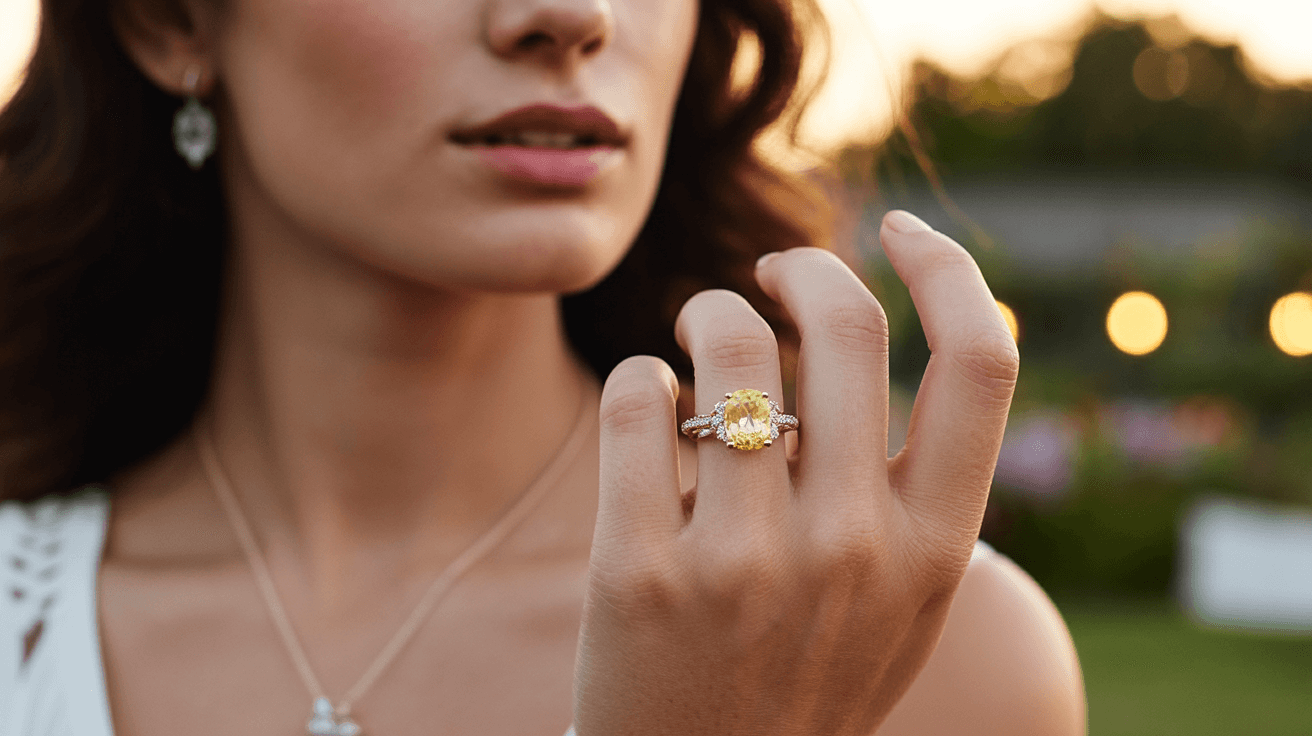
There's a particular kind of courage in choosing an engagement ring that defies the ordinary. Moving beyond the standard diamond solitaire, yellow sapphire engagement rings are having a major moment, celebrated for their honeyed warmth and distinct personality.
If you've found yourself drawn to its beauty but hesitated, wondering if it's "engagement-worthy," this guide will answer every question you haven't yet asked aloud.
What a Yellow Sapphire Engagement Ring Symbolises in Love
Joy and optimism are the foundation. Yellow, psychologically and symbolically, evokes sunlight - warmth, brightness, hope. It's a daily reminder that your partnership is built on happiness.
Sapphires are the ultimate symbol of loyalty and clarity. A well-cut yellow sapphire allows light to pass through unhindered, perfectly reflecting the honesty that sustains a strong relationship. It is love without murkiness or shadow - pure, open, and brilliant.
Prosperity in this context isn't about material wealth - it's about abundance in partnership. The richness of shared experiences, the growth of building a life together, and the flourishing of two people who choose each other daily. Yellow sapphire embodies that generative, life-affirming energy.
In Vedic tradition, the yellow sapphire represents wisdom and good fortune - a perfect symbol for a couple growing together and looking forward to a bright future.
Who Does This Symbolism Fit Best?
Yellow sapphire engagement rings aren't for everyone - and that's precisely the point. They're for couples who want something personal. They're for individuals who value warmth, creativity, and optimism as guiding principles. If your relationship is built on laughter, mutual encouragement, and a shared vision of what's possible, yellow sapphire is your visual language.
Why Modern Couples Are Choosing Yellow Sapphire Over Diamonds
The shift away from diamond-only engagement rings isn't a trend - it's a cultural recalibration. And the yellow sapphire sits at the heart of this evolution.
Individuality (Not Everyone Has It)
Walk into any upscale restaurant and count the diamond solitaires. Now count the yellow sapphire engagement rings. The rarity isn't geological - it's social. Choosing yellow sapphire means your ring won't blend into a sea of identical sparkle. It stands apart, just as your relationship does. It says, "We're not following a template. We're creating our own."
Warmth (Diamonds Can Feel Icy)
Yes, diamonds are breathtaking. Their brilliance is cool, clinical, and architectural. For some, that feels perfect. For others, it feels distant. The yellow sapphire glows. It has an internal warmth that shifts with the light - honeyed in candlelight, golden in sunshine, rich and molten under warm indoor lighting.
Colour Psychology: Optimism and Happiness
Colour affects mood. Yellow is universally associated with optimism, energy, and happiness. Every glance at your hand becomes a small, subconscious reminder of joy. Over decades of wear, that matters more than most buyers realise at the outset.
Ethical Transparency (Especially Lab-Grown)
Younger generations, particularly millennials and Gen Z, are acutely aware of supply chain ethics. Lab-grown yellow sapphires offer an elegant solution: chemically identical to natural stones, traceable from creation to setting, and free from the ethical ambiguities that shadow mined gemstones. For couples prioritising conscious luxury, this matters deeply.
Wedding Photos Pop (Golden Hue Photographs Beautifully)
Here's a practical consideration rarely discussed: yellow sapphire photographs gorgeously. The warm hue complements virtually every skin tone and contrasts beautifully against wedding whites, creams, and champagnes. In an era where engagement and wedding photography is meticulously curated, a yellow sapphire ring becomes a visual focal point - distinctive, elegant, and endlessly photogenic.
Pairs with Minimalist and Maximalist Styles
It is a gem that truly suits everyone. Whether your aesthetic leans towards Scandinavian minimalism or Baroque maximalism, yellow sapphire adapts.
Is Yellow Sapphire a Good Stone for an Engagement Ring?
Let's address the practical question directly: Yes.
Durability for Daily Wear
Yellow sapphire ranks 9 on the Mohs hardness scale, second only to diamond (10). This isn't a delicate gemstone that requires constant vigilance. It resists scratching from everyday contact - keys, laptop edges, accidental bumps - and maintains its polish over years of continuous wear. Sapphire is a member of the corundum family, the same mineral family as ruby. If you'd trust a ruby engagement ring (which royal families have worn for centuries), you can trust a yellow sapphire with equal confidence.
The Real Risk Is the Setting, Not the Stone
Here's what most buyers don't realise until after purchase: the vulnerability of an engagement ring lies primarily in the setting, not the gemstone itself. Prong settings, whilst beautiful and traditional, require periodic inspection - prongs can loosen over time, especially with active wear. A quick six-month check with a jeweller ensures your stone remains secure. Band thickness matters too. For engagement rings intended for constant use, choose bands with adequate structural integrity, typically 1.8mm or thicker.
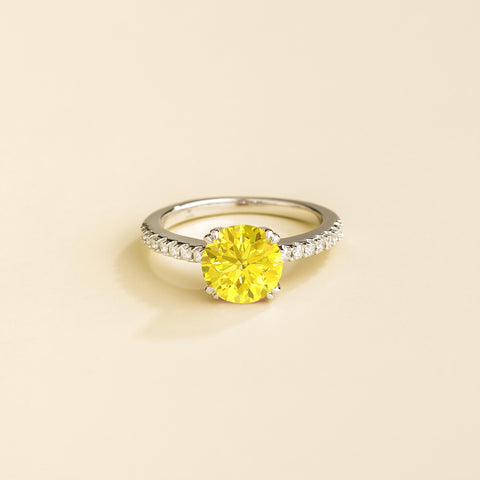
Best Yellow Sapphire Engagement Ring Styles
Style isn't superficial - it's how your ring integrates into your daily life, your aesthetic identity, and your long-term vision for this piece.
Solitaire: The Modern Icon
The solitaire setting is elegance distilled. One exceptional stone, no distractions, total focus on colour and cut. For yellow sapphire, this simplicity becomes powerful - the warm hue speaks for itself. Best shapes: Oval (elongates the finger, maximises face-up size), cushion (soft romantic brilliance), and round (timeless symmetry).
Three-Stone: Past, Present, Future
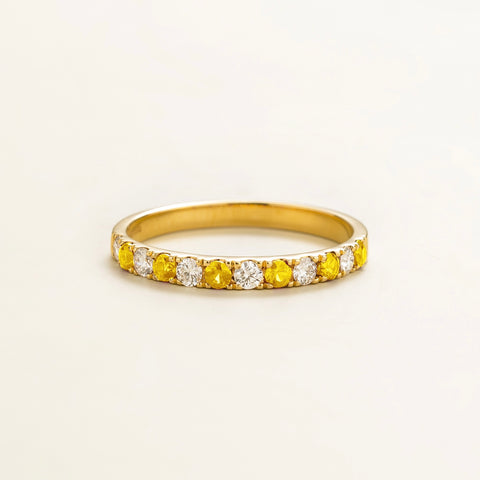
The three-stone setting carries inherent symbolism: one stone representing your individual journeys, the centre stone representing your present commitment, and the third representing your shared future. For yellow sapphire, this works beautifully with side stones in complementary hues - lab-grown diamonds for crisp contrast, white sapphires for tonal harmony, or smaller yellow sapphires for monochromatic sophistication.
Halo: Maximum Glow and Presence
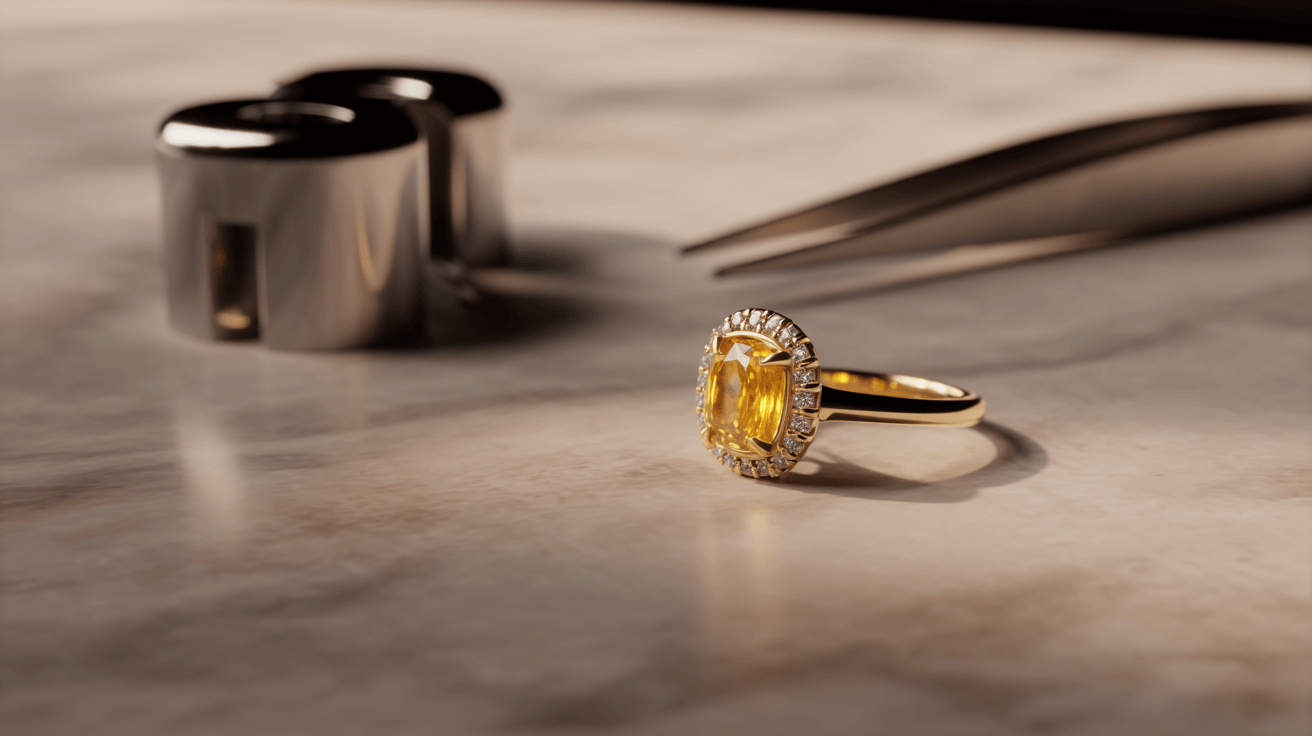
A halo setting surrounds the centre yellow sapphire with smaller diamonds or white sapphires, amplifying both visual size and sparkle. The contrast between the golden centre and the colourless surround creates a luminous, sun-like effect. A 1.2-carat yellow sapphire in a halo can appear as substantial as a 2-carat solitaire.
Vintage-Inspired vs Modern Minimal
Vintage-inspired designs embrace ornamentation: milgrain detailing, filigree metalwork, and Art Deco geometric motifs - pairing gorgeously with the yellow sapphire's warm, nostalgic glow. Modern minimal designs strip away excess: sleek knife-edge bands, hidden halos, or contemporary bezel settings that let the yellow sapphire's colour do all the talking.
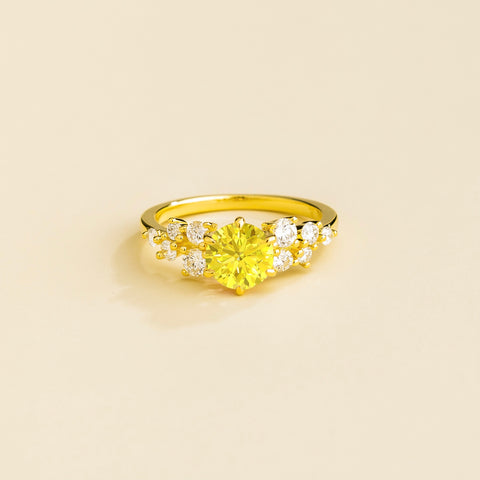
Best Shapes for Yellow Sapphire Engagement Rings
Shape influences how large the stone appears, how it sits on the finger, and how light moves through the gem.
Oval: The modern classic. Ovals offer the best face-up size, elongate shorter fingers beautifully, and deliver excellent brilliance. They're currently the most popular choice for coloured gemstone engagement rings - and for good reason.
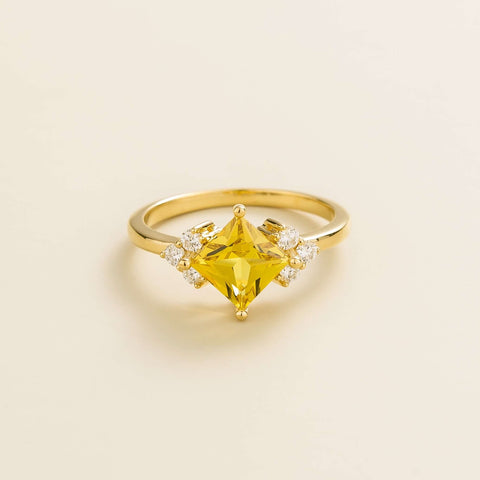
Cushion: Romantic and soft, cushion cuts have rounded corners and larger facets that create a gentle, glowing sparkle. They suit vintage-inspired settings perfectly and work beautifully with golden and canary yellow hues.
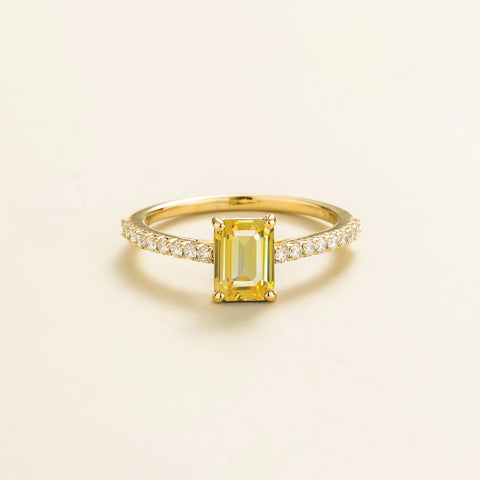
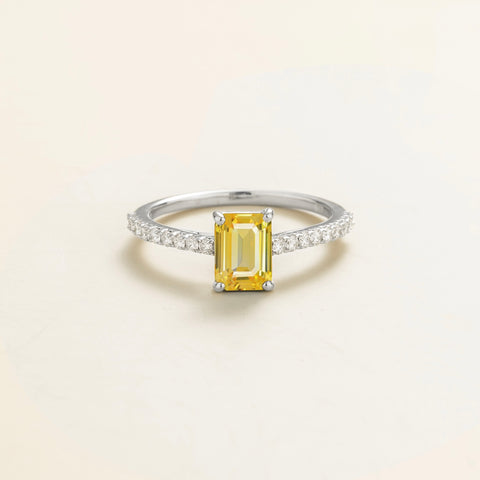
Emerald cut: Sophisticated, editorial, and distinctly modern. Emerald cuts prioritise clarity over brilliance - step-cut, creating long, clean flashes of light. This cut demands a high-quality stone, but the result is architectural elegance perfect for minimalist aesthetics.
Round: Timeless, balanced, and universally flattering. Round yellow sapphires offer exceptional symmetry and work beautifully in traditional solitaire or halo settings.
Radiant: If you want brilliance that rivals a diamond, radiant cuts deliver. These stones combine the elegance of an emerald shape with the sparkle of a round, creating maximum light return. Radiants make yellow sapphires positively glow.
If You Want It to Look Bigger
Elongated shapes (oval, pear, marquise, emerald) maximise surface area. A 1.8-carat oval can appear as large as a 2.5-carat round due to its elongated proportions - whilst also creating the flattering illusion of longer, more elegant fingers.
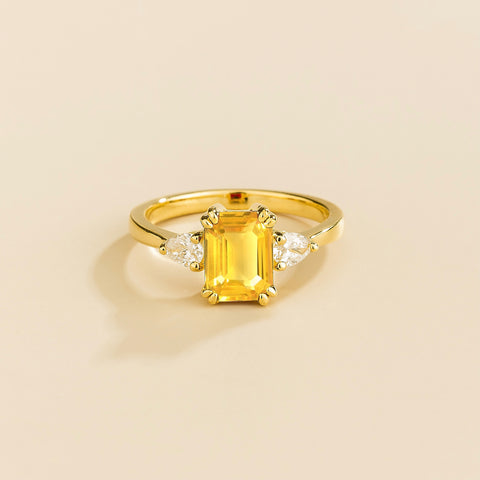
Best Carat Sizes for Daily Engagement Wear
Choosing the right carat weight is about balance - finding the sweet spot between wearability, proportion, and lifestyle compatibility.
The Sweet Spot Ranges
Subtle elegance (0.75–1.25 carats): These sizes suit delicate hands, minimalist tastes, or professionals in conservative fields. A 1-carat yellow sapphire in a simple bezel setting is quietly powerful - refined without demanding attention.
Balanced daily statement (1.25–2.0 carats): The most popular range for engagement rings. A 1.5 to 2-carat yellow sapphire strikes the ideal balance: substantial enough to be noticed and admired, practical enough to wear comfortably every day, and proportionate for most hand sizes.
Bold statement (2.0+ carats): Here, you're making an entrance. These stones are dramatic, eye-catching, and best suited for confident, expressive personalities. For carats above 2.5, opt for lower-profile settings to prevent the ring from feeling top-heavy or snagging constantly.
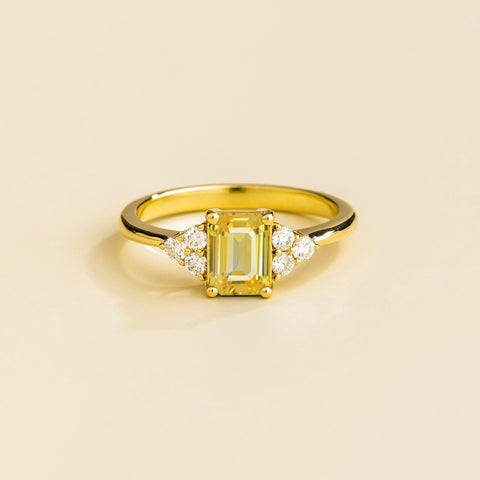
Metal Choice for Engagement Rings: What Flatters Yellow Sapphire Most
Metal isn't merely structural - it's a design collaborator that either amplifies or competes with your stone's colour.
Yellow Gold
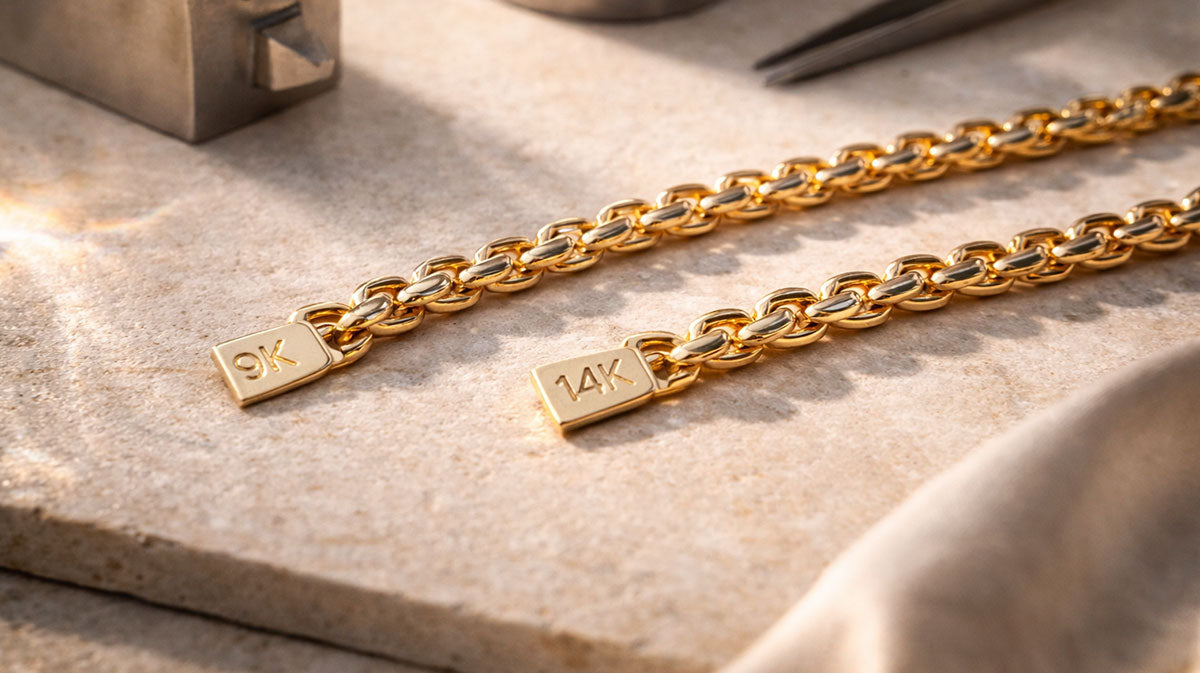
18ct yellow gold and yellow sapphire create harmonious, warm elegance. The metal doesn't compete; it amplifies. The result is cohesive, romantic, and timeless - a ring that feels like a unified work of art rather than a stone and a setting. Yellow gold also carries vintage associations, perfectly suited to Edwardian, Art Deco, or 1970s bohemian aesthetics.
White Gold / Platinum
18ct white gold or platinum creates a striking contrast. The cool, silvery metal makes the yellow sapphire's colour pop with modern vibrancy. A yellow sapphire in a sleek platinum bezel setting is quietly dramatic - sophisticated without excess. This combination reads contemporary, clean, and bold.
Rose Gold
18ct rose gold offers the best of both worlds: warmth without matchy-matchy sameness. The pinkish undertones complement the yellow sapphire's golden hue whilst adding a soft, romantic dimension. Rose gold also flatters a wide range of skin tones, particularly warmer complexions. It feels vintage-inspired without being overtly period-specific.
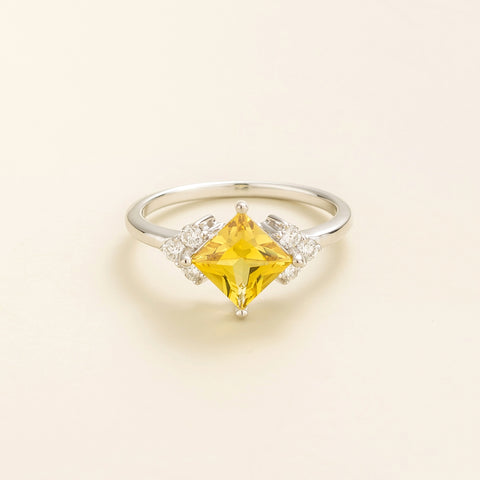
Yellow Sapphire vs Diamond for Engagement: Emotion + Practicality
This isn't about which is "better" - it's about which feels like you.
The Emotional Difference
Diamonds represent classic tradition - the expected choice, the socially validated symbol of engagement. For some, that tradition feels comforting and romantically significant. There's no shame in choosing the path well-worn if it genuinely resonates.
Yellow sapphires represent personal story and individuality. They're the choice of couples who want warmth, who value meaning over convention, who'd rather their ring spark conversation than blend seamlessly into expectation. Choosing yellow sapphire is an act of self-definition.
The Practical Difference
Durability: Both are exceptional. Sapphire (9) and diamond (10) are the two hardest gemstones used in jewellery - daily wear is no issue for either. Sparkle style: Diamonds deliver sharp, fiery brilliance - light fractures into rainbow flashes. Yellow sapphires glow. They create warm, diffused radiance rather than sharp fire. It's the difference between a disco ball and a sunrise. Everyday aesthetic: Yellow sapphires shift subtly richer in warm light, brighter in daylight, glowing in candlelight. This variability is part of their enduring charm.
"Which One Feels Like You?"
If you want tradition, maximum fire, and classic elegance, a diamond is exceptional. If you want warmth, personal meaning, modern individuality, and a gemstone that radiates optimism, yellow sapphire is your answer. Neither is a compromise. Both are intentional luxury. Choose the one that makes you feel seen.
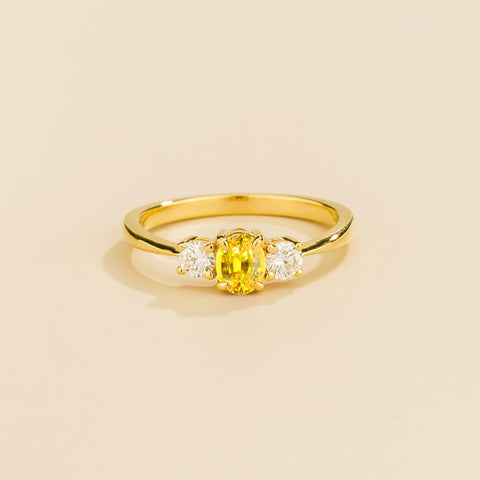
Choosing Natural vs Lab-Grown for an Engagement Ring
Natural yellow sapphires form over millions of years deep within the Earth. They carry geological rarity and, for some, a romantic narrative of nature's artistry - and typically command higher prices.
Lab-grown yellow sapphires are created in controlled environments over weeks. According to the Gemological Institute of America, they're chemically, physically, and optically identical to natural stones - same hardness, same brilliance, same durability. They're more affordable, fully traceable, and ethically transparent.
The differences lie in the rarity story (natural) versus traceability and value (lab-grown). Both are real sapphires. Both are engagement-worthy. For a comprehensive comparison including emotional, practical, and environmental considerations, read: Natural vs Lab-Grown Yellow Sapphire Rings: What's the Real Difference?
Conclusion
Yellow sapphire offers everything an engagement ring should: exceptional durability for a lifetime of daily wear, timeless beauty that transcends trends, and symbolism rooted in joy, optimism, and shared growth. It's intentional. It's distinctive. It's yours.
The perfect engagement ring isn't the one everyone else would choose. It's the one that feels like home when you glance down at your hand - today, next year, and decades from now.
Explore our curated collection of yellow sapphire engagement rings, each crafted with exceptional artistry, ethical sourcing, and the kind of beauty that needs no justification.
Frequently Asked Questions
What is the best setting for an active lifestyle?
For active lifestyles, choose low-profile settings, such as bezels or semi-bezels, to protect the stone from impact and snagging. Avoid high-set prongs or delicate cathedral settings. Ensure your band is at least 1.8mm thick for structural integrity.
What carat size is best for everyday engagement wear?
The sweet spot for daily wear is 1.25–2.0 carats - substantial enough to make a statement whilst remaining practical for constant use. Larger stones (2.5+ carats) are stunning but benefit from lower-profile settings to prevent snagging.
Is lab-grown yellow sapphire real?
Yes. Lab-grown yellow sapphires are chemically, physically, and optically identical to natural sapphires. They're not imitations - they're real sapphires created in controlled environments rather than mined from the Earth.
Does a yellow sapphire sparkle like a diamond?
Yellow sapphire creates warm, glowing radiance rather than sharp, fiery sparkle. Both are beautiful, but the effect differs: diamonds fracture light into rainbow flashes; yellow sapphires glow with diffused brilliance.
Which metal makes a yellow sapphire look best?
It depends on your aesthetic. Yellow gold creates harmonious warmth; white gold or platinum creates modern contrast; rose gold offers romantic softness. Try each against your skin tone and personal style before deciding.