How to Care for Gold Jewellery So It Lasts for Years
Gold jewellery is one of the few purchases that genuinely gets better with time, provided it is looked after properly. A well-cared-for gold ring, necklace, or pair of earrings can pass through generations without losing its beauty or its value. Yet many people wear their gold daily without a second thought for maintenance, and then wonder why it begins to look dull, scratched, or lifeless after a year or two.
The good news is that caring for gold jewellery is neither complicated nor time-consuming. A few consistent habits make an enormous difference. Whether you own pieces from Juvetti's 9K, 14K, or 18K gold collections, or are planning your next purchase, this guide covers everything you need to know to keep your gold jewellery looking flawless for years to come.
Does Gold Jewellery Tarnish?
This is one of the most frequently asked questions, and it deserves a clear, direct answer before anything else. Pure gold does not tarnish. It is one of the least reactive metals on earth, which is precisely why it has been used in jewellery for thousands of years. However, the gold used in most fine jewellery is not pure gold: it is alloyed with other metals to improve its durability, and those alloy metals can react to their environment over time.
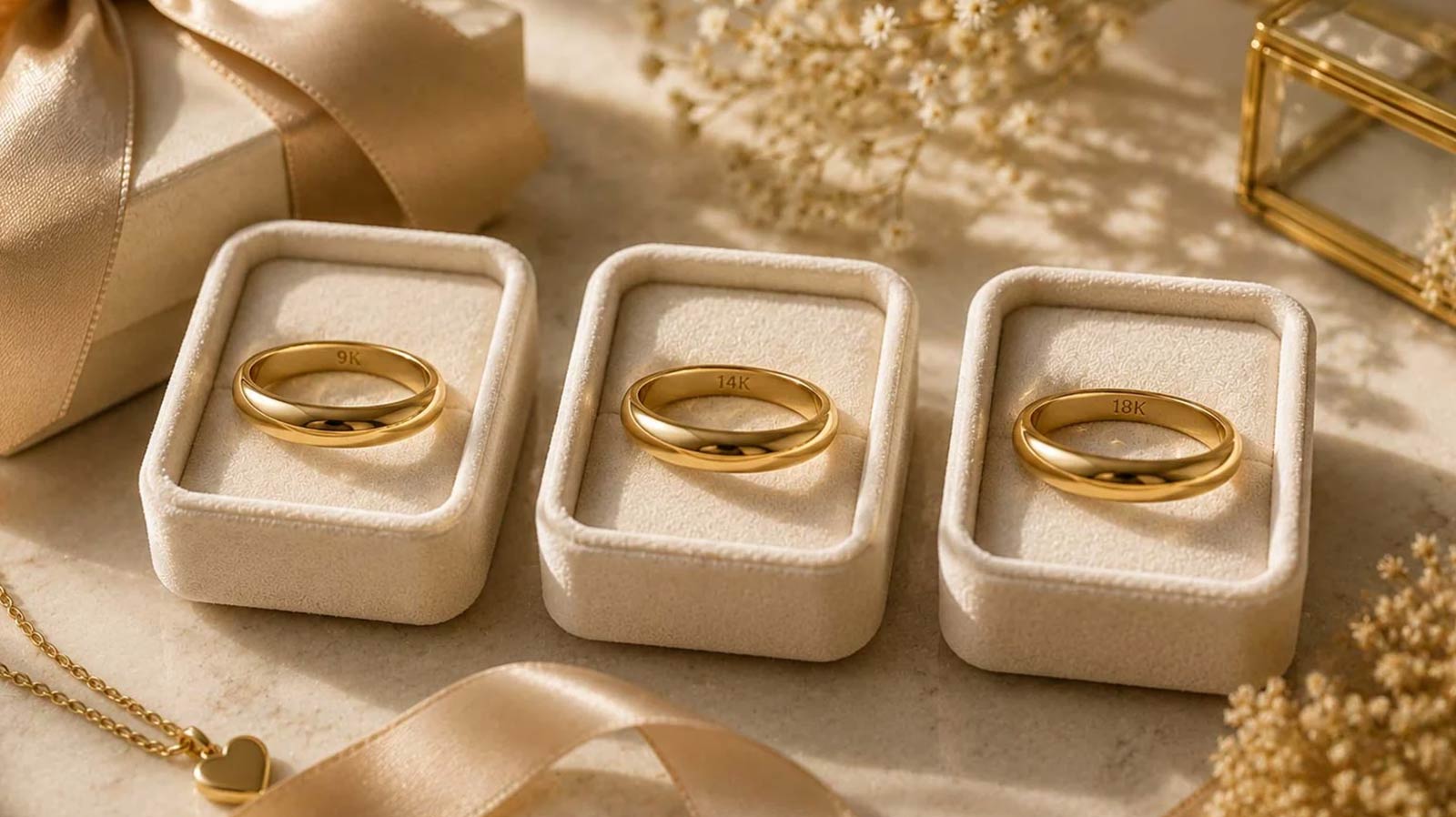
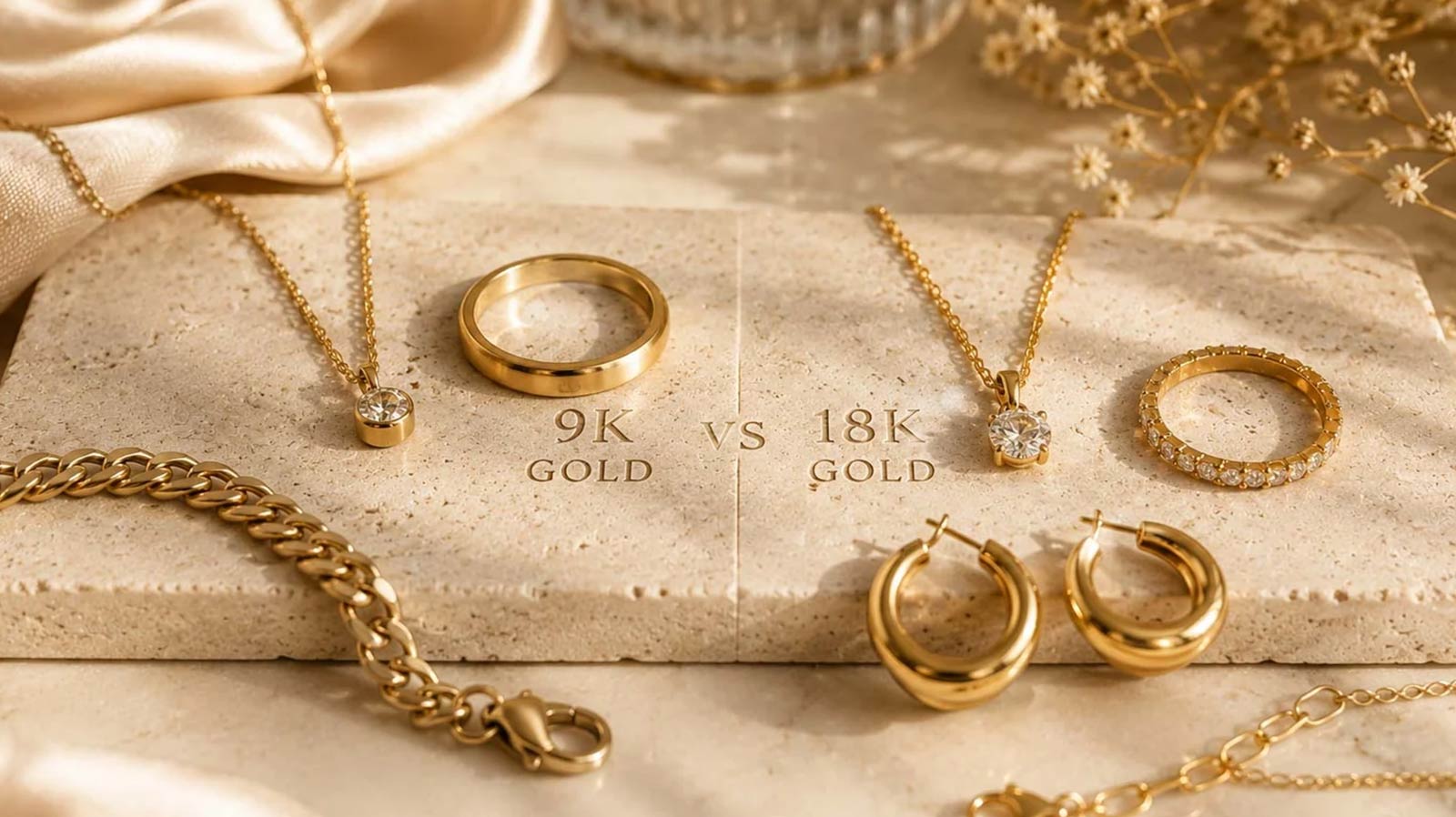
The lower the gold karat, the higher the alloy content, and the more susceptible the piece is to surface changes over time. 9K gold, with only 37.5% pure gold, is more reactive than 14K or 18K gold under the same conditions. This does not make 9K gold a poor choice, but it does mean the care principles in this guide apply most critically to lower-karat pieces.
White gold also deserves a specific mention. Most white gold jewellery is rhodium-plated to achieve its bright, cool finish. That rhodium layer does wear down over time with regular use, which can give the piece a slightly warmer appearance beneath. This is not damage: it is simply normal wear, and re-plating by a professional jeweller restores the original finish completely.

How to Clean Gold Jewellery at Home
Regular home cleaning is the single most effective thing you can do to maintain your gold jewellery's brilliance. Over time, skin oils, lotions, dust, and daily residue accumulate on the surface of the metal and within settings, creating a film that dulls the natural lustre of the piece. The solution is simple and requires nothing more than items already in most homes.
The Right Way to Clean Gold Jewellery at Home
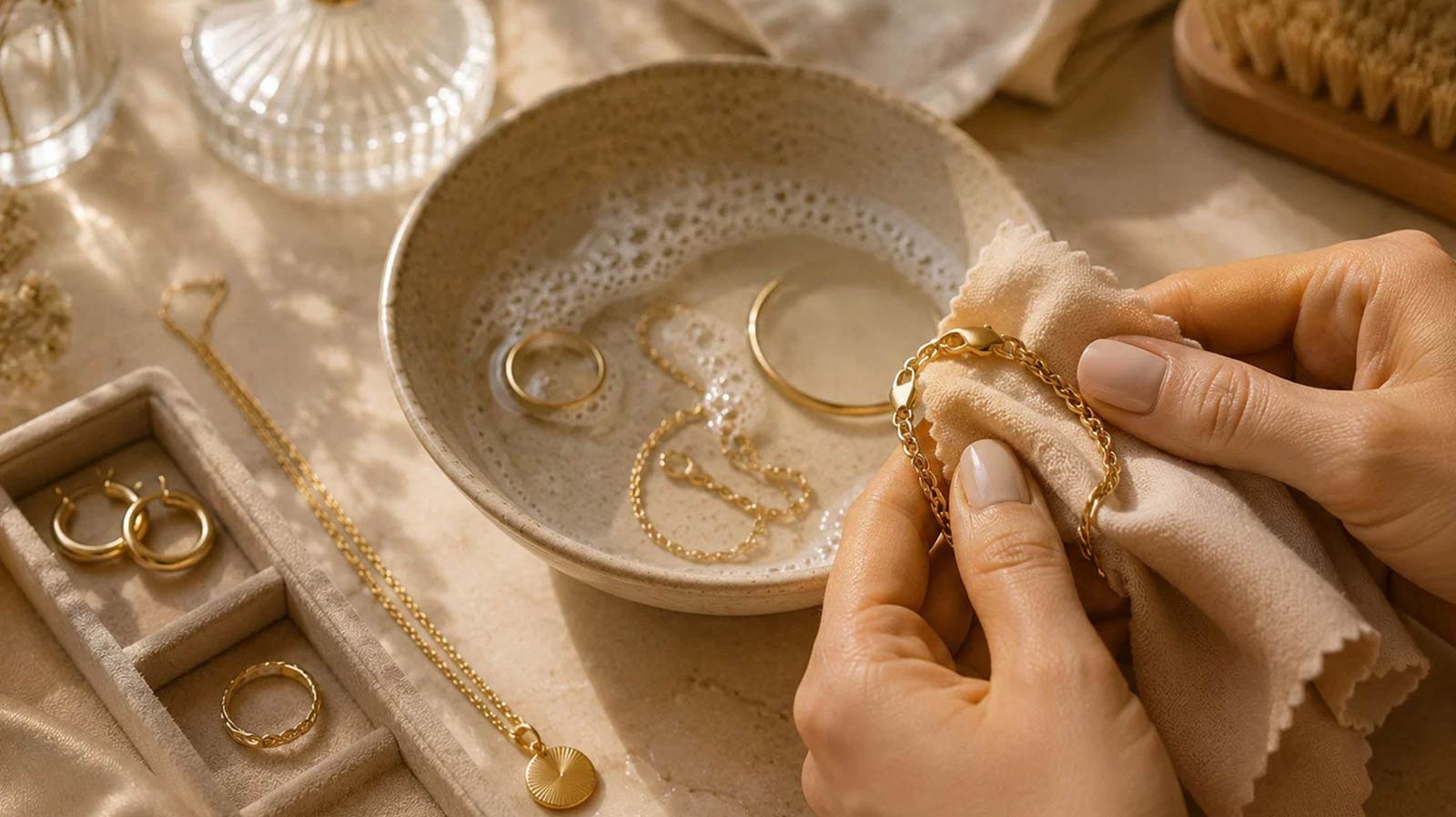
What you need: warm water, a few drops of mild dish soap, a soft-bristled toothbrush, and a lint-free cloth.
- Fill a small bowl with warm water and add two to three drops of mild dish soap. Avoid hot water, which can loosen certain gemstone settings, and never use boiling water.
- Submerge the piece and soak for 15 to 20 minutes. This loosens built-up oils and residue without any abrasion.
- Gently scrub with a soft-bristled toothbrush, paying close attention to the undersides of settings, the interior of chain links, and any areas where grime tends to collect. Use light pressure: gold is a relatively soft metal and does not require force.
- Rinse thoroughly under warm running water, ensuring all soap is removed, particularly from around gemstone settings where residue can hide.
- Dry completely with a soft, lint-free cloth before storing or wearing. Leaving moisture on gold, particularly in and around settings, can encourage long-term surface dulling.
For pieces worn daily, a gentle clean once every two to three weeks maintains a consistently beautiful finish. Pieces worn occasionally benefit from a clean before and after each wear.
Cleaning FAQs
Can you clean gold jewellery with toothpaste? No. Toothpaste is mildly abrasive and will scratch the surface of gold over time, dulling its finish rather than restoring it. Stick to mild dish soap and warm water.
Can you clean gold jewellery with baking soda or vinegar? Both carry risk. Baking soda is abrasive and can scratch gold. Vinegar is acidic and can affect certain gemstone settings and alloy metals, particularly in lower-karat gold. Neither is recommended when a simple soap and water method achieves the same result safely.
Can you use an ultrasonic cleaner? Ultrasonic cleaners can be effective for plain gold pieces, but they are not universally safe. Pieces set with emeralds, opals, and pearls should never go into an ultrasonic cleaner, as the vibrations can damage or loosen the stones. When in doubt, ask your jeweller before using one.
When to Remove Your Gold Jewellery
Knowing when to take your jewellery off is just as important as knowing how to clean it. Most gold jewellery is robust enough for daily life, but certain situations place unnecessary stress on both the metal and any gemstone settings.
Before Contact With Chemicals
Household cleaning products are among the most damaging substances your gold jewellery will encounter. Bleach, ammonia, and chlorine-based cleaners can react with the alloy metals in gold, causing discolouration, surface pitting, and weakening of settings over time. Remove all gold jewellery before cleaning any surface that involves chemical products. This applies equally to hand sanitiser, which is now used so frequently that its cumulative effect on gold rings in particular is significant.
Before Applying Perfume or Lotion
Perfume and gold jewellery should never meet directly. The alcohol in most fragrances can dull the surface of gold and affect the brilliance of gemstone settings with repeated exposure. The correct order is always: apply perfume and lotion first, allow it to absorb or dry completely, then put on your jewellery. This single habit extends the lifespan of a piece considerably.
The same principle applies to body lotions, sunscreen, and self-tanning products. Sunscreen in particular contains chemical compounds that react with metal alloys, and self-tanning products leave a residue on gold that is difficult to remove without repeated cleaning.

Gold Jewellery at the Gym, in the Shower, and in the Pool
Can You Wear Gold Jewellery to the Gym?
The gym is one of the environments where gold jewellery takes the most punishment. Weight training, resistance equipment, and general physical exertion create the precise conditions most likely to cause scratches, deformations, and setting damage. The pressure of a barbell against a ring, for example, can bend the band or push a setting out of alignment over time. Sweat is also mildly acidic and contributes to surface dulling with repeated, prolonged exposure.
Remove rings and bracelets before gym use. These are the pieces most directly exposed to equipment and impact. A delicate chain necklace worn during low-impact exercise carries lower risk, but removing it entirely is always the safest approach.
Can You Shower With Gold Jewellery?
Showering with solid gold jewellery will not cause immediate damage. However, the cumulative effect of soap, shampoo, and conditioner residue building up inside settings and chain links will dull even the most brilliantly finished piece over time. Daily showering with jewellery on is one of the most common reasons people find their gold looks tired within a year of purchase.
If removing jewellery before every shower feels impractical, the key mitigation is thorough rinsing and drying after each shower, ensuring no product residue is left on the surface or within settings.
Can You Swim With Gold Jewellery?
Remove your gold jewellery before swimming, without exception. Chlorinated pool water reacts with the alloy metals in gold, gradually weakening the metal structure and dulling its surface. The effect is cumulative and largely invisible until the damage is already done. Saltwater carries similar risks, and the combination of physical activity in the sea, waves, and cold temperatures also creates a genuine risk of losing a piece entirely if a clasp or setting is under any stress.
This guidance applies across all karats, though 14K and 18K gold with their higher gold content are marginally more resistant to chemical reaction than 9K gold in the same conditions.

Wearing Gold FAQs
Can you shower with gold jewellery? Occasionally, yes. Regularly, it is not recommended. Soap and product residue accumulates within settings and links, dulling the finish over time. Thorough rinsing and drying after each shower mitigates the risk considerably.
Can you swim with gold jewellery? No. Remove all gold jewellery before swimming in chlorinated pools or the sea. Chlorine and saltwater both react with alloy metals in gold, causing progressive surface damage and potential weakening of settings.
Can you wear gold jewellery to the gym? It is best to remove rings and bracelets before gym sessions. Impact, pressure, and repeated sweat exposure all contribute to surface scratching and setting stress over time.
Can you sleep in gold jewellery? For most pieces, sleeping in gold jewellery is acceptable with minor caveats. Remove delicate chain necklaces overnight to avoid stressing clasps and tangling. Rings and stud earrings are generally fine for overnight wear.
How to Store Gold Jewellery Properly
Storage is where many people unknowingly cause the most damage to their jewellery. Tossing multiple pieces into the same box or dish might seem harmless, but it creates the conditions for scratching, tangling, and setting damage every single time.
Individual Storage Is Non-Negotiable
Gold can scratch gold. Even pieces of the same karat will mark each other with repeated contact. Store each piece separately, either in individual soft pouches, the original box it came in, or a jewellery box with divided, fabric-lined compartments. Velvet and satin linings are ideal as they provide cushioning without abrasion.
Pieces set with harder gemstones such as diamonds, rubies, or sapphires must be stored away from plain gold pieces and from each other. These gemstones, sitting high on the Mohs hardness scale, will scratch softer metals and other stones if stored in contact with them.
Environment and Conditions
Avoid storing gold jewellery in bathrooms. The humidity from daily showering creates a consistently damp environment that accelerates surface changes, particularly for lower-karat gold and white gold with rhodium plating. A cool, dry bedroom drawer or dedicated jewellery box in a low-humidity area is the ideal storage environment.
Keep gold jewellery away from direct sunlight during storage. Prolonged UV exposure can gradually affect the appearance of certain gemstone settings and, over very long periods, the surface finish of some alloy metals.
Caring for Gold Jewellery When Travelling
Travel introduces a specific set of risks that home storage and daily routine do not. Pieces get thrown together in a rush, packed into luggage where they move freely, and worn in environments ranging from pools to beaches to high-humidity climates.
A dedicated travel jewellery case is one of the most worthwhile small investments you can make for your collection. Even a compact roll-style case with individual fabric pockets keeps pieces separated and protected without taking up significant space in a bag. For valuable pieces with gemstone settings, individual soft pouches inside a hardshell case offer the best protection.
At airport security, remove all jewellery before going through scanners rather than placing it loose into a tray where it can make contact with other metal objects. Keep valuable pieces in your carry-on luggage rather than checked baggage, where handling is less controlled and the risk of loss is higher.
In hot climates, be particularly mindful of perfume and sunscreen application: both are used more frequently on holiday, and both carry the surface risks outlined earlier in this guide.
Storage and Lifestyle FAQs
How should you store gold jewellery? Individually, in fabric-lined compartments, soft pouches, or original boxes. Never store multiple pieces together in contact with one another. Keep storage away from bathrooms, direct sunlight, and high-humidity environments.
How do you travel with gold jewellery safely? Use a dedicated travel jewellery case with individual fabric pockets. Keep valuable pieces in carry-on luggage. Remove jewellery at airport security rather than placing it loose in a tray.
Can cleaning products damage gold jewellery? Yes. Bleach, ammonia, chlorine-based cleaners, and even antibacterial hand wash contain compounds that react with alloy metals in gold. Remove all jewellery before using any household cleaning product.
Professional Maintenance: When and Why It Matters
Home cleaning maintains the surface brilliance of your gold jewellery, but it cannot address everything. Professional maintenance is the safeguard that keeps a piece structurally sound, not just visually beautiful.
For pieces worn every day, including engagement rings, wedding bands, and daily-wear necklaces, a professional inspection every six months is the ideal interval. For pieces worn occasionally, an annual check is sufficient.
During a professional service, a jeweller will clean the piece using specialist equipment such as steam cleaners and ultrasonic baths where appropriate, inspect all settings for looseness or wear, check prongs and clasps for stress fractures, assess the overall condition of the metal, and advise on any remedial work required before a minor issue becomes a significant repair.
The most common finding in professional inspections is a prong or setting that has shifted slightly with wear. Left unaddressed, a loose prong is how a precious gemstone gets lost. Identified early, it is a minor repair that takes minutes. This is the most compelling practical argument for regular professional attention: the cost of an inspection is always a fraction of the cost of replacing a lost stone or rebuilding a damaged setting.
For white gold pieces specifically, professional re-rhodium plating every one to two years restores the original cool, bright finish that daily wear gradually diminishes. For yellow gold and rose gold, polishing during a professional service removes light surface scratches and restores the original depth of colour.


The Juvetti Approach to Lasting Gold Jewellery
At Juvetti, every piece is individually handcrafted using 100% recycled gold and lab-grown precious gemstones, made to be worn and cherished for a lifetime. The care you give a Juvetti piece directly honours the craftsmanship that went into making it.
If you are building a collection designed for daily wear, our guide on the best 14K gold jewellery pieces for everyday wear is a natural next step, as is our guide on whether gold jewellery is a good investment for those thinking about the longer-term value of what they own.
Gold jewellery that is cared for properly does not simply last. It deepens in meaning, accumulates history, and becomes one of the few objects in a life that genuinely improves with the passing of time.