Pink Sapphire Bracelets: The Complete Buying Guide
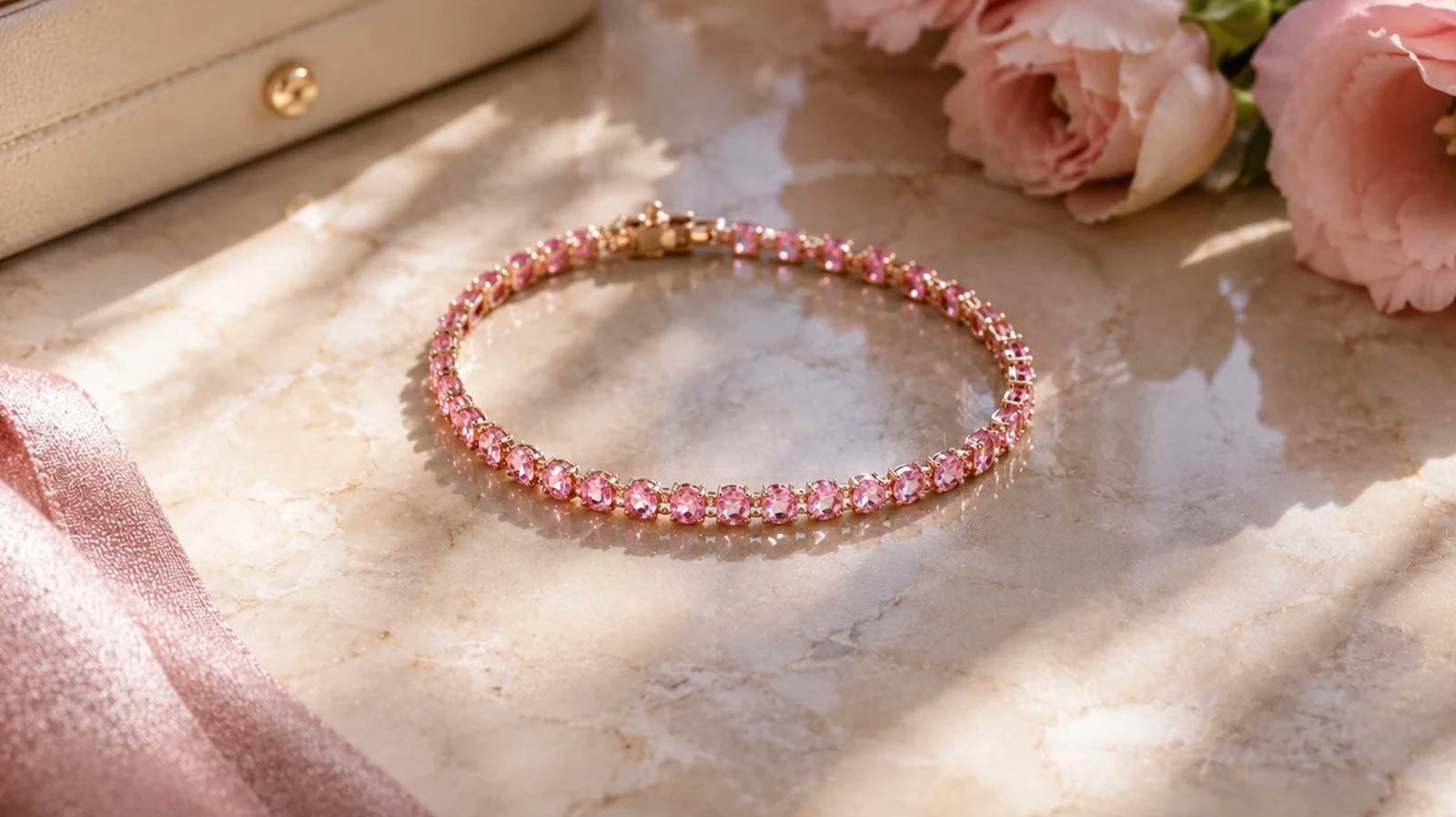
There is something quietly magnetic about a pink sapphire bracelet. The colour catches the light differently with every gesture. Softer when your wrist turns inward, brighter when you reach for a glass, almost glowing when sunlight skims across it. It is jewellery that moves with you, and that movement is precisely what makes it so compelling to wear.
But here is the thing. A bracelet is not chosen the same way as a ring or a necklace. It has to fit comfortably, move beautifully, and survive constant contact with desks, watches, sleeves, and handbags. That is why so many buyers pause at the same question: should I go for a tennis bracelet, a bangle, a delicate chain, a cuff, a charm style, or something adjustable?
This guide is here to make that decision feel straightforward. By the end, you will know which pink sapphire bracelet style genuinely suits your wrist, your lifestyle, your budget, and your values. You will also understand what makes one piece worth wearing for decades while another wears out within a year.
What Is a Pink Sapphire Bracelet?
A pink sapphire bracelet is any bracelet featuring pink sapphire as the main stone, an accent, or a repeated gemstone element. The stones may be natural or lab-grown: both are real sapphires, simply produced differently. Designs range from delicate chains with a single accent to full tennis bracelets and bold statement cuffs.
Pink sapphire is a genuine corundum gemstone, in the same family as ruby and blue sapphire. It is not a pink crystal, a simulant, or cubic zirconia. It is valued for its colour, exceptional hardness, sparkle, and its symbolic associations: love, tenderness, strength, and connection. Explore the full breadth of the pink sapphire collection to understand just how wide the range of designs and colour expressions can be.
A pink sapphire bracelet is not simply a coloured bracelet. It is a piece where gemstone quality, setting strength, wrist fit, and movement all matter simultaneously, and getting all four right is what separates a genuinely excellent piece from one that disappoints.
Why Pink Sapphire Works Beautifully in Bracelet Form
Movement Enhances the Colour
Bracelets move more than any other jewellery piece. Rings remain still; necklaces rest on the collarbone. The gentle, constant movement of a bracelet is what brings the pink sapphire to life. Every wrist movement alters the angle of light on the stone. A soft pink appears nearly icy in cool light but warmer under lamplight. A bright hot pink looks deep indoors and shines more vividly outside.
This is also why stone matching matters so much in multi-stone designs. When stones are mismatched in colour or tone, movement reveals the inconsistency immediately and unmistakably.
The Wrist Is an Elegant, Constantly Visible Surface
The wrist appears constantly: while typing, holding a glass, gesturing, dining, and wearing short sleeves. Pink sapphire brings softness without feeling childish. A slim bracelet with small stones reads as quietly refined; a wider piece with larger stones reads as confident and deliberate.
Pink Sapphire Feels Romantic but Genuinely Wearable
Romantic in rose gold, crisp and modern in white gold, warm and classic in yellow gold. Never too formal for jeans, never too casual for black tie. That versatility across occasion and setting is one of the strongest arguments for pink sapphire over other coloured gemstones.
Types of Pink Sapphire Bracelets
Six main styles, each genuinely suited to a different kind of wearer. Understanding which one fits your life is the most important decision in this entire guide.
Pink Sapphire Tennis Bracelet
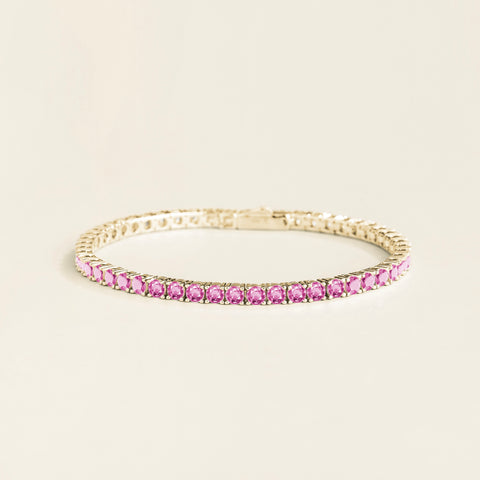
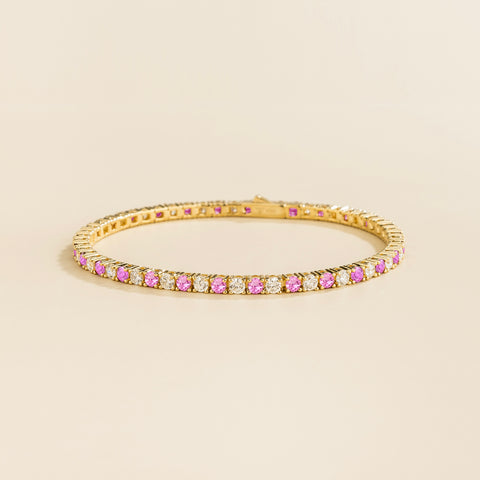
A continuous line of gemstones set on flexible links that wrap smoothly around the wrist. In pink sapphire, the result is softer and more personal than the classic diamond version: the same elegance, with warmth and colour added.
- Best for daily luxury and evening wear in equal measure
- Requires excellent colour matching across all stones
- Needs a secure clasp and flexible construction to drape properly
- Common settings: prong (more sparkle), bezel (more protection), channel (sleekest line)
Pink Sapphire Bangle
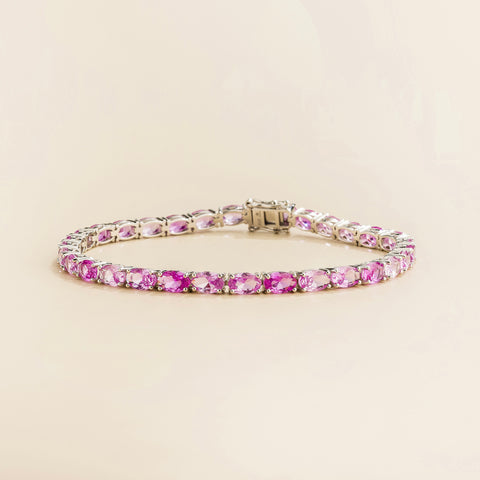
More structured and architectural than a tennis bracelet. Sapphires may appear as pavé accents, a single feature stone, or a partial line across the top of the bangle. Polished and sculptural; works beautifully alone or stacked alongside plain gold bangles.
- Hinged bangles are significantly easier for daily wear than rigid slip-on styles
- Fit is critical: bangles should not slide excessively or feel tight against the wrist bone
- One of the most architectural and considered choices in the bracelet category
Chain Bracelet with Pink Sapphire Accents
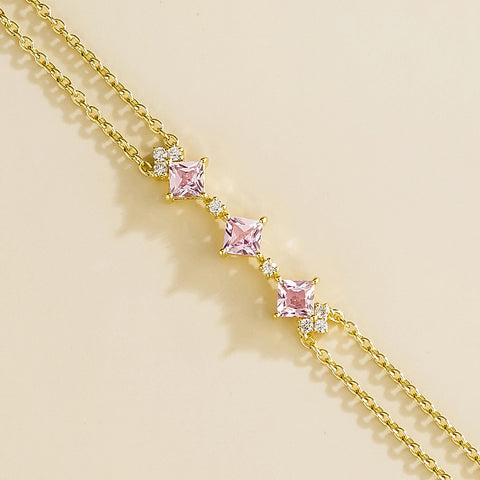
A fine gold chain with one or several pink sapphires as delicate accents. The quietest, most everyday option in the category. Best for minimalist buyers and often the most approachable entry point to pink sapphire jewellery.
- Adjustable lengths improve fit and forgive the guesswork involved in gifting
- Ideal for layering and stacking with other fine chain pieces
- Often more affordable than tennis bracelets while still offering genuine gemstone quality
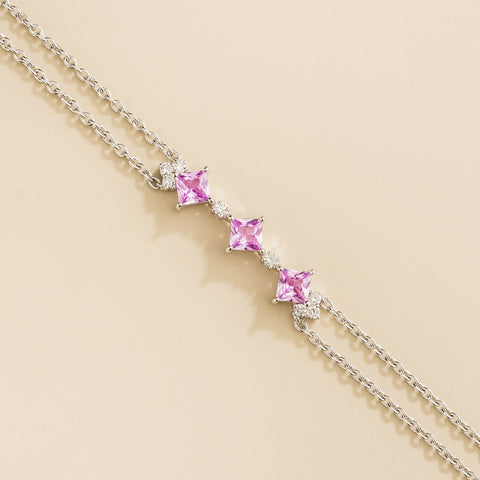
Pink Sapphire Cuff Bracelet
Bold, structured, and unapologetically a statement piece. Sapphires sit as focal stones or scattered accents across a sculptural metal form. Best for confident dressers and special occasions, and particularly striking when paired with a simple outfit that lets the cuff do all the work.
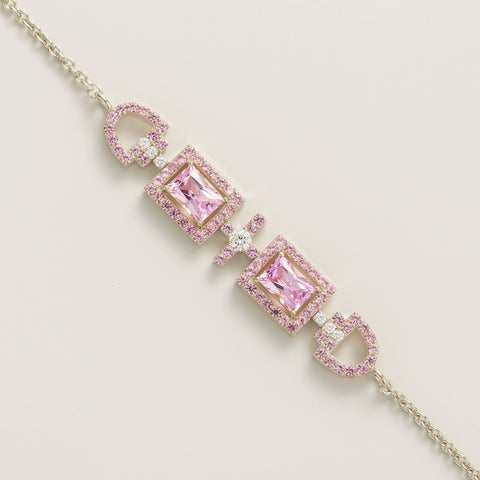
Charm Bracelet
Personal and sentimental in a way no other bracelet style quite manages. A charm bracelet evolves over time, picking up meaning and new stones as it goes. Wonderful for birthdays, milestones, or symbolic jewellery that tells a personal story. Charm attachments and stone settings still need to be properly secured; do not sacrifice construction for style.
Adjustable Pink Sapphire Bracelet
Solves the biggest practical problem in bracelet gifting: sizing. Useful when wrist size is uncertain, and available across chain-based, slider-style, and drawstring-inspired fine jewellery designs. The adjustment mechanism matters as much as the stone. Quality construction here is not optional.
Pink Sapphire vs Diamond Tennis Bracelets
Diamond tennis bracelets are classic, neutral, and highly formal. A safe, forever piece that works with virtually everything. Pink sapphire tennis bracelets feel more personal, romantic, and distinctive. They are not trying to be neutral: they are adding warmth, individuality, and colour to whatever they are worn with.
Diamonds emphasise brilliance and white light. Pink sapphire emphasises colour, warmth, and emotional identity. There is a practical point worth noting: for the same budget, pink sapphire (especially lab-grown) often delivers a more visually impressive piece because the cost per carat is considerably lower. Choose a diamond for pure classic sparkle. Choose pink sapphire for colour, softness, and a bracelet that feels genuinely personal.
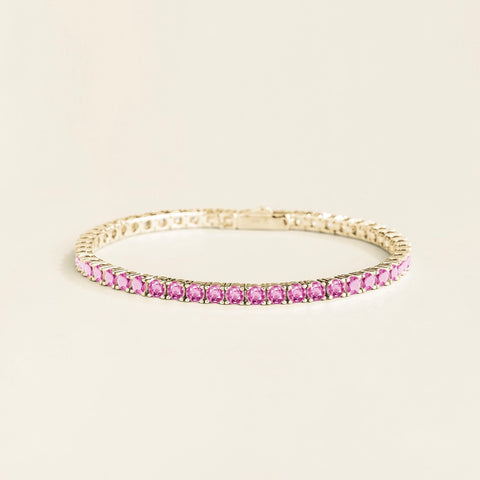
Natural vs Lab-Grown Pink Sapphire Bracelets
What Lab-Grown Pink Sapphire Actually Means
Lab-grown pink sapphire has the same chemical composition, hardness, and optical properties as natural sapphire. It is real sapphire, simply grown in a controlled environment rather than mined from the earth. It is not cubic zirconia, glass, or any kind of simulant, and it should never be confused with those materials.
- Identical chemically to natural sapphire, including Mohs 9 hardness
- An equally strong choice for daily wear: durability is unchanged
- Particularly advantageous for tennis bracelets, where stones can be matched far more consistently
Where Natural and Lab-Grown Differ
Colour consistency is the most visible practical difference. Lab-grown sapphires are more uniform from stone to stone, which shows beautifully in tennis bracelets. Natural sapphires are often heat-treated to improve colour; lab-grown disclosure is clearer and more transparent. For bracelets specifically, lab-grown pink sapphire holds a real advantage: matching many stones across a tennis bracelet is genuinely difficult with natural stones, and that difference is visible on the wrist every day.
Pink Sapphire Colour Variations on the Wrist
Colour reads differently on the wrist than in a product photograph. Here is what to realistically expect across each family.
Judge colour against your actual skin tone and your most-worn metal, not just a studio photograph. Pale stones can vanish on the wrist; very intense colours can feel less versatile for daily wear. If you are uncertain, rose pink is almost always the right answer.
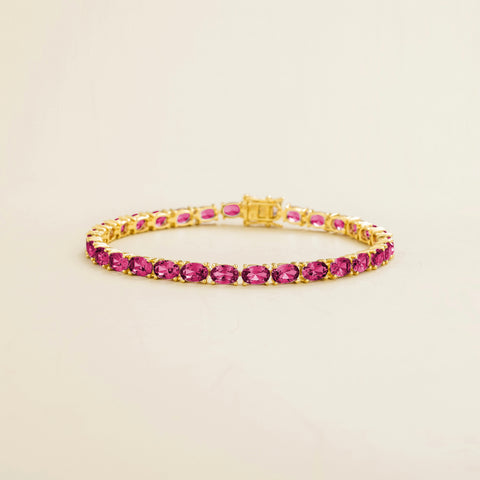
Bracelet Sizing and Fit
Why Fit Matters So Much
A bracelet that is too tight is uncomfortable and constantly noticeable. One that is too loose spins around the wrist, catches on cuffs, knocks against tables, and loses its elegance entirely. A properly fitted bracelet always reads as more luxurious than one that does not fit well, regardless of price point.
How to Measure Your Wrist
Use a soft tape measure around the wrist bone, just below the hand, then add a comfort allowance based on style. As a practical guide:
- Fine chain or tennis bracelet: small allowance for gentle movement
- Bangles: measure the hand at its widest point for slip-on styles; hinged bangles are far more forgiving
- Adjustable bracelets: the most practical choice when gifting without knowing the exact size
Fit by Style
- Tennis bracelet: close but flexible; should drape, not cling or spin
- Bangle: structured, sitting just above the wrist bone without sliding
- Chain bracelet: slightly looser and fluid, with gentle movement
- Cuff: secure and balanced, with the opening positioned correctly on the inner wrist
Best Metals for Pink Sapphire Bracelets
Rose Gold
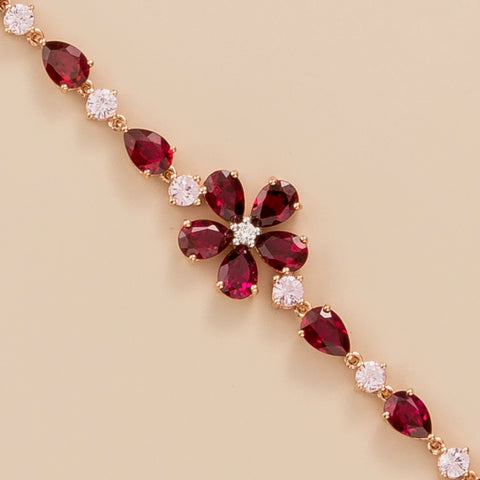
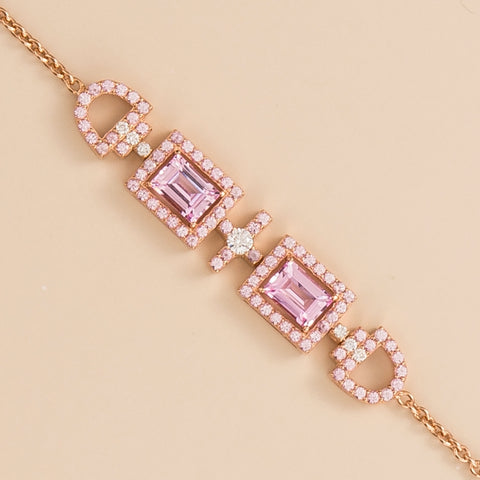
The most romantic pairing available. Rose gold softens pink sapphire and creates a warm, feminine, glowing look that feels cohesive and intentional. Best with baby pink, rose pink, and peach pink stones where the tonal harmony between metal and gemstone is at its most beautiful.
Yellow Gold
Warm, classic, and rich. Yellow gold gives pink sapphire a vintage or luxurious quality that is especially striking with deeper pinks and peach tones. It is the most traditional pairing and ages beautifully with consistent wear.
White Gold
Clean, modern, and crisp. White gold makes pink sapphire appear brighter and sharper by removing warm secondary tones from the frame. Works particularly well in tennis bracelets and designs with diamond accents, where the contrast between pink and white creates a high-impact, contemporary look.
Platinum
Strong, cool-toned, and exceptionally durable. More expensive than gold, but worth considering for heirloom-quality pieces where absolute longevity matters most. Naturally hypoallergenic, requires no replating, and maintains its finish indefinitely.
Are Pink Sapphire Bracelets Durable Enough for Everyday Wear?
Short answer: yes. Pink sapphire sits at 9 on the Mohs scale, only diamond is harder, which makes it genuinely suitable for regular wear: far more so than softer gems like opal or pearl. According to GIA, corundum has excellent toughness and no cleavage, meaning no tendency to break when struck cleanly, which makes it an excellent choice for jewellery worn through the full activity of daily life.
But here is the important caveat: bracelets take more knocks than any other piece of jewellery. They hit desks, doorframes, laptops, and handbag edges constantly. Setting quality matters as much as stone durability.
- Bezel and channel settings protect stones on all sides: better for active wearers
- Prong settings show off more light but need occasional checking by a professional jeweller
- Clasps and safety catches are essential on tennis bracelets: a lost bracelet is expensive and heartbreaking
The sapphire itself is strong. The bracelet still needs secure settings, well-made links, and a reliable clasp to match that strength.
How Much Do Pink Sapphire Bracelets Cost?
Prices in the UK market sit across three broad tiers:
Several factors move the price up or down significantly: natural or lab-grown origin, total carat weight and colour saturation, how well multiple stones are matched, metal type and gold weight, and the complexity of the setting and clasp. Price is not only about stone size. Metal weight, clasp quality, and stone matching all influence both the value and how long the piece genuinely lasts.
How to Style a Pink Sapphire Bracelet
Worn Alone
Best for tennis bracelets, cuffs, and refined bangles. Let the pink sapphire be the singular focus, and resist the temptation to add more around it.
Stacked with Other Bracelets
Stacks beautifully with plain gold bangles, diamond bracelets, delicate chains, or tonal gemstone pieces. Keep metal colour consistent throughout the stack for a considered rather than accidental look.
Paired with a Watch
Position carefully so it does not scratch the watch case. Slim chain bracelets and bangles pair more comfortably alongside watches than larger, sculptural cuffs.
How to Choose Based on Your Lifestyle
For Everyday Wear
A tennis bracelet with bezel settings, a slim bangle, or a secure chain bracelet. Prioritise comfort, clasp quality, and low-profile settings that will not catch on clothing throughout the day.
For Office and Professional Wear
Subtle rose pink or baby pink tones, refined gold settings, moderate width. Avoid oversized cuffs unless your personal style genuinely calls for them in a professional context.
For Special Occasions
Vivid pink, diamond accents, sculptural cuffs, or a full tennis bracelet. This is the moment for something that makes an entrance.
For Gifting
Adjustable chain bracelets, fine bangles, or styles with easy resizing options remove the pressure of guessing a wrist size perfectly. Browse the full pink sapphire bracelet collection to find gifting-friendly styles that combine flexibility with genuine quality.
Care and Maintenance
Pink sapphire is genuinely tough, but a little consistent care makes an enormous difference over years of wear.
- Remove during heavy exercise, cleaning, swimming, or manual work
- Store separately to avoid scratching softer jewellery such as pearls or opals
- Check clasps, links, and prongs periodically: especially important for tennis bracelets worn daily
- Clean gently with mild soap and warm water, using a soft brush around settings
- Avoid harsh chemicals, and seek professional advice before ultrasonic cleaning
Common Mistakes When Buying Pink Sapphire Bracelets
- Judging colour from studio photographs without considering your actual skin tone
- Prioritising total carat weight over colour consistency across all stones
- Ignoring bracelet sizing entirely until it is too late to exchange
- Choosing a weak or low-quality clasp on a tennis bracelet
- Buying a bangle without checking how it passes over the hand
- Confusing lab-grown sapphire with cheap simulants like cubic zirconia
- Picking a style too delicate for the lifestyle it will actually be worn in
- Mixing metals unintentionally when building a stack
Pink Sapphire Bracelet Buying Checklist
Final Thoughts
A pink sapphire bracelet is a beautiful choice, but only when it is chosen with more than colour in mind. The best bracelet is not the brightest, the largest, or the most expensive. It is the one that fits properly, suits how you actually live, uses secure settings, and balances romance, colour, and elegance in a way that is right for you specifically.
Get those things right, and you will have a piece that earns its place on your wrist for years without a second thought.
Ready to start looking? Explore Juvetti's full pink sapphire bracelet collection: ethically crafted designs made for colour, movement, comfort, and the values of modern fine jewellery.

Frequently Asked Questions
Are pink sapphire bracelets good for everyday wear?
Yes. Pink sapphire sits at 9 on the Mohs scale, which makes it well-suited to daily wear. The key is choosing a bracelet with secure settings (bezel and channel are particularly good for active lifestyles) and a strong, reliable clasp. The gemstone itself will handle daily life beautifully; the setting and clasp need to match that standard.
What is the best style of pink sapphire bracelet?
There is no single best style: it depends entirely on your wrist, your wardrobe, and how you will wear it. Tennis bracelets are the most versatile for daily luxury. Bangles offer a sculptural, architectural look. Chain bracelets suit minimalists and gifting situations. Cuffs make a genuine statement. Charm bracelets feel personal and evolve over time. Adjustable styles are the most practical choice for gifting.
Is a lab-grown pink sapphire bracelet worth it?
For most buyers, yes, and especially so for tennis bracelets. Lab-grown pink sapphires share the same chemical composition, hardness, and optical properties as natural sapphires, but with more consistent colour, cleaner clarity, and better value per carat. That consistency is particularly visible in bracelets with multiple stones, where matching is everything and inconsistency shows with every movement of the wrist.
How should a pink sapphire tennis bracelet fit?
Close to the wrist but still moving gently. A small comfort allowance over your measured wrist size is ideal. If it slides too far down the hand or rotates with every movement, it is too loose. If it pinches or feels restrictive, it is too tight. A properly fitted tennis bracelet should drape and flex naturally with the wrist.
How much do pink sapphire bracelets cost?
Prices typically start around £250 to £700 for entry-level chain bracelets. Mid-range pieces sit between £700 and £2,000 for refined bangles and smaller tennis bracelets. Premium pieces, including full tennis bracelets, bespoke cuffs, larger stones, or platinum settings, start at £2,000 and rise from there depending on stone quality, metal weight, and design complexity.