Purple Sapphire vs Amethyst: The Real Difference | Juvetti
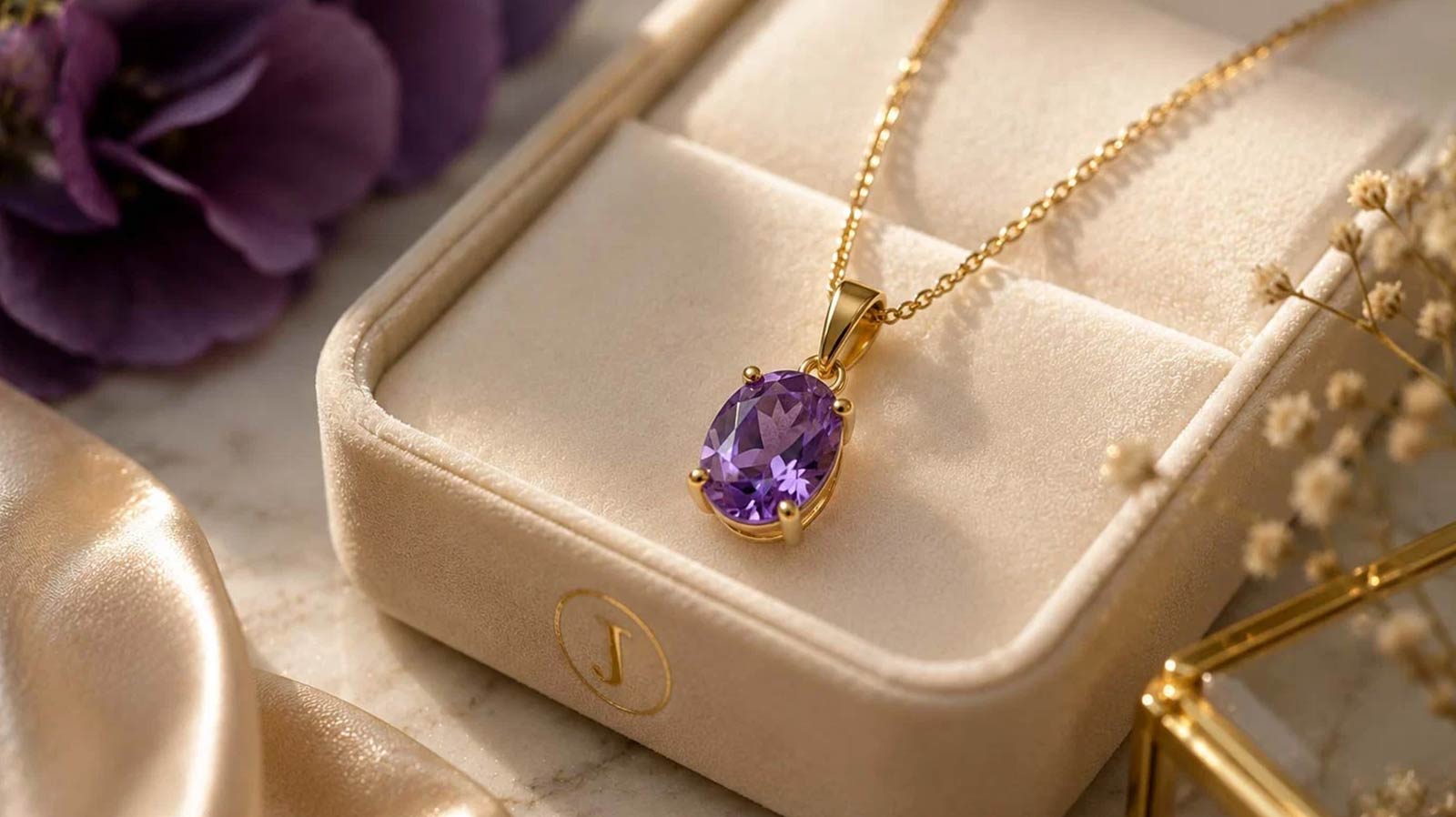
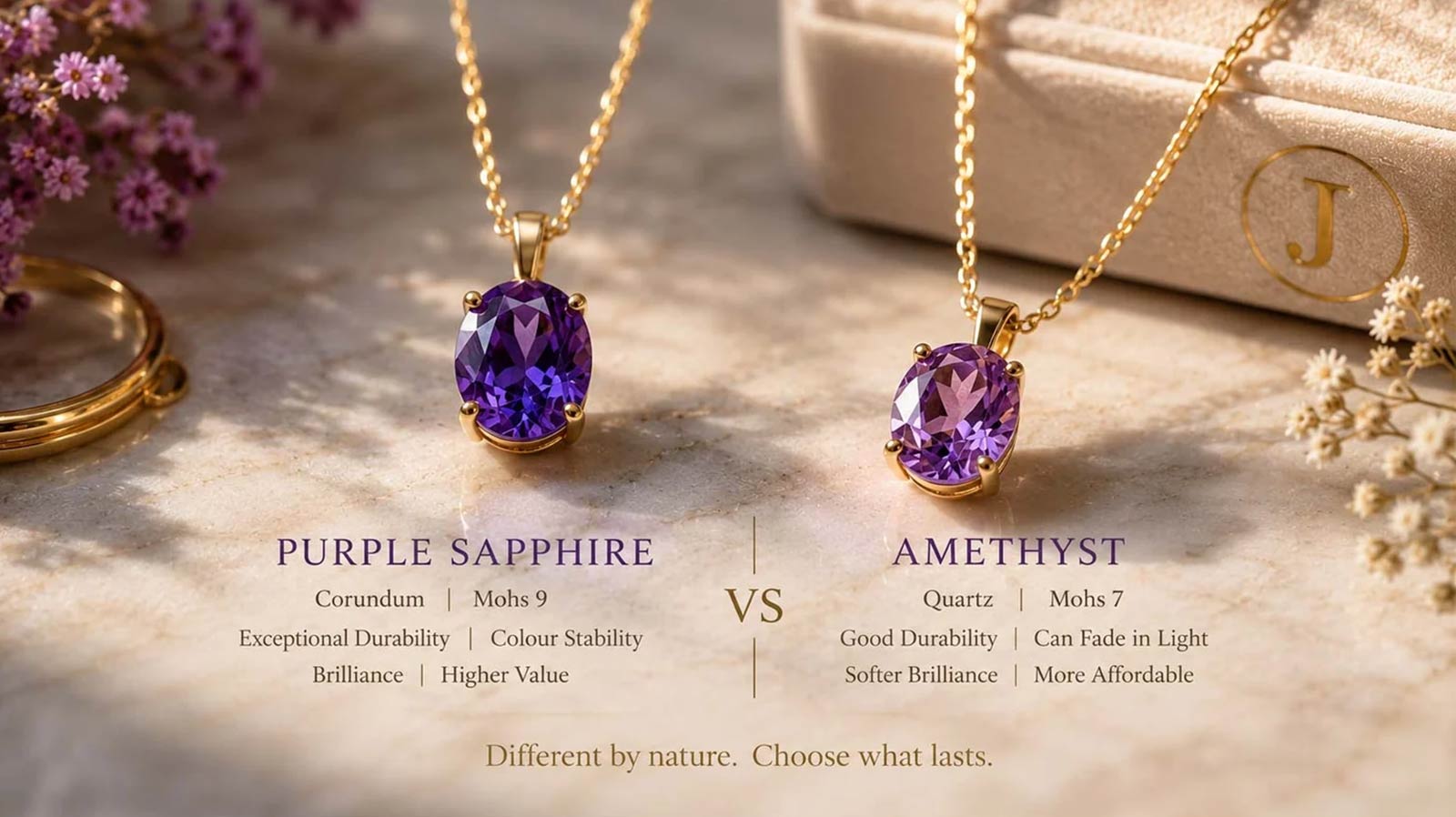
In a photograph, a fine amethyst and a purple sapphire can look like close relatives. On the hand, over years of wear, they behave like strangers. One is the purple variety of quartz, abundant and affordable. The other is corundum, one of the hardest and most prized gem minerals on earth. The visual overlap is exactly why this comparison matters: buyers searching for a purple gemstone necklace or ring are usually choosing between these two stones, often without being told the differences that will decide how the piece looks in ten years.
This guide compares purple sapphire and amethyst honestly across the four things that actually separate them: durability, colour stability, brilliance and value. Neither stone is universally better. But once you know how each one lives, the right choice for your jewellery becomes obvious.
Quick Answer: Purple Sapphire or Amethyst?
- Choose purple sapphire when maximum scratch resistance and frequent long-term wear are the priorities. Its greater hardness helps it retain its polish through years of regular wear, particularly in rings and bracelets. Amethyst remains suitable for regular wear with more attention to scratching and storage.
- Choose amethyst for a larger natural purple gemstone at a much lower price, particularly well suited to pendants, earrings and protected ring settings.
- Lab-grown purple sapphire narrows the traditional price gap, giving buyers access to sapphire durability and colour without the cost of a comparable fine natural sapphire. Amethyst still offers a larger natural purple gemstone at a lower price.
Two Different Minerals, Not Two Shades of the Same Stone
The confusion is understandable, but the geology is unambiguous. Amethyst is quartz, silicon dioxide, coloured purple by iron and natural irradiation. Purple sapphire is corundum, aluminium oxide, coloured by trace elements within one of the hardest crystal structures in nature. They share a colour family, but their mineral composition, hardness, optical performance, availability and price are substantially different.
Durability: Mohs 9 vs Mohs 7 Is a Bigger Gap Than It Sounds
The Mohs scale is not linear, and the two points between amethyst and sapphire represent a genuinely different wearing life. Corundum at 9 is harder than almost everything a necklace or ring will ever touch, which is why sapphire holds its polish and crisp facet edges through years of frequent wear.
Amethyst's 7 comes with a detail most retailers never mention: ordinary household dust and sand are largely quartz, the same hardness as amethyst itself. GIA notes that amethyst has good toughness and suits all jewellery types, but everyday abrasion from dust-laden surfaces and fabrics gradually accumulates micro-scratches on a frequently worn amethyst, softening its polish over time. Sapphire is considerably more resistant to this type of surface abrasion. Neither stone is fragile, and any gemstone can chip from a hard knock at the wrong angle. Over many years of comparable wear, an amethyst may develop more fine scratches and benefit from professional repolishing sooner than a sapphire.
Colour Stability: The Difference Almost Nobody Mentions
This is the quiet decider. GIA documents that some amethyst colour can fade with prolonged exposure to intense light, and that heat should be avoided altogether. An amethyst worn or displayed in strong sunlight over long periods may gradually lose the saturation that made it beautiful, and abrupt temperature changes carry a fracture risk.
Purple sapphire is generally stable under ordinary light and normal wear. Its colour comes from trace elements locked into the corundum crystal itself, and it is not known for fading under everyday conditions, although neither gemstone should be deliberately exposed to extreme heat. For a piece intended to be worn for many years, and especially for one that may eventually be passed on, that stability is a genuine practical advantage worth weighing.
Brilliance: How They Actually Look Side by Side
Corundum's refractive index is meaningfully higher than quartz's, which gives a well-cut purple sapphire the potential for stronger light return than amethyst's softer, glassier lustre, particularly in smaller stones and under evening light. Sapphire can also show a subtle shift between violet and purple from different angles, a property called pleochroism that gives the stone a sense of depth in movement.

When both stones are comparably well cut, purple sapphire often appears crisper and more lively because of its higher refractive index. A well-cut amethyst can still show attractive brilliance, particularly in larger, lighter-toned stones, and cut quality, tone, transparency and lighting all shape how either stone actually performs.
Price and Value Perception: Why One Is Precious and One Is Not
Amethyst was once a genuinely precious gemstone, worn by royalty and priced alongside fine coloured stones. The discovery of vast Brazilian deposits in the nineteenth century changed that permanently: amethyst became abundant, and its price fell to match. Today a large, attractive amethyst costs a fraction of any comparable sapphire, which is precisely its appeal, and there is no shame in it. If the goal is a big purple stone for occasional wear at a modest price, amethyst delivers exactly that.
Purple sapphire sits in a different category. Fine natural purple sapphire is scarce, priced accordingly, and moves further upmarket with size, clarity and untreated colour. That scarcity is why sapphire reads as fine jewellery in a way abundant stones do not: the market has always priced permanence and rarity together.
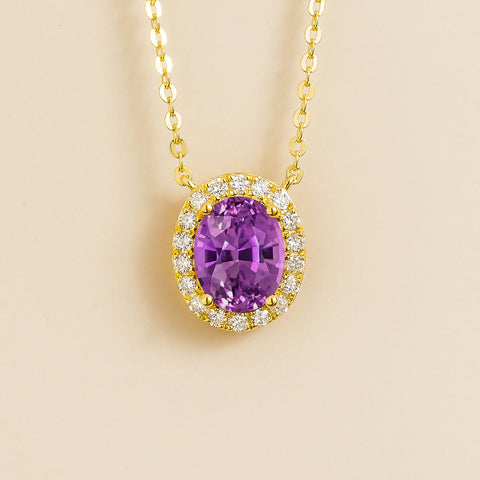
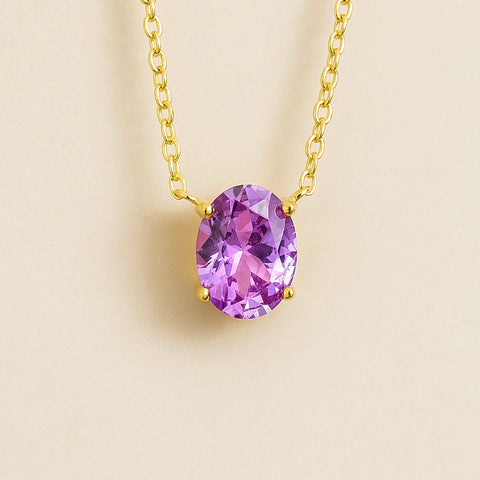
Lab-grown purple sapphire is what narrows the old trade-off. It is real corundum, with essentially the same chemical, physical and optical properties as mined sapphire. At the time of writing, Juvetti's lab-grown purple sapphire necklaces begin at around £220 in gold vermeil and around £380 in solid 9K gold, placing sapphire-based designs within reach of buyers who might previously have assumed sapphire was outside their budget. Browsing a purple sapphire necklace collection with those figures in mind reframes the whole comparison.
Which Stone Suits Fine Jewellery and Long-Term Wear?
Both stones can be used in genuine fine jewellery. Luxury perception is shaped as much by the metal, the design and the quality of the making as by the gemstone's name, and the old precious versus semi-precious labels describe market history rather than beauty. What sapphire brings is greater rarity, a higher refractive index and the hardness to retain its finish through decades of frequent wear, which is why it is usually the stronger option for a lifetime piece worn constantly. A frequently worn purple sapphire necklace earns its place in a collection in a way an occasional piece rarely can, which is why a purple sapphire necklace can become a lasting investment piece in the wardrobe sense: an enduring, frequently worn possession rather than a financial instrument.
Amethyst's strengths point in a different direction: far more visual scale for the money, a naturally formed gemstone, and February birthstone significance. Set well in good metal, it makes genuinely beautiful jewellery, and it is not inherently an occasional or inferior stone. For a piece that will live on the body for years, sapphire's finish retention is the deciding advantage; for generous natural colour and size at an accessible price, amethyst remains an entirely respectable choice.
Care: What Each Stone Asks of You
Both stones clean safely with warm soapy water and a soft brush. Beyond that, their demands diverge. Amethyst should be kept away from prolonged strong light, protected from heat and sudden temperature changes, and stored so that harder stones, including any sapphire or diamond jewellery, cannot scratch it. Purple sapphire asks only for common sense: remove it for sport and heavy work, and have settings checked periodically. Its greater hardness helps it retain facet edges and polish for longer, and its colour is generally stable under normal wearing conditions, although the setting, chain and clasp will still need routine care.
Suitability by Jewellery Type
Because abrasion exposure varies enormously between jewellery types, the fairest comparison is piece by piece rather than stone by stone.
The Verdict: Which Purple Gemstone Should You Buy?
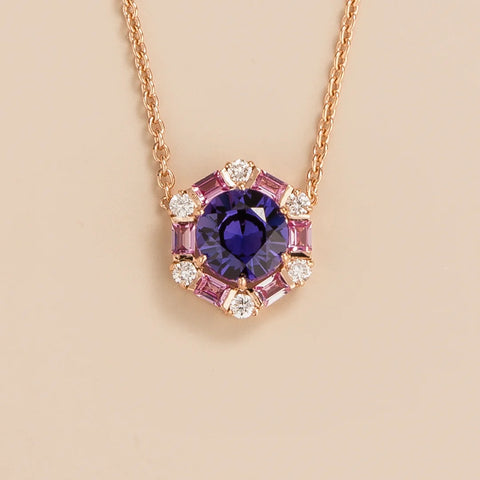
If the sapphire column describes your purchase, the traditional obstacle, price, is the one part of this comparison that has genuinely changed. Lab-grown purple sapphire delivers corundum's hardness, stable colour and brilliance at accessible prices, across necklaces, rings, earrings and bracelets in Juvetti's purple sapphire jewellery collection. And once you have settled on sapphire, the next decisions, shade, clarity, cut, style and metal, are walked through step by step in our purple sapphire necklace buying guide.
Frequently Asked Questions
Is purple sapphire better than amethyst?
Purple sapphire is the stronger choice when maximum scratch resistance, long-term surface retention and frequent wear are the priorities. Amethyst remains a durable jewellery gemstone that offers a larger natural purple stone at a much lower price, particularly well suited to pendants, earrings and protected ring settings. Better depends on the priorities of the purchase.
Can you tell purple sapphire and amethyst apart by eye?
Sometimes, but not reliably. Sapphire tends to look livelier and can shift between violet and purple from different angles, while amethyst has a softer, glassier lustre. Side by side under the same light the difference shows; in isolation, only disclosure and testing settle it, which is why a seller should always state exactly what the stone is.
Does amethyst really fade?
Some amethyst can fade with prolonged exposure to intense light, and heat should be avoided, according to GIA's care guidance. It is not an overnight change, but it is a real consideration for a stone worn or displayed in strong sunlight over years. Purple sapphire's colour is stable in normal wear.
Is amethyst suitable for everyday jewellery?
Yes. GIA describes amethyst as having good toughness and being suitable for all jewellery types. At Mohs 7 it shares the hardness of the quartz in ordinary dust, so frequently worn pieces, especially rings and bracelets, gradually pick up fine scratches and may eventually benefit from repolishing. Pendants and earrings experience far less abrasion and wear very well.
Is a lab-grown purple sapphire a real sapphire?
Yes. Lab-grown sapphire is corundum with essentially the same chemical, physical and optical properties as mined sapphire; the difference is origin, not identity. It is entirely different from a simulant, and it is also not an amethyst substitute: it is the genuine, harder mineral at an accessible price.
Which is more expensive, purple sapphire or amethyst?
Natural purple sapphire costs considerably more than amethyst at every quality level, because fine corundum is scarce and quartz is abundant. Lab-grown purple sapphire narrows the gap substantially: at the time of writing, Juvetti's lab-grown purple sapphire pendants start from around £220 in gold vermeil.
Final Thoughts
Amethyst and purple sapphire answer different questions. One offers generous natural purple at a gentle price and suits most jewellery with sensible care. The other offers hardness, stable colour and lively brilliance for jewellery worn constantly and kept for good. If that second description matches what you are buying, sapphire's case is strong, and it no longer costs what it once did. When you are ready to look at real stones rather than descriptions, compare purple sapphire necklaces side by side and judge the colour and life of the stones for yourself.