D VVS1 Lab Diamonds: What the Grade Means and What It Costs
Two letters and two characters, and they decide a surprising amount about what you are holding.
The short version: D is the highest colour grade a diamond can receive, and VVS1 is the third highest of eleven clarity grades. Together they describe a stone with no detectable body colour and inclusions that a trained grader struggles to find at ten times magnification. That is about as close to the top of both scales as you can get without paying for flawless.
The more useful question is what that pairing changes in practice, and where it quietly stops mattering. The eight IGI graded stones chosen for this guide, all of them from our lab grown diamond collection, use the same colour and clarity scales as natural diamonds, so those grades are directly comparable. If you are choosing a stone for a piece rather than reading about grading for its own sake, the ring collection shows how these stones look once they are set.
This guide covers whether the difference is visible, where the grade earns its keep, what the certificate actually certifies, and what D VVS1 costs.
The short answer, before the detail
If you want the decision in five lines:
- D VVS1 is the top of the colour scale paired with near the top of the clarity scale. It is a genuinely high specification, not a marketing phrase.
- Neither grade describes something you can see unaided. Colour is judged against master stones under controlled lighting, and VVS inclusions are found under magnification.
- This guide does not establish that VVS1 produces a visible advantage in any cut. An openly cut stone is simply easier to inspect.
- Which cuts show more of the interior is the business of the dedicated shape guides, so this page stays on the grade itself.
- At Juvetti the eight D VVS1 stones in this guide run from £250 to £830, so the highest colour grade, paired with the third highest clarity grade, sits in that range across these eight stones.
Where the two grades sit on their scales:
- D is the first of the 23 colour grades, at the colourless end of the D to Z scale.
- VVS1 is the third of the 11 clarity grades, behind Flawless and Internally Flawless.
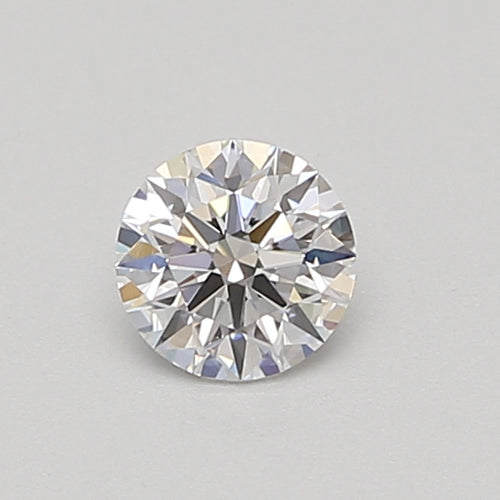
Everything below is the reasoning behind those five lines, starting with the 0.44 carat round that sets the floor on price.
The two grades, each in one paragraph
D is the top of the GIA D to Z colour scale, at the colourless end of the colourless band. How that scale works, and whether D is worth paying for against E and F, is the business of our guide Should You Buy a D Colour Lab Diamond?, so this page will not re-explain it.
VVS1 is the third of the eleven GIA clarity grades, behind only Flawless and Internally Flawless, with inclusions so slight that a skilled grader struggles to find them at ten times magnification. The clarity grade on its own, including what VVS1 costs across carat sizes, belongs to our VVS1 lab diamonds guide.
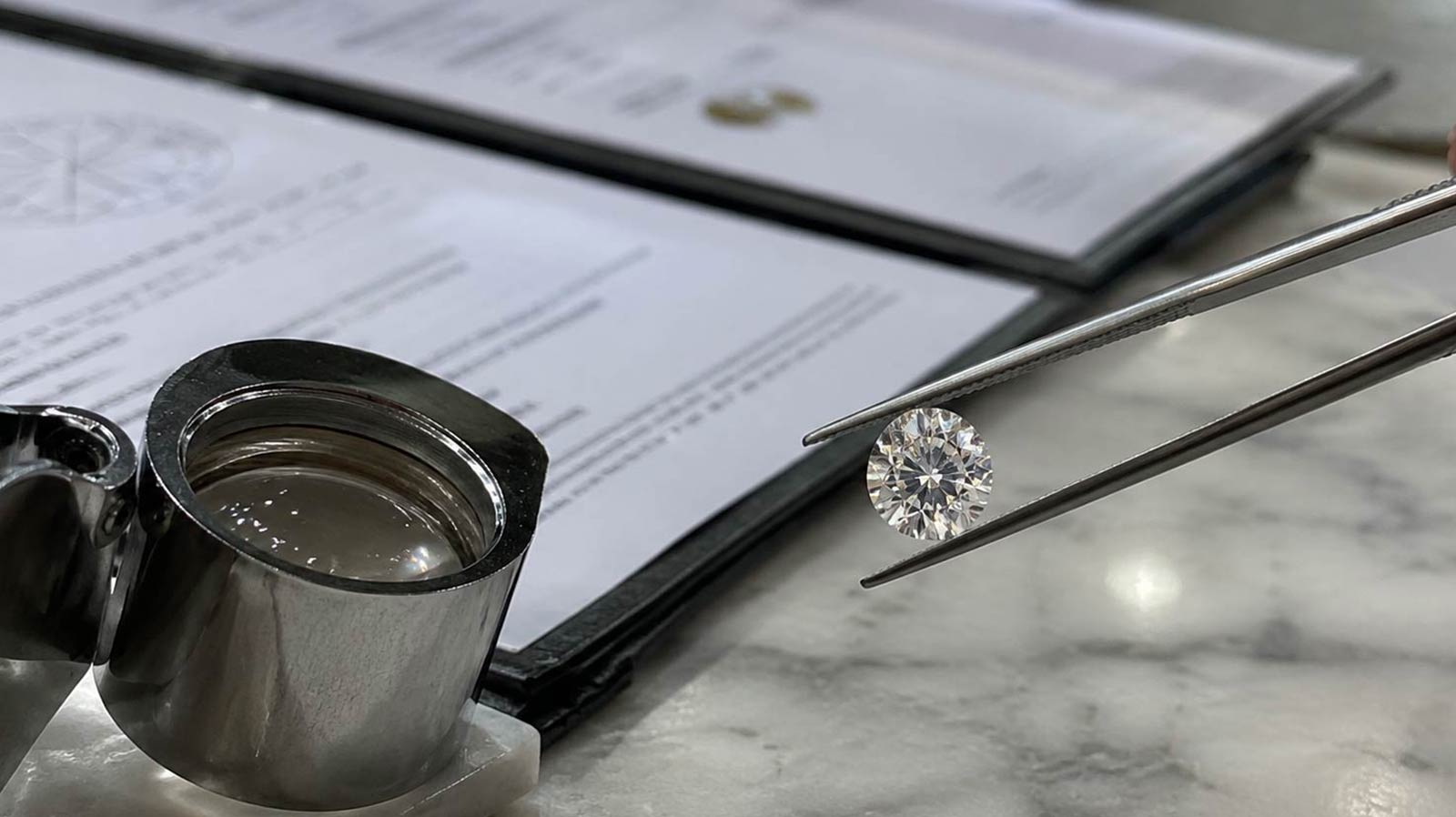
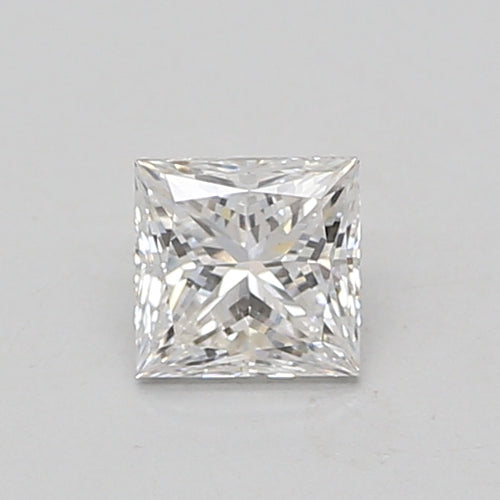
What this page keeps for itself is the pairing. Neither grade describes something you can see unaided. Colour is settled by comparison against master stones under controlled lighting, and VVS inclusions are found with a loupe, not with the naked eye. D VVS1 is therefore a specification about certainty rather than appearance, and the rest of this guide is about where that certainty is worth paying for. If you want to look for yourself, the 0.71 carat princess below has a wide open table, which is where any tint or inclusion would show first.
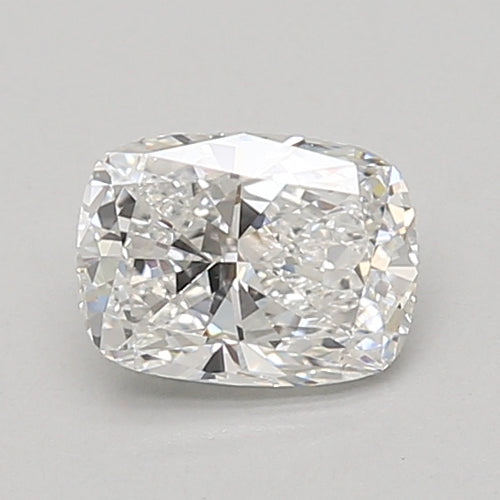
The 0.85 carat cushion below sits between the two cutting families, which makes it a useful stone to hold in mind while reading the next section.
Where the grade earns its keep, and where it does not
This is the part most buyers get wrong, in both directions. A diamond's cut decides how much of its interior the eye can inspect, and an openly cut stone is simply easier to examine, by you or by anyone with a loupe. This guide does not establish that VVS1 produces a visible advantage in one cut rather than another. Where each cut falls on that spectrum is the business of its own shape guide, so this page will not rank them.
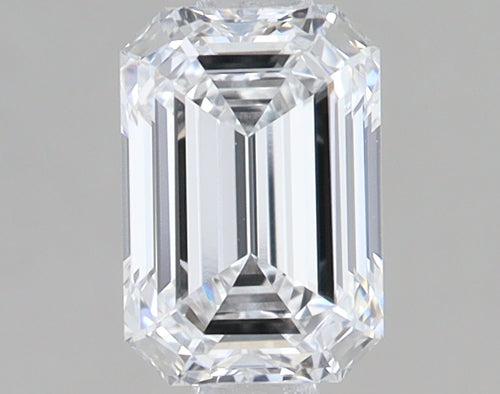
What the pairing buys, in any cut, is certainty rather than appearance, and that is a perfectly reasonable thing to buy provided you know that is what you are buying. The 1.08 carat emerald cut below is one of the seven D VVS1 shapes represented in this selection.
What the IGI report certifies
Every D VVS1 stone in this guide carries an IGI report, and it is worth knowing what that document does and does not say.
IGI grades laboratory grown diamonds on the same colour and clarity scales used for natural diamonds. Its lab grown reports carry the same colour range, from colourless at D through to light colour at Z, and the same clarity range from internally flawless down to included. So a D VVS1 grade means the same thing whichever way the stone was made, which is the whole point of using one scale.
The report also states the origin rather than leaving it to be inferred, and IGI's reports record the growth process where it is asked for. That matters commercially as well as ethically: terminology in this trade is standardised, and the international standard on consumer confidence in the diamond industry, ISO 18323, "specifies a set of permitted descriptors for the diamond industry" covering diamonds, treated diamonds, synthetic diamonds, composites and imitations. Clear naming is a standard, not a courtesy.
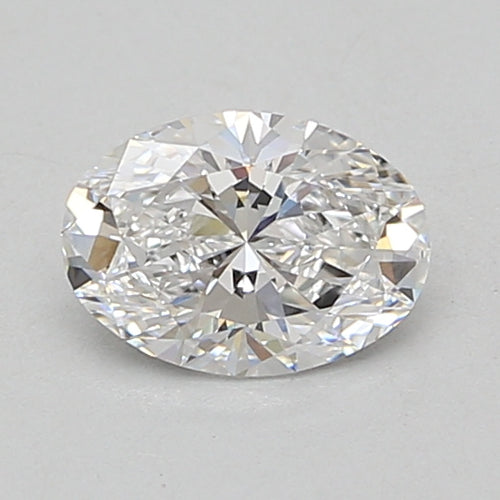
One practical feature is worth asking about. IGI offers laser inscription of the report number onto the girdle of the stone, which it describes as "permitting fast identification of a gemstone under magnification". If you ever want to confirm that the stone in a setting is the stone on the paperwork, that inscription is how it is done in seconds rather than by argument. Every stone in this guide has an IGI report number recorded against it, including the 0.92 carat oval below. Whether a particular stone has also been laser inscribed is worth asking us before you buy, since that is a separate step. How the certificates themselves compare across laboratories is covered in our guide to lab grown diamond certifications.
What D VVS1 costs
Prices in this section are the eight stones selected for this guide, read from their pages on 18 August 2026. They describe our current stock rather than the UK market.
Across those eight, D VVS1 runs from £250 for a 0.44 carat round to £830 for a 1.57 carat marquise. In between, the six stones between 0.71 and 1.1 carats sit in a narrow band, between £440 and £510.
Two things are worth reading carefully in those numbers.
The spread reflects several things at once. A published price carries carat, shape, cut quality and how much of the rough survives cutting, and rough behaves differently for a marquise than for a round. Carat is the most visible part of that, though it is not the whole of it.
Carat does not scale in a straight line. The 1.57 carat marquise is roughly three and a half times the weight of the 0.44 carat round and roughly three and a third times the price, which tracks closely. The 1.1 carat marquise at £510 is two and a half times the weight of the round for roughly twice the price. Two stones from the same shape family, two different relationships, which is why we would rather show you the stones than quote you a formula.
If the size question is the one you are actually weighing, our 1 carat lab diamonds guide covers how that weight reads on the hand once it is set.
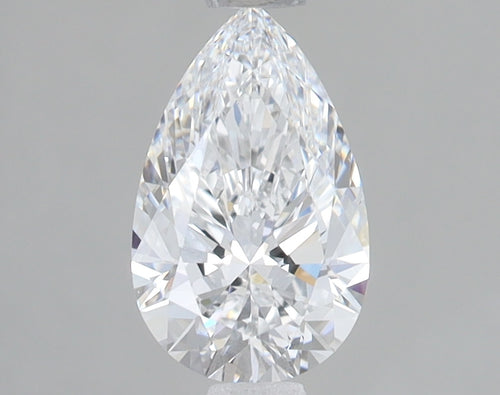
The 1.08 carat pear below sits in the middle of that band and is a fair example of what the money buys at this size. What all of it means is that the highest colour grade, paired with the third highest clarity grade, sits between £250 and £830 across these eight stones, which is the part worth noticing. We have not priced comparable E or F stones for this guide, so we would rather not put a figure on the D premium here. If that comparison would help you decide, ask us and we will pull like for like from current stock and show you both.
The setting, and where the metal does real work
Once the grade and the shape are settled, the setting is the decision that changes how the stone reads day to day.
Shape is its own decision, and five of the seven cuts in this selection have dedicated guides in this cluster. Choosing between them is that guide's job rather than this one. Here the question is what happens after the shape is chosen.
Setting second, and here the metal does real work. A colourless stone in white gold settings keeps the whole piece in one visual register, so nothing competes with the stone. In yellow gold, the warmth of the metal can reflect very slightly into the stone from below, which is worth knowing if the reason you chose D was to have no colour visible at all. It is a small effect and many people prefer the contrast, but it deserves saying out loud rather than being discovered afterwards.
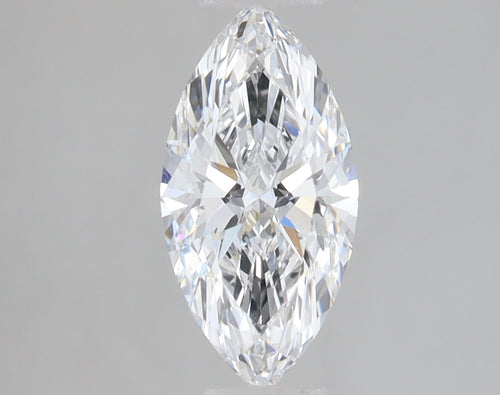
For shape-specific setting guidance, see our marquise lab diamonds guide. The 1.1 carat marquise below is the next stone in this selection.
Where D VVS1 earns its place
D VVS1 may suit buyers who value the certainty of the specification itself. That is a real reason: buying the highest specification can be reasonable when certainty matters more to you than a visible difference. There is also an honest case for not buying it at all, and it is not ours to make twice: our F colour lab diamonds guide makes it properly, including when spending less on colour and more on cut or carat is the better decision.
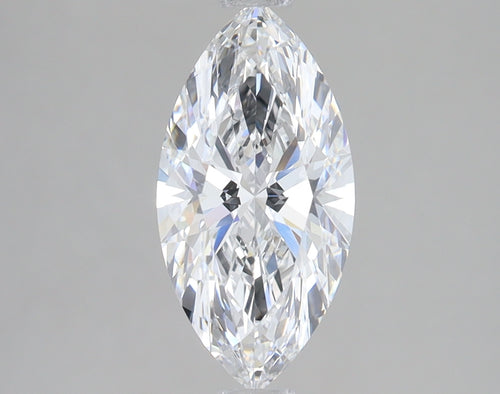
The 1.57 carat marquise below is the largest stone in this selection and the most expensive by a clear margin.
Frequently Asked Questions
Is a D VVS1 lab diamond worth the extra cost?
It depends on how much the certainty of the specification matters to you. This guide does not compare like for like E or F stones, so it puts no figure on the D premium. If that comparison would decide it for you, ask us to pull comparable stones from current stock and look at them together.
Can you see the difference between D and F colour?
Not reliably, and not in the way the scale might suggest. GIA grades colour by comparing a stone with master stones of known grade under controlled lighting, so the result is a comparison rather than a description of how the diamond looks on its own. D, E and F all sit in the colourless band. What D gives you is the certainty of being at the top of the scale, which is a different thing from a visible improvement.
Is an IGI report for a lab grown diamond the same as one for a natural diamond?
It uses the same colour and clarity scales, so the grades mean the same thing, and it states clearly that the stone is laboratory grown rather than leaving that to be inferred. IGI can also laser inscribe the report number onto the girdle, which lets you confirm later that the stone in your setting is the stone on the paperwork. Ask for the report number when you buy, and keep it with the piece.
D VVS1 describes the top of the colour scale paired with the third grade on an eleven grade clarity scale. Neither is something you see unaided, and both are things a grader establishes with reference stones and a loupe.
That is not an argument against the grade. It is an argument for knowing what you are buying it for: certainty, or simply the pleasure of owning the best grade on the report. Both can be good reasons, depending on what you value in the stone.
The collection below shows the current D VVS1 stones with their IGI report numbers, and our team will be glad to talk through which shape suits the setting you have in mind.