Are Purple Sapphire Necklaces Expensive? UK Price Guide
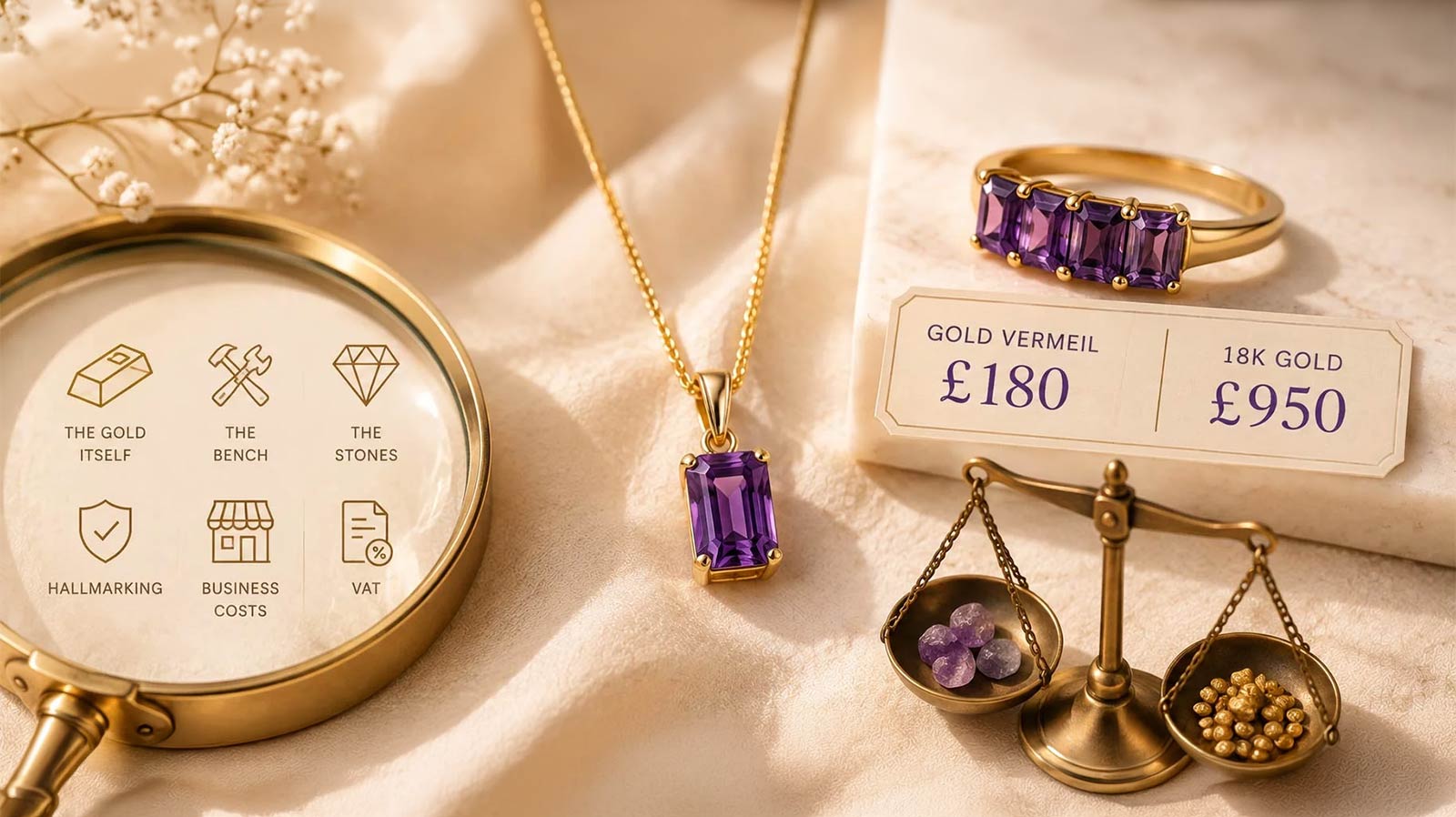
Short answer: no, not usually. Across the Juvetti pieces reviewed for this guide, a purple sapphire pendant necklace runs from about £220 to £400 in gold vermeil and from about £750 to £2,000 in solid 18K gold, depending on the stone and the setting. Those are our own published prices rather than a survey of the UK market, and a large tennis necklace is a different conversation we will come to.
If you have been comparing listings and finding numbers that make no sense next to one another, you are not imagining it. Two purple sapphire necklaces can look almost identical on screen and sit hundreds of pounds apart. Across the pieces compared in this guide, four things account for most of that gap: the size of the stone, whether it is lab-grown or mined, how much diamond work surrounds it, and which metal you choose.
A necklace like this is usually bought for someone, or for a moment worth marking, so it helps to know what the number is made of before you decide. This page puts real published UK prices against each of those four things, using pieces from our own purple sapphire collection so you can open any figure and check it. If you already know your budget and want help choosing a shape and a length instead, our purple sapphire necklace buying guide covers that side properly, and this one stays on price.
What a purple sapphire necklace actually costs in the UK
Here is the range across the pieces reviewed here, taken from published prices rather than estimates.
- Simple solitaire pendant, around 1.5 carats: from about £250 in gold vermeil, around £750 in 18K gold.
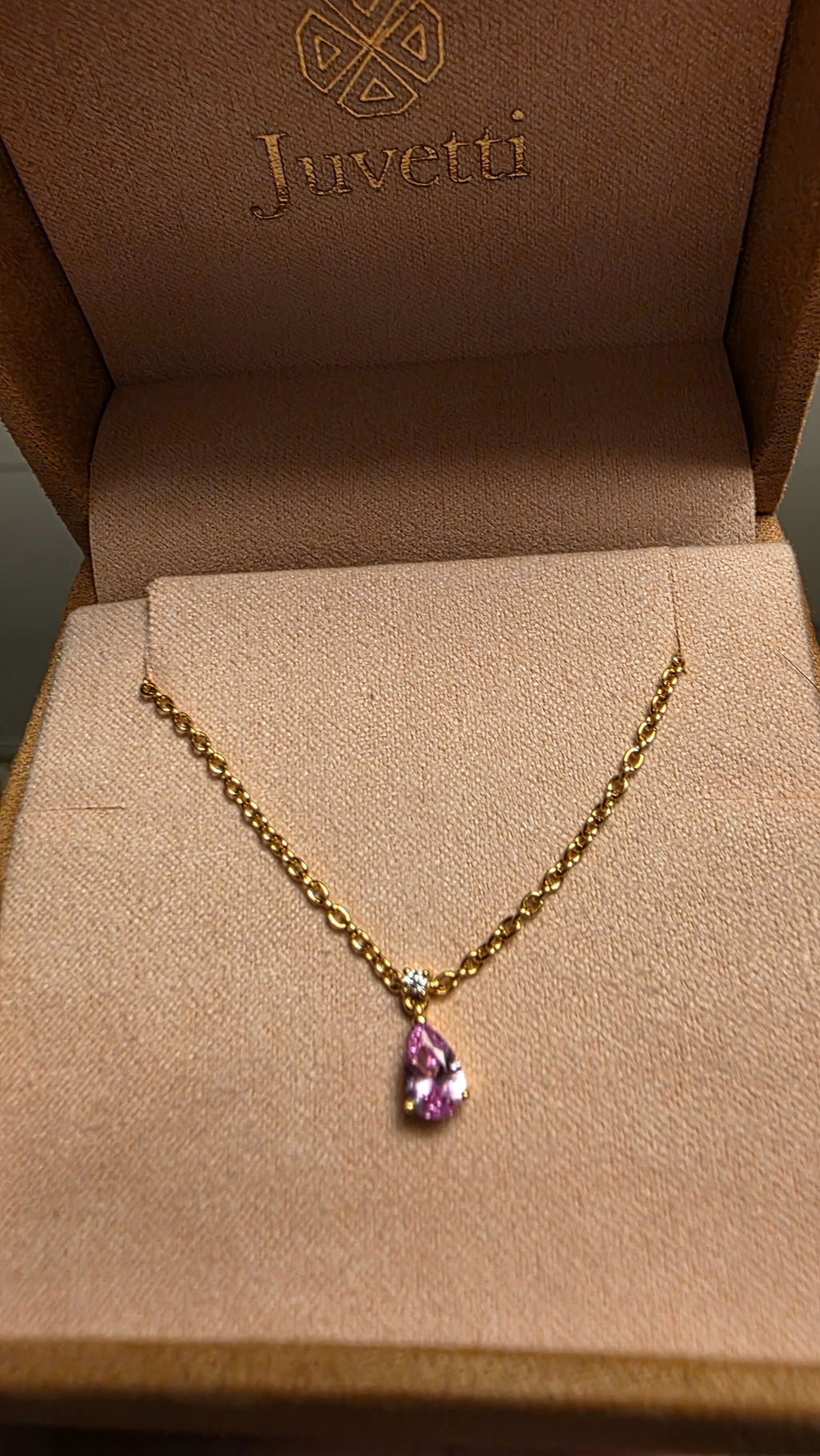
- Small pear or round drop with a diamond accent: from about £220 in vermeil, around £890 in 18K.
- Larger solitaire, 2 to 4 carats: roughly £370 to £400 in vermeil, £1,160 to £1,360 in 18K.
- Halo or multi-stone design with meaningful diamond content: £420 to £650 in vermeil, £1,430 to £2,000 in 18K.
- Tennis necklace, around 18 carats of sapphire: £1,380 in vermeil, rising to £7,740 in 18K.
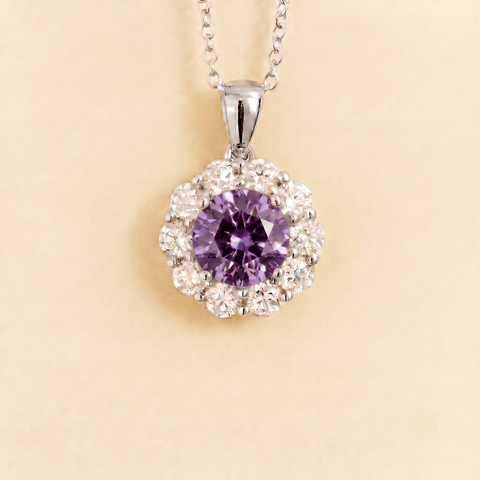
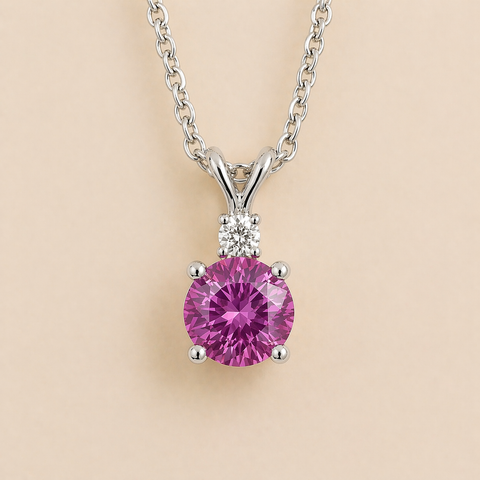
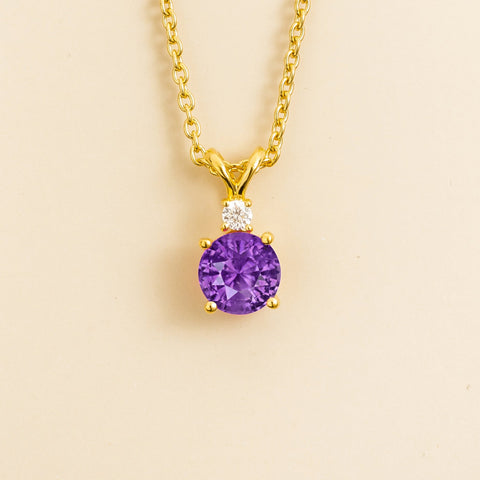
Those bands are what a purple sapphire necklace price looks like across our own range, and most people shopping for a first one land in the first three. The Ovo below is the simplest solitaire in the range, carrying roughly a 1.55 carat stone with nothing else added to the price.
Price by carat: what stone size really does to the number
Carat weight moves the price, but far less sharply than most people expect, and this is the single biggest reason purple sapphire necklaces feel affordable.
The clearest way to see it is one design in two sizes, because everything else is held still. Our Pisa pear drop pendant is offered in a small version carrying roughly 0.75 carats, and a medium carrying roughly 2.22 carats. Same design, same setting, same diamond accent, same workshop. Every piece in our necklace collection lists its stone weight and metal the same way, so this comparison is one you can repeat on any two pieces.
- Small, 0.75 carats: £220 in gold vermeil, £890 in 18K gold.
- Medium, 2.22 carats: £370 in gold vermeil, £1,160 in 18K gold.
Which is worth pausing on. Roughly three times the carat weight costs about 68 percent more in vermeil, and about 30 percent more in 18K gold. The stone is not what you are mostly paying for.
With mined stones the curve behaves very differently. GIA notes that size makes more of a difference in the price of fine-quality sapphire, because large fine material is genuinely scarce, so price per carat climbs steeply rather than gently. A 4 carat mined purple sapphire of good colour is a rare object. A 4 carat lab-grown one is a stock size.
Where the carat curve flattens out completely
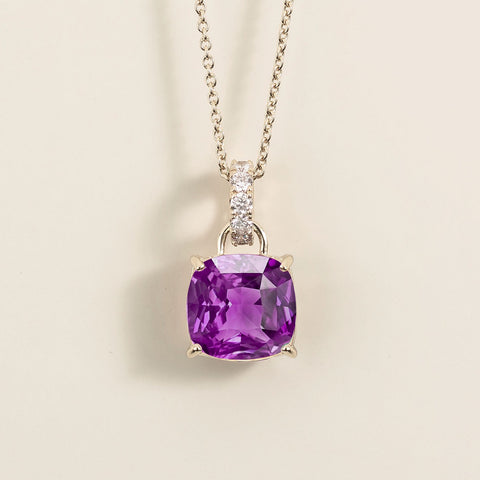
At the top of the single-stone range the effect almost disappears. Our Thamani solitaire carries a 4 carat emerald-cut purple sapphire and opens at £400 in gold vermeil, reaching £1,360 in 18K gold. That is a substantial stone for a price a mined equivalent could not approach.
So if you are choosing between a modest stone and a generous one, the question is really about what suits the person wearing it, not about what the budget will bear. A 4 carat emerald cut reads as a statement piece. A 1.5 carat oval sits quietly under a collar. Neither decision costs what you would assume.
Lab-grown versus natural purple sapphire pricing
This is where the biggest price difference in the whole subject sits, and it is worth being precise about what the two words mean.
A laboratory-grown purple sapphire is a purple sapphire. Lab-cultured gemstones share the same chemical structure, optical properties and physical features as mined stones, and they are not simulants. What differs is where the crystal formed. A simulant is something else entirely: cubic zirconia or glass, a different material that resembles the colour without being the stone, and it should always be described as what it is.
The clearest published statement of that principle is American rather than British. The United States rules on jewellery description require that a stone name may not be used for a laboratory-grown stone unless it is immediately preceded with equal conspicuousness by the word "laboratory-grown" or "laboratory-created" or a phrase of like meaning. It has no force in the UK, but it puts the standard plainly, and it is a fair thing to expect of any seller anywhere: if a listing does not say which one you are looking at, that is simply the first thing to ask.
Why the price gap is so wide. A mined purple sapphire of good, even colour in a large clean size is genuinely uncommon, and GIA observes that fancy sapphires are generally less available than blue ones, and some colours are scarce, especially at the extremes of size. Scarcity is an important part of a mined stone's premium, though it sits alongside colour, clarity, whether the stone has been treated, its origin, its certification and simple demand. A cultivated stone removes the scarcity without removing the sapphire, so you are paying for the material and the craft rather than for the luck of a deposit.
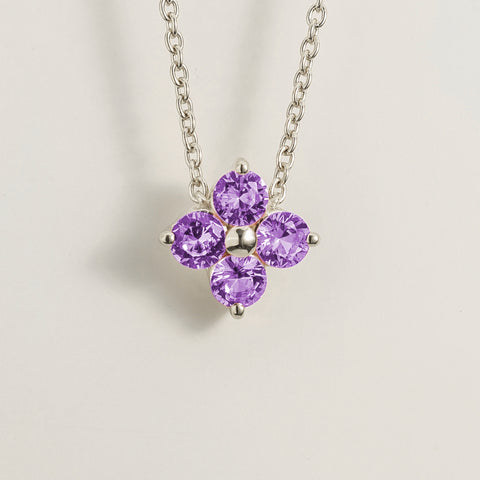
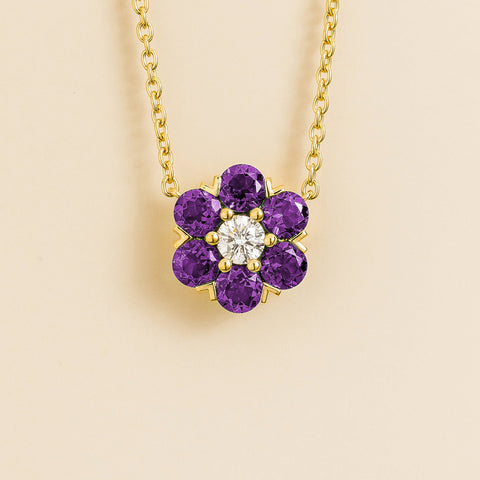
.Every purple sapphire on this page is lab-grown, which is why a 4 carat centre stone can sit at £400 rather than at several thousand. The Clover below sets four of them into a single pendant, which is the kind of piece that arithmetic makes possible. If you want the difference between a purple sapphire and its most common lookalike explained properly, purple sapphire compared with amethyst does that in detail.
Why purple sapphires often cost less than blue
Purple and blue sapphires are the same mineral. The colour comes from trace elements in the crystal rather than from a different stone, so the durability you get is the same, and a purple sapphire wears just as well day to day as a blue one. Why, then, does blue command more?
Blue is the sapphire people ask for. Centuries of engagement rings, royal jewellery and auction records have concentrated demand on one colour. Every other hue sits in the category the trade calls fancy sapphire, which GIA defines as sapphires that are not blue and may be any colour except red. Fancy colours are priced by a smaller pool of buyers, and a smaller pool means softer prices even when the material is equally fine.
Two consequences follow, and both work in your favour:
- You are not paying a name premium. With purple, more of the price goes into the size of the stone and the quality of the setting rather than into the colour's reputation.
- The comparison is not about quality. A purple sapphire is not a lesser blue sapphire. It is the same species in a colour fewer people have been taught to want.
There is one exception worth knowing. Padparadscha, the pink-orange sapphire, is the fancy colour that does carry a premium, and GIA notes it typically has a value much higher than many other fancy sapphires. Purple is not in that bracket, which is good news if purple is what you want. If you are still weighing the two colours, our blue sapphire collection sits alongside the purple one for a direct look.
The metal moves the price more than the stone does
Here is the part most price guides leave out. On almost every piece on this page, choosing the metal changes the total more than choosing the stone.
Take the Thamani solitaire again, with the same core design and the same stone throughout:
- Gold vermeil: £400
- 9K gold: £690
- 14K gold: £1,000
- 18K gold: £1,360
That is a £960 difference on one design, with the stone never changing. Gold vermeil is a gold layer over a silver article rather than solid gold, which is why it opens the range. Which step is the biggest depends on how you measure it: vermeil to 9K is the largest proportional increase, at roughly 72 percent, while 14K to 18K is the largest increase in pounds, at £360.
So when you see two purple sapphire necklaces priced far apart, it is worth checking the metal before assuming the stones differ. If you are deciding between the solid gold options, how 9K and 14K compare in everyday wear is the practical read, and the differences between white, yellow and rose gold covers colour, which changes the look without changing the fineness.
What else is inside the price
Beyond the stone and the metal, four things quietly move the number.
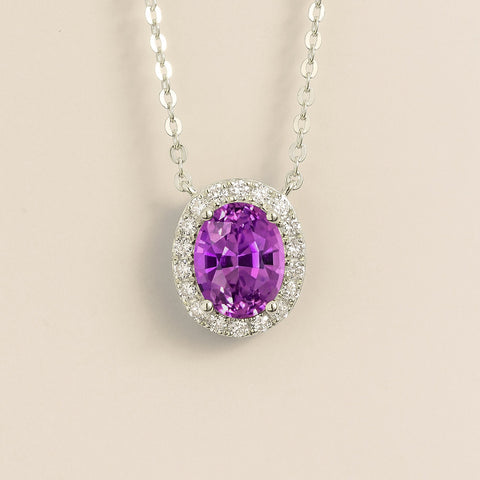
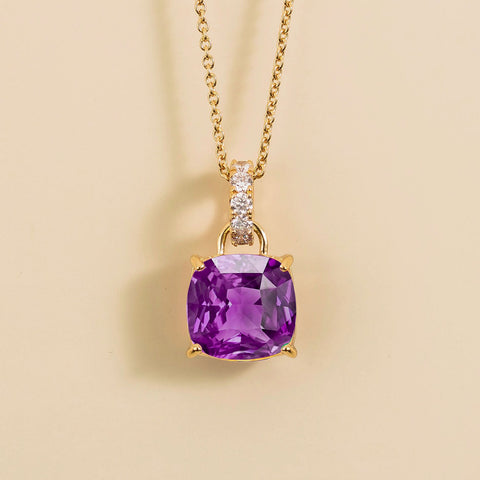
Diamond content. This is usually the largest hidden difference. Our Cinq flower pendant carries about 1.50 carats of purple sapphire plus a 0.25 carat diamond centre and opens at £420. The Floret halo carries a rather larger 2.2 carat sapphire, but it also adds roughly 1.0 carat of diamonds around it, and opens at £650, reaching £2,000 in 18K. The additional diamonds and the more complex setting they require help explain the £230 difference, though the published prices do not isolate how much each contributes.
Setting labour. Every small stone in a halo needs its own seat cut and its own claws closed, one at a time. A solitaire is one setting operation. A halo can be twenty.
Hallmarking. Under section 1 of the Hallmarking Act 1973 a gold article sold in the course of a business must be hallmarked unless an exemption applies, and the gold exemption weight is 1.0 gram. A vermeil piece is a silver article, so it is never gold-hallmarked however thick the gold layer. Either way this is a real cost, and a small one against the totals above.
VAT. The standard rate of UK VAT is 20 percent, applied to the price before tax, so roughly one sixth of a UK shelf price is tax rather than jewellery. It is always worth confirming whether a quoted figure includes it.
The Floret halo below carries every one of those lines at once.
When a purple sapphire necklace does get expensive
There is one design that leaves the usual range behind, and it is worth naming so the numbers do not surprise you.
A tennis necklace sets stones continuously around the whole length rather than in one pendant. Our Salto oval tennis necklace carries roughly 18 carats of purple sapphire and opens at £1,380 in gold vermeil, reaching £7,740 in 18K gold. That is somewhere between ten and twenty times the stone content of a pendant on this page, with every stone individually set.
So if a piece seems expensive for a purple sapphire necklace, count the stones before anything else. That is almost always where the money is.
How to tell whether a price is fair
Four questions settle it, and any good jeweller should be glad to answer them.
- Is the stone lab-grown or mined, and what is its carat weight? Both facts together. A price only means something once you know which stone you are being quoted for, so this is the one to ask first.
- Which metal is this, and is it solid gold or vermeil? This moves the total more than the stone does, so it is the fastest way to explain a gap between two listings.
- How much diamond is in the piece? A halo can add more to the price than the centre stone.
- Does the quoted figure include VAT and UK delivery? A quick yes or no avoids a surprise at checkout.
Four clear answers let you compare any two prices properly, wherever you are shopping. On our own pieces the stone type, the carat weight and the metal are printed on every product page, so the answers are there before you ask. If you are putting a set together rather than buying one piece, the purple sapphire earrings follow the same pricing logic.

Frequently Asked Questions
How much is a purple sapphire necklace in the UK?
Most purple sapphire pendant necklaces sit between about £220 and £650 in gold vermeil, and between about £750 and £2,000 in solid 18K gold, depending on the stone size and how much diamond work surrounds it. Larger designs such as tennis necklaces begin higher, at around £1,380. The metal you choose usually moves the total more than the stone does.
Are purple sapphires cheaper than blue sapphires?
Usually, yes. Purple sapphire is the same mineral as blue sapphire, with the same durability, but blue attracts far more demand and carries a name premium as a result. Purple sits in the fancy sapphire category, which is priced by a smaller pool of buyers. You are getting the same species without paying for the colour's reputation.
Is a lab-grown purple sapphire a real sapphire?
Yes. Lab-cultured gemstones share the same chemical structure, optical properties and physical features as mined stones, and they are not simulants. What differs is where the crystal formed. That is quite different from a simulant such as cubic zirconia, which is another material altogether, and a good jeweller will tell you which one you are looking at without being asked.
So, are purple sapphire necklaces expensive? For what you get, no. A generous, genuinely durable coloured stone in a well-made setting starts in the low hundreds, and the biggest lever on the final number is the metal rather than the sapphire.
That leaves you free to choose on the part that actually matters: the shape of the stone, the length that suits the neckline, and the colour of gold the person wearing it already loves.
Explore the purple sapphire collection and compare the sizes and settings side by side. If you would like a hand deciding between two pieces, or working out which metal suits how often it will be worn, our team will be happy to talk it through with you.