
How to Care for and Maintain Your Lab Grown Diamond Necklace
"A diamond is forever"-but only if you care for it properly. This iconic advertising slogan for De Beers captures a beautiful truth: with the right attention, your lab grown diamond necklace can sparkle brilliantly for years to come. Yet here's what the slogan doesn't tell you: whilst the diamond itself is nearly indestructible, the delicate setting and chain that showcase it require thoughtful care.
Your lab grown diamond necklace is more than a fashion piece. It can be a lasting symbol of elegance, intention, and personal story. Perhaps it marked a milestone, celebrated an achievement, or simply became your signature piece that makes every outfit feel complete.
Lab-grown diamonds possess the same durability and brilliance as mined ones, but necklaces face unique challenges. Chains tangle, clasps weaken, and pendants encounter more movement than rings or earrings ever do.
This guide offers professional, practical advice to keep your lab grown diamond necklace sparkling brilliantly for decades, because jewellery this beautiful should shine as brightly on your 50th anniversary as it did the day you first clasped it around your neck.
Why Proper Care Matters for Lab Grown Diamond Necklaces
Understanding why your lab grown diamond necklace requires specific care helps you protect it more effectively. These pieces combine remarkable durability with delicate structural elements that benefit from mindful maintenance.
Diamonds Are Durable, but Settings Are Not Indestructible
Lab grown diamonds rank 10 on the Mohs hardness scale, identical to mined diamonds, making them the hardest naturally occurring substance on Earth. Your diamond itself can withstand remarkable wear, resisting scratches and maintaining its brilliant sparkle indefinitely. However, the setting that holds your diamond tells a different story. Prongs can bend, bezels can loosen, and delicate metalwork can suffer damage from impacts or pressure. According to the Gemological Institute of America, even the most durable gemstones require protective settings, and those settings need regular inspection and care.
Protecting the Chain and Pendant Structure
Necklaces face unique vulnerabilities that other jewellery pieces don't encounter. Chains experience constant movement, friction, and stress at connection points. Clasps open and close repeatedly, gradually weakening over time. Pendants swing with your movement, creating additional pressure on jump rings and bails. A weakened link or faulty clasp might seem minor until you lose a cherished pendant. Preventive care protects the structural integrity of your entire necklace, not just the diamond itself.
Maintaining Sparkle for Generations
Lab grown diamonds possess exceptional light performance and that captivating sparkle that draws every eye. Yet daily exposure to body oils, lotions, perfumes, and environmental residue gradually builds a film on your diamond's surface, diminishing its brilliance. This buildup acts like a veil, blocking light from entering and reflecting through the diamond's carefully cut facets. Regular cleaning restores that magnificent sparkle, ensuring your necklace continues catching the light beautifully.
Daily Habits to Protect Your Necklace
The foundation of excellent jewellery maintenance starts with simple daily habits. Small protective measures prevent the most common damage and keep your lab grown diamond necklace looking its absolute finest.
When to Remove Your Necklace
Think of removing your necklace as an act of love towards your jewellery. Take it off before showering-soap residue, shampoo, and hard water minerals build up on diamonds and dull their sparkle. Remove it before exercise, as sweat contains salts and acids, plus gym equipment poses impact risks. Swimming demands necklace removal, too. Chlorine in pools and salt in ocean water damage precious metals and can weaken settings over time. Even sleeping in your necklace risks tangling, chain stress, or accidental snagging on bedding.
Safe Storage Practices
Proper storage prevents frustrating tangles and potential damage. Store your lab grown diamond necklace in a fabric-lined jewellery box with individual compartments, or keep it in a soft pouch to prevent scratches and tangling. Lay necklaces flat rather than hanging them, as hanging can stress chains and clasps over time. Never toss multiple necklaces together in a drawer; chains tangle with maddening ease, and untangling them can stress links and clasps. Consider fastening the clasp before storage to minimise tangling risk.
Avoiding Perfumes, Lotions, and Chemicals
Adopt the "last on, first off" approach with your necklace. Apply perfume, body lotion, hairspray, and makeup before putting on your jewellery. These products contain chemicals that accumulate on diamond surfaces and can damage metal finishes over time. By making your necklace the finishing touch to your daily routine-and the first piece you remove when returning home-you minimise exposure to substances that compromise its beauty.
Cleaning Your Lab Grown Diamond Necklace at Home
Regular at-home cleaning represents one of the most effective ways to maintain diamond jewellery shine between professional services. The process is straightforward, gentle, and remarkably effective.
Gentle Soap and Warm Water Method
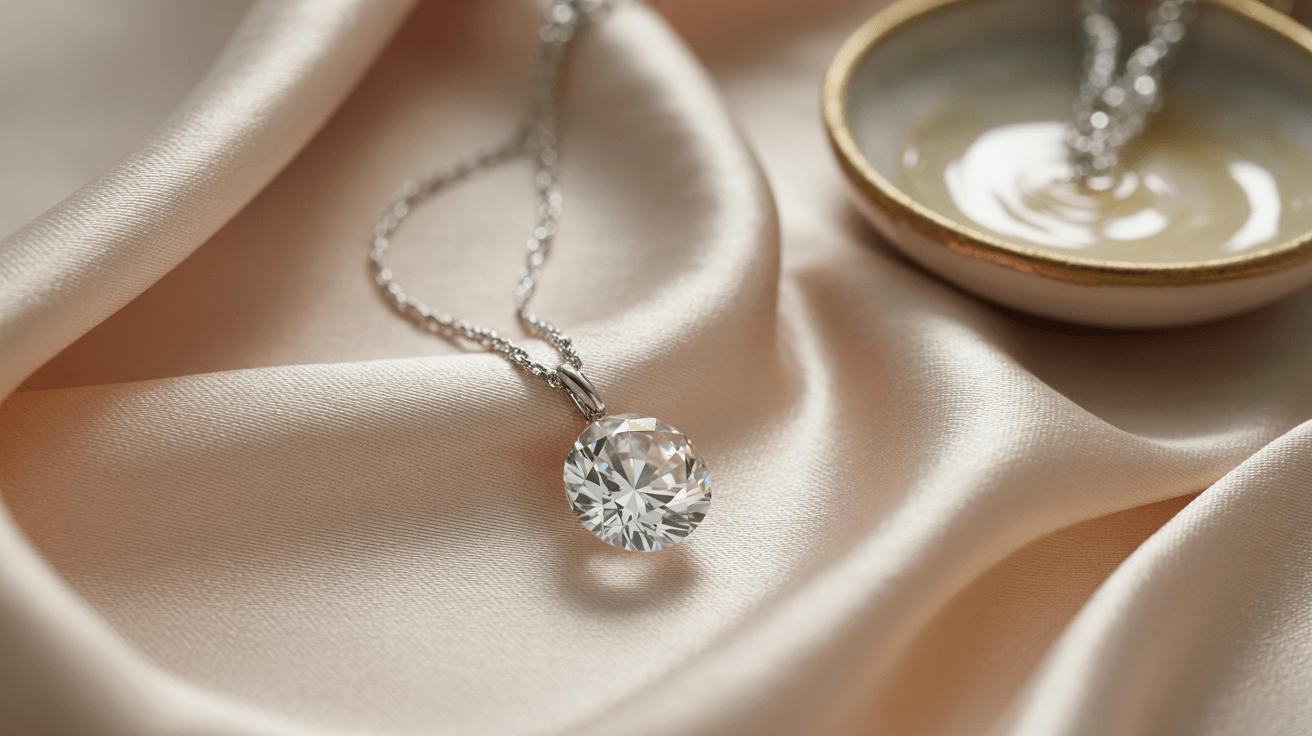
The safest method for cleaning lab grown diamond necklaces involves mild washing-up liquid and warm water. Fill a small bowl with lukewarm water and add a few drops of gentle, phosphate-free washing-up liquid. Submerge your necklace and let it soak for 10-15 minutes to loosen accumulated oils, dust, and residue. After soaking, rinse thoroughly under clean lukewarm running water-take care not to rinse over an open drain; use a bowl underneath as a safety net. Pat dry with a soft, lint-free cloth, then allow the necklace to air dry completely before storage. This method is gentle enough for weekly use on pieces you wear frequently.
Using a Soft Brush for Pendant and Prongs
For more thorough cleaning, use a soft-bristled brush-a baby toothbrush or dedicated jewellery brush works perfectly. After soaking your necklace, gently brush around the diamond and setting, paying special attention to the back of the stone where oils and debris accumulate most heavily. Use light, circular motions rather than aggressive scrubbing. According to Jewellers of America, this method represents one of the safest gemstone cleaning methods for home use. Take extra care when cleaning chains, gently brushing between links to remove trapped residue.
Jewellery Cleaning Solutions: What's Safe, What to Avoid
Commercial jewellery cleaning solutions designed for diamonds offer convenience, but selecting the right product requires careful attention. Choose cleaners specifically formulated for diamonds and the precious metal of your setting, whether gold, platinum, or silver. Steer clear of products with undisclosed ingredients, excessive chemical concentrations, or gritty substances that could scratch delicate surfaces. The traditional soap-and-water approach remains the gold standard for home care. If you opt for a commercial product, follow the usage instructions strictly and ensure thorough rinsing to remove all residue. Never combine different cleaning products or experiment with homemade chemical mixtures, as unpredictable reactions can irreversibly harm both your diamond and its metal setting.
Common DIY Mistakes
The internet is overrun with DIY jewellery cleaning hacks, but many cause permanent damage. Never use toothpaste. Toothpaste is abrasive and can scratch precious metals and dull jewellery - avoid it.
Bleach is absolutely forbidden, as it can discolour metals and weaken settings irreparably. Avoid vinegar, which is acidic enough to etch metal settings over time. Similarly, skip baking soda pastes, which are too abrasive for regular use on fine jewellery. The gentle soap-and-water method might seem boring compared to viral cleaning hacks, but it's the one professional jewellers trust.
Professional Cleaning and Maintenance
While home care is essential, professional gemstone maintenance ensures your lab grown diamond necklace receives expert attention that preserves both its beauty and structural integrity.
How Often to Schedule Professional Cleanings
Plan to have your lab grown diamond necklace professionally cleaned and inspected at least once or twice annually. If you wear your necklace daily, consider quarterly visits. Professional jewellers use specialised equipment that achieves a deeper clean than home methods can accomplish. These visits allow trained gemologists to inspect your necklace for potential problems before they become serious, checking chain integrity, examining clasps, inspecting prongs, and identifying any signs of wear.
Checking Prongs and Clasps for Security
During professional maintenance, jewellers examine the structural elements that keep your diamond secure. Prongs can bend or wear down over time, creating a risk that your diamond might come loose. Clasps weaken with repeated use, and jump rings can develop microscopic gaps. Chain links can stretch or develop weak spots from constant movement. A professional inspection catches problems early, allowing for repairs before you lose a precious diamond or damage an irreplaceable setting.
Re-polishing Metals
Over time, precious metal settings show signs of wear: scratches accumulate, finishes dull, and in the case of white gold, rhodium plating wears away. Professional re-polishing restores the original lustre of your metal settings, removing minor scratches and bringing back that just-purchased shine. White gold necklaces may need periodic rhodium re-plating to maintain their bright white appearance. These services dramatically refresh the overall appearance of your necklace.
Common Mistakes to Avoid
Even well-intentioned jewellery owners sometimes make mistakes that compromise their necklaces. Awareness of these common pitfalls helps you avoid them entirely.
Wearing Necklaces During High-Impact Activities
Whilst lab grown diamonds themselves are remarkably durable, subjecting your necklace to unnecessary risk during vigorous activities is unwise. Remove your necklace before sports, intense exercise, gardening, DIY projects, or any activity involving potential impact or catching. Chains can snap if caught on equipment or clothing. Save your lab grown diamond necklace for occasions where it can be admired safely.
Storing Multiple Necklaces Together
One of the most common storage mistakes is keeping all jewellery together in a single container. Chains tangle with each other in frustratingly complex knots that stress links during untangling. Diamonds can scratch other gemstones, precious metals, and even other diamonds. Always store each necklace separately in individual compartments or soft pouches.
Using Harsh or Abrasive Cleaners
Perhaps the most damaging mistake is using inappropriate cleaning methods or products. Harsh chemical cleaners, abrasive pastes, and homemade solutions can permanently damage both diamonds and settings. Ultrasonic cleaners, whilst safe in professional hands, can be misused at home-overuse can loosen settings. When in doubt, stick with the gentle soap-and-water method.
Long-Term Protection: Insurance and Warranties
Protecting your lab grown diamond necklace extends beyond cleaning and storage to include financial and documentary safeguards that provide peace of mind.
Why Jewellery Insurance Matters
Quality lab grown diamond necklaces represent significant investments, both financially and emotionally. Jewellery insurance protects against loss, theft, or damage that standard home contents insurance may not adequately cover. According to The Knot, jewellery insurance typically costs about 1-2% of the item's value annually. When insuring your necklace, obtain a professional appraisal documenting its value, specifications, and unique characteristics. Keep detailed photographs from multiple angles.
Understanding Store Warranties and Aftercare
When purchasing a lab grown diamond necklace, carefully review the warranty and aftercare policies included with your purchase. Reputable jewellers often provide guarantees covering manufacturing defects, and many offer complimentary cleaning and inspection services for the life of the piece. Understanding exactly what your warranty covers helps you take full advantage of these benefits.
Protecting an Heirloom for Generations
Lab grown diamond necklaces, maintained with proper care, become treasured family heirlooms, carrying stories and memories through generations. Document your necklace's history-when and where you acquired it, its significance, and any special occasions it commemorated. According to Brides, heirloom preservation combines practical maintenance with emotional stewardship, honouring both the physical beauty and the meaningful legacy of your jewellery.
Frequently Asked Questions
Can I wear my lab grown diamond necklace every day?
Absolutely! Lab grown diamonds are just as durable as mined diamonds, making them perfect for daily wear. However, remove your necklace during activities that might damage it-showering, swimming, exercising, or sleeping. With proper care and regular professional inspections, your necklace can withstand decades of daily wear whilst maintaining its brilliant sparkle.
What is the safest way to clean my diamond necklace at home?
The safest method uses lukewarm water and a few drops of gentle washing-up liquid. Soak your necklace for 10-15 minutes, gently brush with a soft-bristled brush, rinse thoroughly under running water (over a bowl for safety), and pat dry with a lint-free cloth.
Are ultrasonic cleaners safe for lab grown diamonds?
Professional ultrasonic cleaners used by jewellers are safe for lab grown diamonds. However, exercise caution with home ultrasonic cleaners-improper use or overuse can loosen prongs and settings over time. When in doubt, save ultrasonic cleaning for professional appointments.
Should I remove my necklace before showering or swimming?
Yes, always remove your necklace before both activities. Shower products leave residue that dulls diamond brilliance over time. Swimming exposes your necklace to chlorine or salt, both of which can damage metal settings and weaken structural elements.
How often should I have my necklace professionally cleaned?
Schedule professional cleaning and inspection at least once or twice yearly. If you wear your necklace daily, consider quarterly visits. Professional cleaning achieves deeper results than home methods, and the accompanying inspection catches potential problems early.
Do warranties usually cover necklace chain or clasp repairs?
Coverage varies significantly between jewellers. Many reputable jewellers include complimentary prong tightening and basic repairs in their lifetime warranties, whilst chain and clasp coverage depends on the specific policy. Always read your warranty documentation carefully.

In a Nutshell
Proper care ensures your lab grown diamond necklace retains its breathtaking beauty and profound meaning for decades to come. The secret to lifelong radiance isn't complicated-it's the combination of simple daily habits and periodic professional attention. By removing your necklace during risky activities, storing it safely, cleaning it regularly with gentle methods, and scheduling professional maintenance, you ensure this treasured piece remains as stunning as the day you first wore it.
Remember that caring for your lab grown diamond necklace transcends mere maintenance-it's an act of honouring its significance in your life. Whether it represents love, achievement, personal style, or family legacy, this sparkling treasure deserves protection that matches its value. When you're ready to explore more about choosing the perfect piece, discover what to look for when buying a lab grown diamond necklace, or learn about the eco-friendly elegance of lab grown diamonds. Explore Juvetti's certified lab-grown diamond necklaces - each piece comes with authentication, comprehensive warranties, and dedicated aftercare support. Quality diamond necklaces backed by reputable jewellers give you not just beautiful jewellery, but also the peace of mind that comes with expert guidance and lasting protection for generations to come.