Is Gold Jewellery a Good Investment? What Buyers Need to Know
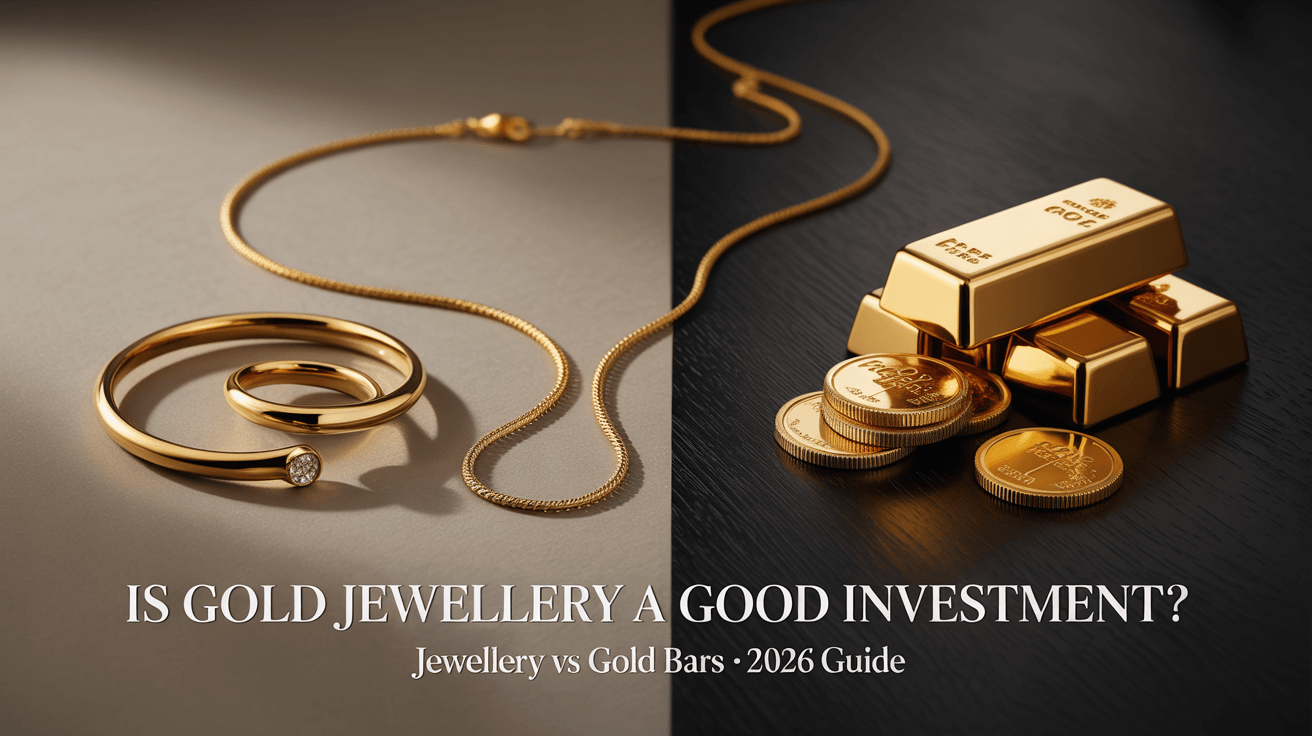
Gold has captivated humanity for millennia - not just for its beauty, but for its enduring value. As economic uncertainty persists and inflation concerns mount in 2026, many people are reconsidering gold jewellery not merely as an adornment but as a tangible asset. But does gold jewellery truly qualify as a sound investment, or are you better off with gold bars tucked away in a vault?
The answer isn't straightforward. Gold jewellery occupies a unique position between pure financial investment and personal luxury - offering both intrinsic metal value and the pleasure of wearing something beautiful. Understanding this dual nature is essential for making informed decisions about whether gold jewellery deserves a place in your investment strategy.
This comprehensive guide examines the genuine investment potential of gold jewellery, cutting through marketing claims to reveal what actually affects value retention, when it makes financial sense, and what separates a smart purchase from an expensive mistake.
Quick Verdict: Is Gold Jewellery Worth It as an Investment?
Gold jewellery can hold value, but it's usually not the best "pure investment" compared to gold bullion. Here's what you need to know:
| Scenario | Characteristics | Why It Matters | Investment Verdict |
|---|---|---|---|
| When Gold Jewellery Works as an Investment | High karat gold (18K or 22K) Substantial gold content by weight Purchased with low retail markup Timeless, classic designs Strategic buying approach |
Value is closely tied to intrinsic gold content rather than fashion or branding, preserving resale potential. | Sound long-term value store |
| When Gold Jewellery Does NOT Work as an Investment | Heavy design or brand premiums Low karat gold (9K, 10K) Trendy styles with short lifespan Excessive gemstone settings complicating valuation |
Retail premiums and design complexity erode resale value, regardless of purchase price. | Poor investment choice |
Gold jewellery vs gold bars: Bullion offers superior pure investment returns due to minimal premiums (typically 2-5% above spot price) and straightforward resale at predictable values. However, jewellery provides the unique advantage of being worn and enjoyed whilst still retaining intrinsic metal value - making it ideal for those wanting both utility and value preservation.
Bottom line: Choose high-karat, heavier pieces in timeless designs if you want wearable value retention. Choose bullion if you want maximum investment returns. Gold jewellery can work as an investment, but only with strategic purchasing and realistic expectations.

What Does "Investment" Actually Mean for Gold Jewellery?
Before evaluating gold jewellery as an investment, we must clarify what "investment" means in this context. Most people conflate three distinct concepts, each with different implications.
Intrinsic Value (Scrap Value)
Intrinsic value represents what you'd receive if your jewellery were melted down and sold purely for its metal content. This value is entirely objective and calculable based on the weight of pure gold in the piece, karat purity, and the current gold spot price (which fluctuates daily).
For example, a 10-gram 18K gold ring contains 7.5 grams of pure gold (75% purity). If gold trades at £50 per gram, the intrinsic value is approximately £375 - regardless of design, brand, or original purchase price.
This intrinsic value provides a value floor - the minimum your jewellery is worth at any given time.
Resale Value (Secondary Market Value)
Resale value reflects what someone will actually pay for your jewellery in the second-hand market. This value is subjective and influenced by design appeal, current trends, condition, brand recognition, and market demand at the time of sale.
Resale value can exceed intrinsic value for designer pieces, antique jewellery, or timeless classics. However, it typically falls between intrinsic value and original retail price for most jewellery.
Collectible/Designer Appreciation
Certain pieces appreciate significantly beyond their metal value due to prestigious brand names (Cartier, Tiffany, Van Cleef & Arpels), limited editions or discontinued designs, historical significance, or exceptional craftsmanship.
This category operates more like art or collectibles than commodity investment. Only a small percentage of gold jewellery falls here, and predicting which pieces will appreciate requires expertise and often luck.
For most buyers, focusing on intrinsic value and resale value provides the most realistic investment framework.
The Uncomfortable Truth: Understanding the "Spread"
This section reveals why gold jewellery rarely performs as well as bullion from a pure investment standpoint - crucial for setting realistic expectations.
What Is the Spread?
The spread is the difference between what you pay (retail purchase price) and what you can sell for (resale value). In gold jewellery, this spread is typically substantial.
When you buy: Retail price = gold content value + craftsmanship + design + retail markup + VAT
When you sell: Resale price = closer to gold content value (unless brand/design demand exists)
Real-World Example
Imagine purchasing an 18K gold necklace weighing 20 grams for £2,000:
- Pure gold content: 15 grams (20g × 75%)
- Gold spot value: £750 (at £50/gram)
- Premium paid: £1,250 (for design, craftsmanship, retail markup)
If you need to sell immediately, most buyers offer prices based primarily on gold content - perhaps £750-900. You've experienced an instant 50-55% value gap simply because the design premium rarely transfers to resale.
Why This Matters for Investment
This spread is not a scam - you're paying for skilled craftsmanship, design work, and retail operations. However, it fundamentally differs from buying gold bars, which trade with minimal spread (typically 2-5% above spot price).
Investment implication: Gold jewellery works best as a long-term hold. The longer you own it, the more the spread amortises across years of wear and enjoyment. If you need liquidity within months or a few years, jewellery significantly underperforms bullion.

How Gold Jewellery Value Is Actually Calculated
Understanding valuation empowers you to make informed purchases and set realistic resale expectations.
The Basic Formula for Intrinsic Value
Approximate scrap value = (Total weight in grams × Karat purity ÷ 24) × Current gold spot price
| Step | What to Do | Calculation | Result / Insight |
|---|---|---|---|
| Step 1 | Determine pure gold content by karat | 24K = 100% pure gold 22K = 91.7% pure gold 18K = 75% pure gold 14K = 58.3% pure gold |
Karat rating defines how much of the item’s weight is actual gold |
| Step 2 | Calculate pure gold weight | Example: 15g × 0.75 (18K) | 11.25 grams of pure gold |
| Step 3 | Apply current gold spot price | 11.25g × £50 per gram | £562.50 intrinsic gold value |
This represents the minimum value your jewellery holds as a commodity.
What Affects Actual Resale Value
Beyond intrinsic value, several factors influence what you'll actually receive:
Positive factors: Hallmarks and certificates, excellent condition, classic timeless designs, recognised brands, original packaging, higher karat purity
Negative factors: Visible damage or scratches, missing stones or broken clasps, trendy designs now out of fashion, no documentation, lower karat content, complex designs requiring extensive repair
To understand how different gold purities affect both appearance and value, explore 14K vs 18K Gold: Understanding the Differences.
14K vs 18K Gold: Which Is Better for Investment?
This question surfaces repeatedly among jewellery investors, and the answer depends on your specific priorities.
18K Gold: Higher Intrinsic Value
Advantages for investment:
- Contains 75% pure gold vs 58.3% in 14K
- Higher intrinsic value per gram of total weight
- More valuable if sold for scrap
- Premium perception in luxury markets
- Richer, more saturated colour
Example: At the same 10-gram total weight, 18K contains 7.5 grams pure gold, whilst 14K contains only 5.83 grams. At £50/gram, that's £375 vs £291.50 - approximately 29% more pure gold value in 18K.
Browse the 18K Gold Collection for investment-grade options.
14K Gold: Durability and Practicality
Advantages for investment:
- Greater hardness and scratch resistance
- Better suited for daily wear without damage
- Maintains condition longer (important for resale)
- Lower initial purchase price per piece
- Still holds substantial gold content
For jewellery worn frequently - especially rings subjected to daily impacts - 14K's durability can preserve resale value better than damaged 18K pieces. A pristine 14K ring may resell better than a scratched, dented 18K equivalent.
Explore the 14K Gold Collection for durable investment pieces.
The Verdict
For pure value retention per gram: 18K provides superior gold content and higher intrinsic value.
For wearable investment pieces: 14K offers better durability, potentially preserving overall condition and resale appeal.
Strategic approach: Consider 18K for necklaces and earrings (lower wear), and 14K for rings and bracelets (higher wear). This optimises both gold content and longevity.
Additionally, consider gold colour when making investment decisions. Learn how white gold, yellow gold, and rose gold compare in terms of maintenance costs and long-term value retention.

Gold Jewellery vs Gold Bars and Coins: An Honest Comparison
For those seriously considering gold as an investment vehicle, understanding how jewellery compares to traditional bullion is essential.
Gold Bars and Coins: The Pure Investment
| Advantages | Disadvantages |
|---|---|
| Minimal premium (typically 2–5% above spot price) | Zero utility - cannot be worn or enjoyed |
| Easy pricing tied directly to weight and purity | Storage costs may require a safe deposit box |
| Simple resale through bullion dealers at spot price minus a small fee | Insurance is needed to cover full value |
| No design risk - value unaffected by aesthetic trends | No emotional or lifestyle value |
| Storage efficient - compact and stackable | Returns depend entirely on gold price movements |
| Standardised and easy to verify authenticity | Purely transactional investment |
Gold Jewellery: The Hybrid Approach
| Advantages | Disadvantages |
|---|---|
| Wearable asset - enjoy beauty whilst preserving value | Higher premium (30–100%+ above gold content) |
| Dual purpose - personal luxury and financial hedge | Variable resale value depending on design, condition, and trends |
| Emotional value and sentimental attachment | Wear and tear can reduce resale value |
| Social acceptability - displays wealth subtly | Harder to price due to subjective valuation factors |
| Heirloom potential for the next generation | Fashion risk - styles can become dated |
Decision Framework: Which Is Best for You?
| Choose Gold Bars / Coins If | Choose Gold Jewellery If |
|---|---|
| Your primary goal is wealth preservation and appreciation | You want to enjoy wearing your investment |
| You want maximum gold content per pound spent | You value beauty and craftsmanship alongside metal value |
| You need easy liquidation at predictable market prices | You’re comfortable with longer holding periods (5+ years) |
| You treat gold as portfolio diversification | You want heirloom pieces with emotional significance |
| You can afford dedicated, secure storage | You understand and accept the design premium |
Choose both if: You want balanced exposure to gold assets (70-80% to bullion for pure investment, 20-30% to high-karat jewellery for wearable value)
What Makes Gold Jewellery Hold Value Better: A Buyer's Checklist
Not all gold jewellery offers equal investment potential. Use this checklist to identify pieces most likely to retain value.
✓ Substantial Weight
Heavier pieces contain more pure gold, increasing intrinsic value. Target weights: Necklaces 10+ grams, bracelets 8+ grams, rings 4+ grams, earrings 3+ grams per pair.
✓ Higher Karat Purity
More gold content per gram translates directly to higher intrinsic value. Investment hierarchy: 22K-24K (maximum), 18K (excellent balance), 14K (good content with strength), 10K and below (minimal investment value).
✓ Timeless, Classic Designs
Investment-grade designs: Simple gold chains (rope, curb, cable), classic hoops and studs, plain gold bangles and cuffs, solitaire or simple band rings, minimalist pendants.
Avoid for investment: Highly trendy pieces, overly ornate, dated designs,and styles tied to specific decades.
✓ Low Complexity and Minimal Fragility
Simpler pieces have fewer points of failure and maintain condition better. Preferred: Solid construction without hollow sections, minimal moving parts, few or no gemstone settings, and durable construction.
✓ Excellent Condition
Condition dramatically affects resale value. Maintain: No visible scratches or dents, functioning clasps, no missing elements, original finish intact, no discolouration.
✓ Proper Documentation
Keep everything: original receipts, certificates of authenticity, appraisal documents, hallmark information, brand documentation, and original packaging.
✓ Clear Hallmarks
Look for karat stamps (14K, 18K, 750, 585), manufacturer's marks, and country of origin marks. Pieces without clear hallmarks sell at significant discounts.
✓ Strategic Brand Selection
Certain brands command premiums: Cartier (Love, Trinity collections), Tiffany & Co. (classic designs), Van Cleef & Arpels (Alhambra), Bulgari (B.zero1). However, brand premiums only apply to sought-after pieces in excellent condition.
The Role of Design, Trend, and Brand in Gold Investment
Gold jewellery exists simultaneously in two markets: commodity (value based purely on gold weight) and luxury product (value includes design and brand). Strategic investors target pieces that maintain strong positions in both.
How Design Trends Affect Investment Value
Trend-resistant designs: Geometric simplicity, minimal ornamentation, versatile styling, neutral aesthetics unconnected to specific eras.
Trend-vulnerable designs: Highly distinctive statement pieces, styles strongly associated with specific time periods, extreme proportions.
Investment strategy: For reliable value retention, stick to timeless classics. If purchasing trendy designs, accept that resale may require waiting decades for vintage revival.
When Brand Matters (and When It Doesn't)
Brand premium applies when: Signature recognisable designs, excellent condition, complete documentation, verified authentic pieces.
Brand doesn't help much when: Generic designs available anywhere, poor condition, no authentication, mass-produced catalogue items.
Gold Colour and Investment Considerations
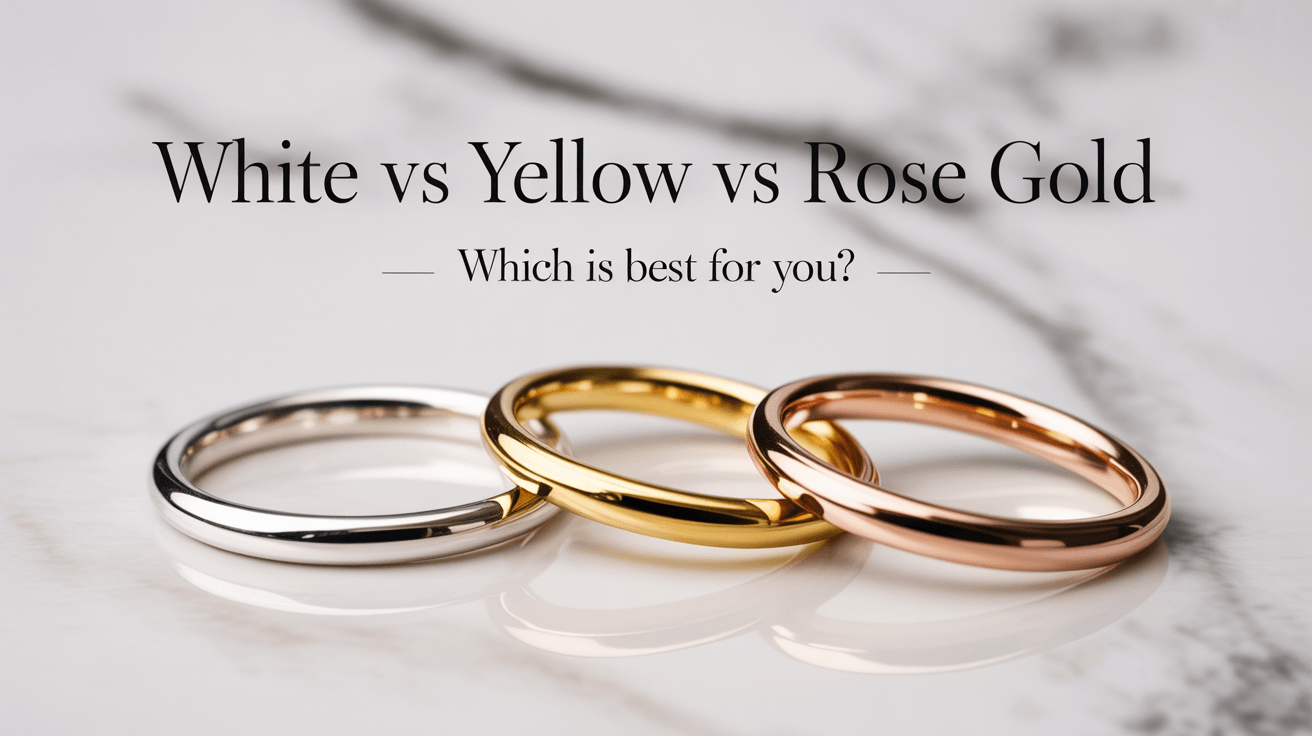
Different gold colours - white gold, yellow gold, and rose gold - have identical intrinsic value at the same karat, but resale dynamics differ.
Yellow gold offers the most universally recognised, easiest to resell globally, and most trend-resistant option for pure investment purposes.
White gold enjoys current strong demand but requires rhodium replating (maintenance cost consideration).
Rose gold has fashion-dependent demand with more volatile resale markets.
Hidden Costs That Affect Your Gold Jewellery ROI
Honest investment analysis requires accounting for all costs over the ownership period.
Maintenance and Repair Costs
Regular maintenance: Professional cleaning (£20-40 annually), prong tightening (£30-60 every 2-3 years), rhodium replating for white gold (£40-100 every 1-3 years), polishing (£30-80 as needed).
Repairs: Clasp replacement (£50-150), chain soldering (£40-100), ring resizing (£50-200), stone replacement (£50-500+).
10-year cost estimate: Simple yellow or rose gold (£100-300), white gold (£300-600), complex pieces with stones (£500-1,000+).
Insurance Costs
Typical rates of 1-2% of appraised value annually add significant carrying costs. Example: £5,000 piece at 1.5% rate = £75 annually = £750 over 10 years.
Loss and Theft Risk
Unlike gold bars stored in vaults, jewellery worn regularly faces loss and theft risks requiring secure storage, comprehensive insurance, photographic documentation, and careful wearing practices.
Selling Fees and Commissions
| Selling Channel | Fees / Commissions | Pros & Cons | Best Used When |
|---|---|---|---|
| Pawn Shops | Offer 40–70% of scrap value No explicit fees |
Instant payment Significantly reduced payout |
Liquidity is urgent and speed matters more than price |
| Consignment Shops | 30–50% commission | Longer time to sale Potentially higher final prices |
You can wait for the right buyer and want better pricing |
| Auction Houses | Seller’s commission: 10–25% Buyer’s premium: 15–30% |
Global exposure High fees offset by premium pricing |
High-value, rare, or collectible pieces |
| Online Marketplaces | Platform fees: 10–20% | Wide audience Shipping, fraud, and authentication risks |
Mid-range pieces with strong demand and clear provenance |
| Investment Implication | 10–30% total transaction costs | Fees materially impact short-term profitability | Holding periods of 5–10+ years are essential for positive returns |
Frequently Asked Questions
Does gold jewellery hold its value?
Yes, gold jewellery holds intrinsic value based on its gold content, which never reaches zero. However, resale value is typically 40-80% of the original purchase price due to retail markups. High-karat pieces (18K-22K) with substantial weight in timeless designs hold value best. The longer you own the piece, the better the value retention as the initial premium amortises over years of wear.
Is 18K gold better than 14K for investment?
18K contains 75% pure gold vs 58.3% in 14K, giving it approximately 29% more pure gold value at the same total weight. For pure investment value per gram, 18K wins. However, 14K offers better durability for daily wear, potentially preserving condition and resale appeal better. Choose 18K for necklaces and earrings, 14K for rings and bracelets to optimise both gold content and longevity.
Which gold is best for investment - jewellery or bars?
Gold bars are better for pure investment due to minimal premiums (2-5% above spot), easy resale at predictable prices, and no design risk. Gold jewellery costs 30-100%+ above gold content but offers the advantage of being worn and enjoyed. Choose bars if maximising returns is your primary goal. Choose jewellery if you want both wearable beauty and value preservation, accepting lower financial returns in exchange for lifestyle value.
What karat gold is best for investment?
For maximum gold content and value retention, 18K-22K is best for investment. 18K (75% pure) offers an excellent balance between gold content and durability. 22K (91.7% pure) provides even higher gold content but is softer and less common in Western markets. Avoid 10K and below for investment purposes as they contain minimal gold (under 50%).
How do I know if my gold jewellery is a good investment?
Check these factors: substantial weight (heavier is better), high karat purity (18K+), clear hallmarks, timeless classic design, excellent condition, proper documentation, minimal gemstone settings. Calculate intrinsic value using weight and karat to understand your value floor. If you paid less than 2x the intrinsic value, it's likely a reasonable investment piece.
Does gold jewellery appreciate in value?
Gold jewellery's metal content appreciates with gold spot price increases, but this often doesn't offset the initial retail premium in short periods. Most jewellery appreciates modestly over 10+ years as gold prices rise. Designer pieces from prestigious brands can appreciate significantly, but this is unpredictable. View jewellery as value preservation rather than wealth appreciation, with the bonus of wearable utility.

Final Verdict: Is Gold Jewellery a Good Investment?
Gold jewellery can serve as a legitimate investment vehicle - but only under specific circumstances and with realistic expectations. It's not a pure financial investment like gold bullion, nor is it merely frivolous spending. It occupies a middle ground offering both intrinsic value preservation and personal enjoyment.
| Gold Jewellery Makes Sense When | Gold Jewellery Doesn’t Make Sense When |
|---|---|
| You plan to hold long-term (5–10+ years minimum) | You need liquidity in the short term |
| You choose high-karat pieces (18K preferred) | You’re prioritising maximum financial returns |
| You focus on substantial weight and timeless designs | You’re buying trendy, fashion-forward pieces |
| You’ll actually wear and enjoy the pieces | You’re paying extreme retail premiums |
| You understand it combines lifestyle and financial value | You won’t wear it, removing the dual-purpose advantage |
| You accept lower returns than bullion in exchange for utility | You expect bullion-like performance from jewellery |
The truth is that gold jewellery represents a hybrid asset class. Measure its success not just in pounds returned, but in years of wearing pleasure, emotional satisfaction, and the security of owning tangible value that can never become entirely worthless.
If you're drawn to both the beauty of fine jewellery and the security of gold ownership, high-quality pieces from the yellow gold, white gold, or rose gold collections can serve you well. Choose strategically, buy quality, and enjoy the journey of owning something both beautiful and valuable.