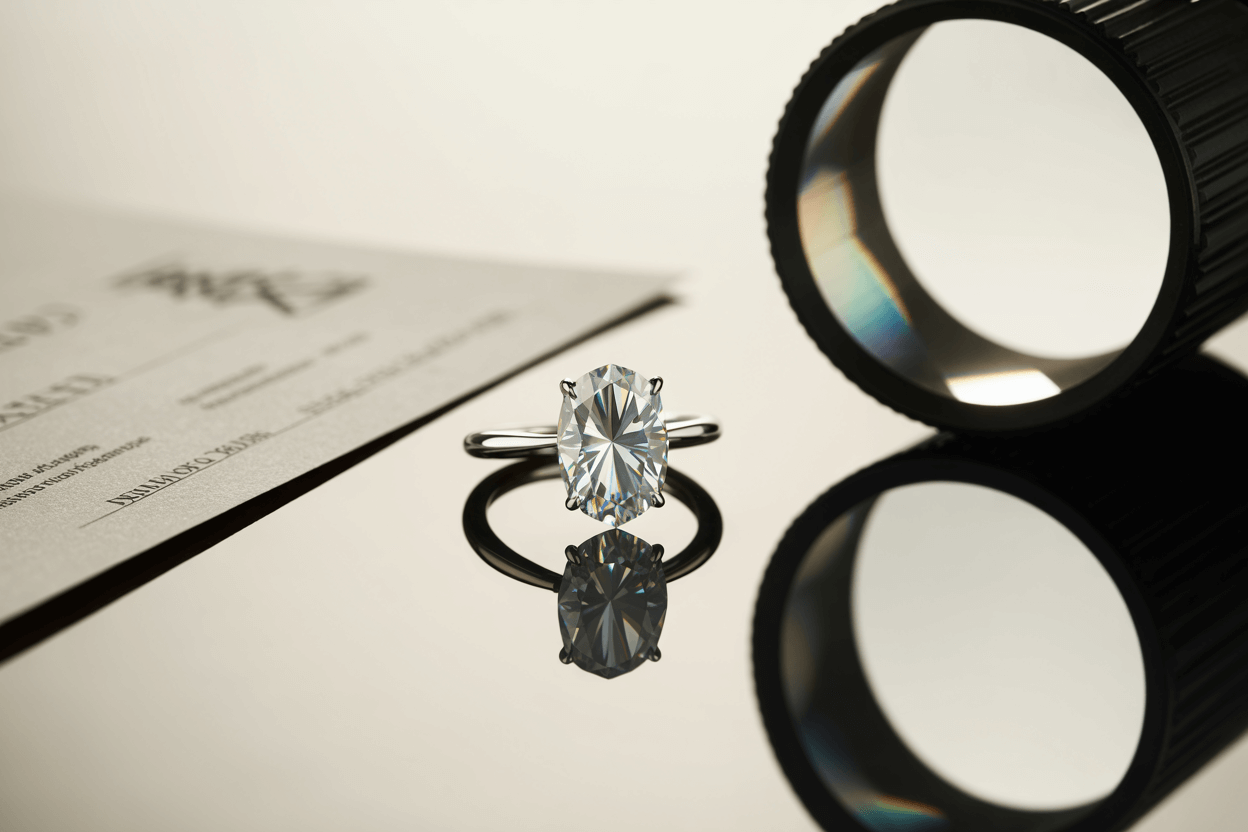
Lab Grown Diamond Ring Certifications Explained
When investing in a diamond ring, trust and proof are everything. A diamond certification serves as your diamond's "birth certificate", official documentation that verifies its quality, authenticity, and characteristics. For lab grown diamond rings, understanding certifications becomes even more crucial as this market continues to evolve rapidly.
At Juvetti, we believe every customer deserves complete transparency when choosing their perfect sustainable diamond ring. Whether you're selecting an engagement ring or adding to your jewellery collection, knowing how to read and verify lab grown diamond certification will protect your investment and ensure you're getting exactly what you pay for.
Why Certification Matters for Lab Grown Diamonds
Proof of Authenticity and Transparency
Lab grown diamond certification provides irrefutable proof that your diamond was created in a laboratory setting using advanced technology. Without proper certification, distinguishing between lab grown and natural diamonds becomes nearly impossible to the naked eye, even experienced jewellers rely on specialised equipment and official reports.
Certified lab grown diamonds give you complete transparency about the diamond's origin, quality grade, and manufacturing process. This documentation becomes particularly important when purchasing online or from retailers you haven't worked with before.
To better understand the advantages of choosing sustainable, certified diamonds, explore the key benefits of choosing a certified lab grown diamond ring.
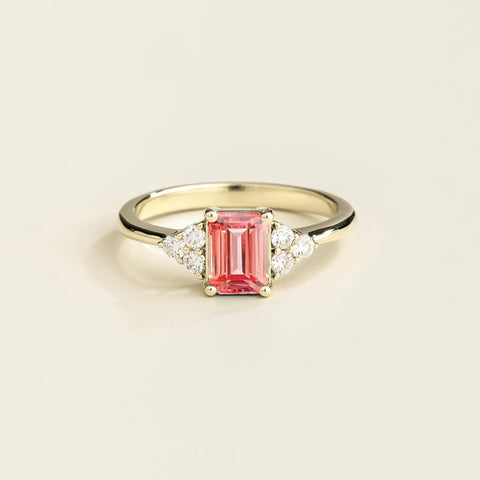
Protecting Buyers from Misrepresentation
The diamond market has unfortunately seen instances where lab grown diamonds were misrepresented as natural stones, or where lower-quality diamonds were sold with inflated claims about their characteristics. Diamond grading reports from recognised authorities protect you from these risks by providing independent, third-party verification of your diamond's properties.
At Juvetti, we ensure all our lab grown diamond rings come with proper certification from respected grading institutes, giving our customers complete confidence in their purchase.
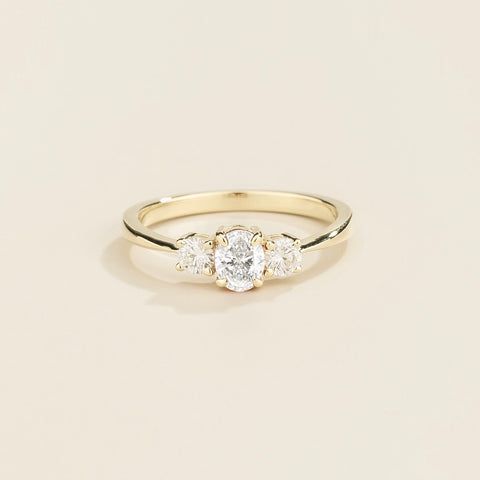
The Difference Between Certified vs. Non-Certified Diamonds
Certified diamonds have been thoroughly examined and graded by professional gemologists using standardised criteria. Non-certified diamonds, whilst potentially offering lower upfront costs, carry significant risks:
-
No guarantee of claimed quality grades
-
Difficulty with insurance valuations
-
Challenges when seeking repairs or resizing
-
Potential issues with resale value
-
Lack of legal recourse if quality claims prove false
The Leading Lab Grown Diamond Grading Authorities
GIA (Gemological Institute of America)
The GIA remains the most recognised name in diamond grading worldwide. Their lab grown diamond reports clearly identify stones as "laboratory-grown" and provide the same rigorous analysis as their natural diamond certificates. GIA-certified lab diamonds receive a comprehensive evaluation covering:
-
Complete 4Cs assessment (cut, colour, clarity, carat weight)
-
Detailed proportions and symmetry analysis
-
Fluorescence characteristics
-
Growth method identification (CVD or HPHT)
-
Laser inscription verification
GIA reports are widely accepted by insurers, appraisers, and retailers globally, making them an excellent choice for engagement rings and significant purchases.
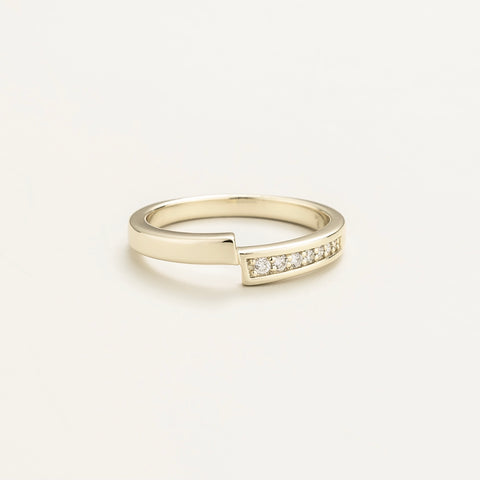
IGI (International Gemological Institute)
IGI is very prominent in lab grown diamond certification, particularly popular among younger consumers and online retailers. IGI certification for lab grown diamonds offers thorough grading with slightly more accessible reporting language. Their reports include:
-
Comprehensive 4Cs grading
-
Digital verification systems
-
Clear growth method documentation
-
Detailed cut quality analysis
-
Professional photography of the diamond
Many Juvetti customers appreciate IGI's modern approach to certification, particularly their user-friendly online verification system.
HRD Antwerp
HRD Antwerp brings European expertise to diamond certification, with particular strength in cut quality assessment. Their lab grown diamond certificates emphasise precision and craftsmanship, making them popular for customers focused on exceptional cut quality. HRD certificates feature:
-
Advanced cut grading technology
-
Detailed clarity plotting
-
Comprehensive colour analysis
-
European certification standards
-
Strong reputation in the UK market
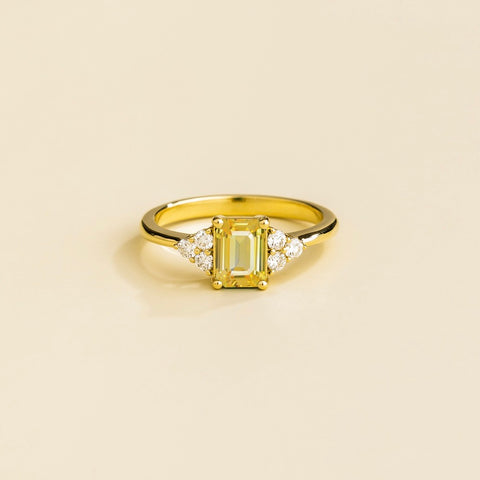
GCAL (Gem Certification & Assurance Lab)
GCAL offers innovative certification approaches, including guaranteed diamond grading and digital certificates. Their lab grown diamond reports provide:
-
100% accuracy guarantee on grading
-
Advanced optical analysis
-
Digital certificate options
-
Detailed cut performance metrics
-
Consumer-friendly reporting format
What's Included in a Lab Grown Diamond Certificate
The 4Cs: Cut, Colour, Clarity, Carat Weight
Every legitimate diamond certification covers the fundamental 4Cs that determine a diamond's quality and value:
Cut: Evaluates how well the diamond's facets interact with light, affecting brilliance and sparkle. Grades typically range from Excellent to Poor.
For inspiration on how different cuts and settings influence style, explore our guide to popular lab grown diamond ring cuts and design trends.
Colour: Measures the absence of colour in the diamond, with D (colourless) being the highest grade, progressing through to Z (light yellow/brown).
Clarity: Assesses internal inclusions and external blemishes, ranging from Flawless (FL) to Included (I1, I2, I3).
Carat Weight: The precise weight of the diamond, measured to the hundredth of a carat.
If you’re still learning how to evaluate these factors when choosing a ring, our comprehensive lab grown diamond buying guide provides step-by-step clarity.
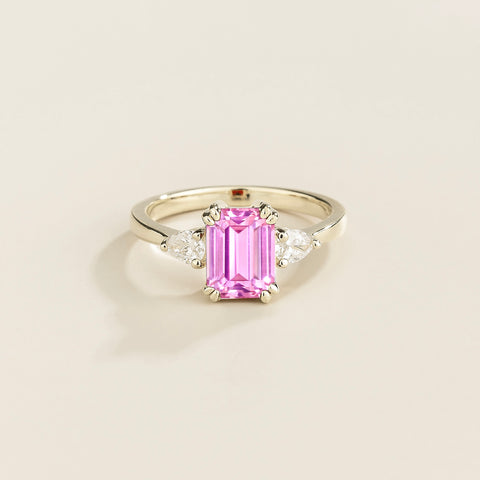
Laser Inscription & Unique Report Number
Most certified lab grown diamonds feature a microscopic laser inscription on the girdle (outer edge) that matches the certificate number. This inscription, invisible to the naked eye, provides definitive proof of authenticity and helps prevent certificate fraud.
The unique report number allows you to verify your diamond's details through the grading institute's online database, ensuring your certificate matches their official records.
Growth Method Notation (CVD vs HPHT)
Lab grown diamond certificates specify the growth method used to create your diamond:
CVD (Chemical Vapour Deposition): Creates diamonds layer by layer in a controlled chamber environment.
HPHT (High Pressure High Temperature): Mimics natural diamond formation conditions using extreme pressure and temperature.
Both methods produce identical diamonds chemically, physically, and optically — the notation simply documents the manufacturing process used.
Fluorescence, Proportions, and Other Key Details
Comprehensive certificates also document:
-
Fluorescence intensity under UV light
-
Detailed measurements and proportions
-
Polish and symmetry grades
-
Girdle characteristics
-
Culet details
-
Any additional treatments or enhancements
How Lab Grown Certification Differs from Natural Diamonds
Language Used (e.g., "laboratory-grown" vs older terms)
Modern lab grown diamond certificates use clear, positive language like "laboratory-grown" or "laboratory-created" rather than older, potentially misleading terms. This linguistic evolution reflects the industry's recognition that lab grown diamonds are genuine diamonds, not imitations.
Reputable grading institutes ensure their language accurately represents the product whilst maintaining a clear distinction from natural diamonds.
Market Perceptions & Buyer Reassurance
As lab grown diamonds gain mainstream acceptance, certification has become increasingly important for buyer confidence. Many customers at Juvetti specifically request to see certificates before purchasing, viewing them as essential validation of their sustainable jewellery choice.
Professional certification helps bridge any knowledge gaps and provides the same level of assurance traditionally associated with natural diamond purchases.
Why Reports for Lab Diamonds Are Becoming Stricter
Grading institutes have enhanced their lab grown diamond certification processes to address market growth and consumer protection needs. Modern reports include more detailed growth method analysis, enhanced verification systems, and stricter quality control measures.
For a broader view of where the industry is heading, explore the future innovations shaping lab grown diamond rings.
This evolution ensures lab grown diamond certification meets the same rigorous standards as natural diamond grading, protecting both retailers and consumers.
Common Myths and Buyer Mistakes About Certification
Myth: "Lab Grown Diamonds Don't Need Certificates"
Some buyers assume lab grown diamonds are "all the same" and don't require certification. This couldn't be further from the truth. Lab grown diamonds exhibit the same quality variations as natural stones, with significant differences in cut quality, clarity grades, and colour ratings.
Without certification, you're essentially buying blind, unable to verify the quality claims or compare options effectively.
Myth: "All Certifications Are Equal"
Whilst all legitimate certifications provide valuable information, different grading institutes may have slightly varying standards or specialities. GIA certificates often command higher recognition for resale, whilst IGI might offer more detailed cut analysis for certain diamonds.
Understanding these nuances helps you make informed decisions based on your specific needs and priorities.
Mistake: Ignoring Report Details Beyond the 4Cs
Many buyers focus solely on the 4Cs whilst overlooking other crucial certificate information. Details like fluorescence, girdle thickness, and culet size can significantly impact the diamond's appearance and performance.
Take time to understand all certificate sections or work with knowledgeable jewellers who can explain how each factor affects your specific diamond.
How to Verify a Lab Grown Diamond Certificate Online
Checking GIA and IGI Online Databases
Both GIA and IGI maintain comprehensive online databases where you can verify certificate authenticity using the report number. Simply visit their official websites and enter your certificate number to access the complete grading details.
This verification process takes just minutes and provides immediate confirmation that your certificate is genuine and accurate.
Matching Laser Inscription with Paper Report
Use a jeweller's loupe or ask your retailer to show you the laser inscription on your diamond's girdle. This microscopic engraving should exactly match the report number on your certificate.
If the inscription is missing, illegible, or doesn't match, this raises serious authenticity concerns about either the diamond or the certificate.
Spotting Red Flags in Fake or Altered Certificates
Watch for these warning signs of fraudulent certificates:
-
Poor print quality or spelling errors
-
Missing grading institute logos or contact information
-
Certificates that can't be verified online
-
Suspiciously perfect grades (all Excellent ratings)
-
Prices that seem too good to be true
-
Reluctance from sellers to allow independent verification
Once your diamond is verified and authenticated, it’s equally important to know how to properly care for and maintain your lab grown diamond ring to protect its brilliance long term.
At Juvetti, we encourage all customers to verify their certificates independently and provide full support throughout this process.
Frequently Asked Questions
Do all lab grown diamonds come with certification?
Not all lab-grown diamonds are certified. Smaller accent stones (typically under 0.5 carats) usually aren’t, as certification isn’t practical at that scale. However, diamonds 0.5 carats and above, particularly those used in engagement rings, should always come with certification from a recognised grading institute such as IGI, GIA, or GCAL.
Which certification is best for lab grown diamonds?
GIA and IGI are both excellent choices, with GIA offering the highest global recognition and IGI providing detailed, accessible reports. The "best" choice depends on your priorities: GIA for maximum credibility, IGI for comprehensive detail and modern reporting.
How can I verify if my lab grown diamond certificate is real?
Check the certificate online using the grading institute's official verification system, examine the laser inscription with magnification, and look for professional print quality and proper institute branding.
Are uncertified diamonds cheaper or riskier?
Uncertified diamonds often appear cheaper initially but carry significant risks. Without independent verification, you can't confirm quality claims, making insurance difficult and resale challenging.
What's the difference between IGI and GIA certifications?
Both provide reliable grading, but GIA offers broader industry recognition, whilst IGI often provides more detailed information and modern digital features. Your choice depends on personal priorities and specific requirements.
Does certification affect the resale value of lab grown diamonds?
Yes, certified lab grown diamonds typically maintain better resale value than uncertified stones. Certificates provide essential documentation for future buyers and make the resale process more straightforward.
Final Thoughts
Certification equals confidence when purchasing lab grown diamond rings. These official reports provide the transparency and verification needed to make informed decisions about significant jewellery investments.
At Juvetti, every customer deserves complete peace of mind with their sustainable diamond choice. By understanding certification basics, knowing how to verify reports, and working with reputable retailers who prioritise transparency, you'll ensure your lab grown diamond ring represents excellent value, exceptional beauty, and lasting confidence.
Remember: always demand certification for any significant diamond purchase, take time to understand your report details, and never hesitate to verify certificates independently. Your perfect sustainable diamond ring awaits accompanied by the proper documentation to verify its quality and authenticity.
If you’re still deciding whether lab grown is the right choice, here are the top reasons to choose a lab grown diamond engagement ring.