Article: F VS2 Lab Diamonds: The Best Value Combination on the Report?
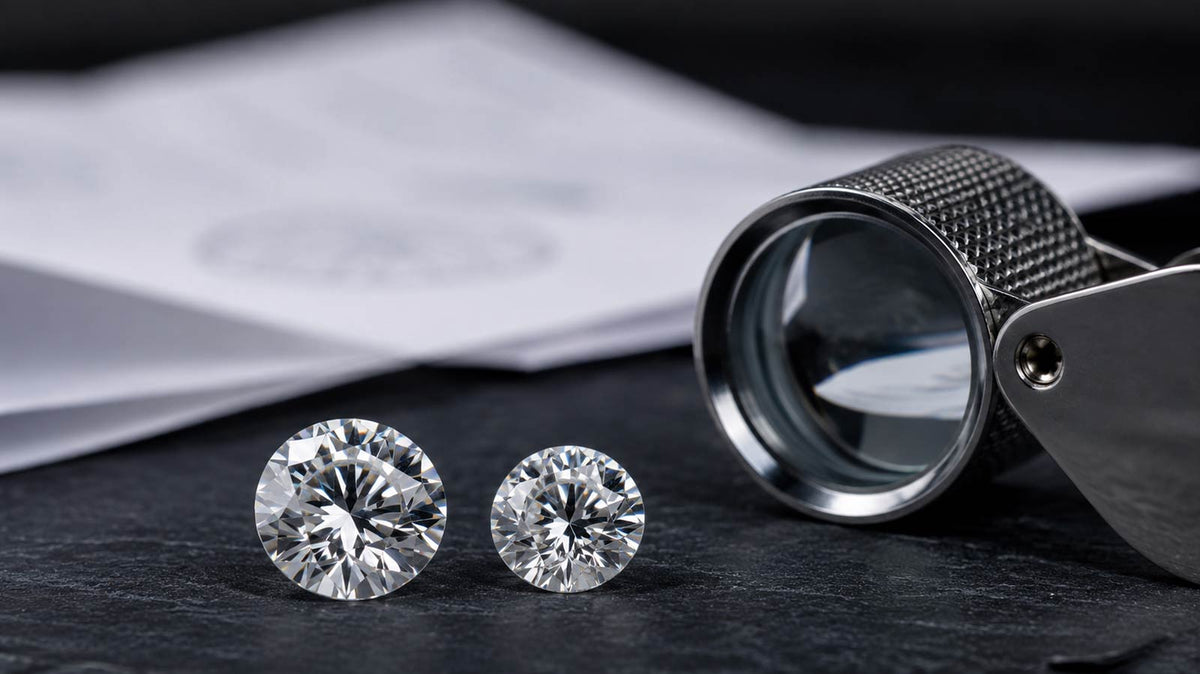
F VS2 Lab Diamonds: The Best Value Combination on the Report?
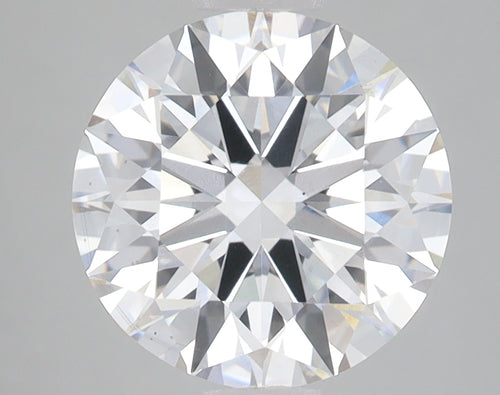
F and VS2 are two grades read together on a diamond report, and this guide examines the pairing using eight current Juvetti stones.
The short version: F is the third and final grade in the colourless band, and VS2 is sixth of the eleven clarity grades, assessed at ten times magnification. Whether a VS2 stone shows anything without magnification varies from stone to stone.
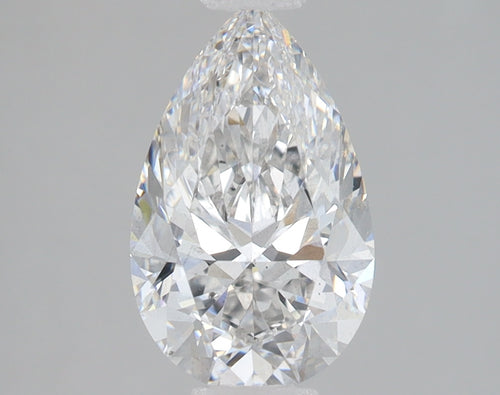
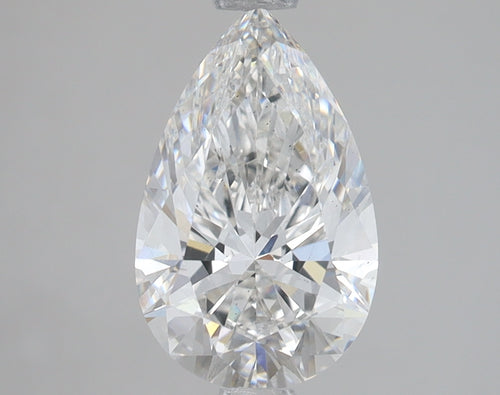
The eight stones gathered for this guide, all from our lab grown diamond collection, run from a 1.58 carat pear at £580 to a 15.9 carat round at £29,730, and every one carries an IGI or GIA report. If you are choosing a stone for a piece rather than reading about grading, the ring collection shows what these stones become once they are set.
This guide covers what the pairing means, why it is the value case rather than the compromise case, what the certificates say, and what F VS2 actually costs.
The short answer, before the detail
If you want the decision in four lines:
- F VS2 is a specification worth reading on its own terms. The colour grade stays inside the colourless band and the clarity grade stays inside the loupe's territory.
- F is still a colourless grade. It is the third and final step of the colourless band, not the first step outside it.
- VS2 is defined by what a grader finds under magnification, not by what you see. Whether a particular VS2 stone shows anything unaided is a stone by stone question, which is why we would rather show you the stone than quote you a rule.
- Across the eight stones in this guide, F VS2 runs from £580 to £29,730, and the shape of that range says more about how diamonds are priced than any theory.
Everything below is the reasoning, starting with the stone that sets the floor.
The two grades, each in one paragraph
F is the last of the three colourless grades on the GIA D to Z scale, behind only D and E. What the F grade means in full, and how it compares against the grades either side of it, is the business of our F colour guide, linked further down, so this page will not re-explain it.
VS2 sits sixth of the eleven clarity grades, in the Very Slightly Included band, where inclusions are minor and found under ten times magnification. The clarity scale itself, and the premium the grades above VS command, belongs to our VVS1 lab diamonds guide.
What this page keeps for itself is the pairing. F sits two positions below D on the colour scale; VS2 sits four grades below Flawless territory on the clarity scale; and both positions are settled by graders with master stones and loupes rather than by anything the eye reports. This guide does not establish that F VS2 looks different from the grades above it, and it does not need to. What it establishes is what the report says, what the money buys, and where each pound lands.
What the pairing actually describes
F VS2 pairs the final colourless grade with a clarity grade assessed at ten times magnification, which makes it a combination worth examining on its own terms rather than as a discount on something else.
The colour grade stays inside the colourless band. F is not nearly colourless; it is the colourless band's own third member, sharing the band with D and E.
The clarity grade lives in the loupe's territory, with honest variation. VS2 inclusions are, by definition, minor and found under magnification. Some VS2 stones show nothing unaided at all; others show something to a patient eye at close range. That variability is exactly why buying a specific stone, seen and chosen, beats buying a grade in the abstract.
For the full argument about spending less on colour and directing the budget to cut or carat, see our F colour lab diamonds guide, which owns that decision properly.
F VS2 is not a lower rung on someone else's ladder; it is its own reading of the report, and the stone in front of you is the only page that settles it.
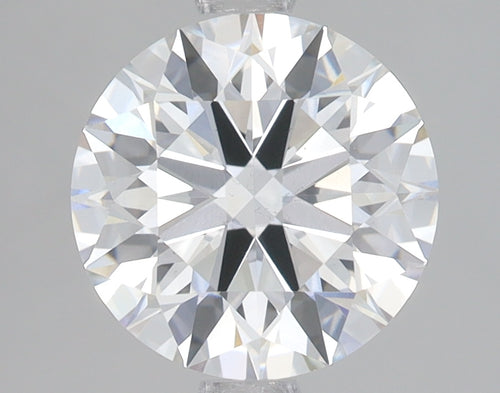
There is a mirror to this article, and it is worth naming honestly: some buyers want the top of both scales for the certainty of it, and that is a real reason to pay for it. Two philosophies, not a right and a wrong answer. The 2.5 carat round below, one of the guide's three ideal cut rounds, is a fair stone to hold in mind through the rest of it.
What the certificates say
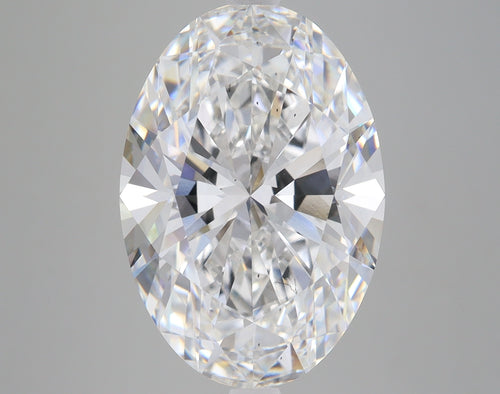
Every stone in this guide carries an independent report, and this selection happens to carry both kinds: seven IGI reports and one GIA, on the 8.24 carat oval below.
The two laboratories no longer describe lab grown diamonds the same way, and it matters to how this page reads. IGI continues to grade lab grown stones on the familiar D to Z colour scale and eleven grade clarity scale. GIA moved new colourless to near colourless lab grown submissions to an overall Premium or Standard classification from 1 October 2025, while its earlier reports remain valid, which is why the 8.24 carat oval below carries a GIA report that still reads F VS2. How the certificates compare, and what each records, is covered in full in our guide to lab grown diamond certifications. The practical habit worth keeping: ask for the report number when you buy, and keep it with the piece.
What F VS2 costs
Prices in this section are for the eight stones selected for this guide and describe our current stock rather than the UK market.
Across the eight, F VS2 runs from £580 for the 1.58 carat pear to £29,730 for the 15.9 carat round. The four stones between 1.58 and 2.73 carats all sit between £580 and £1,160, which is the band where this combination does its most persuasive work: whole carats, colourless band colour, and change from £1,200.
Two things in that table deserve a careful reading.
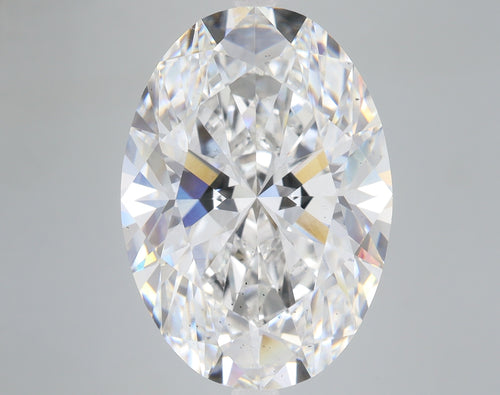
Price is a bundle, not a formula. The 12.8 carat oval costs less than the 8.24 carat oval despite carrying half again more weight: same shape, same grade pair, different certificates and different individual stones. A published price carries cut quality, proportions, the certificate, and how the rough behaved, all at once, which is why we would rather show you two stones than quote you a rate per carat.
Read per carat, the same table tells a second story. The four small stones sit between £367 and £428 per carat. The larger examples work out near £786 per carat for the 11.19 carat cushion, £941 for the 12.8 carat oval, £1,490 for the 8.24 carat oval and £1,870 for the 15.9 carat round. Every figure is simple division on prices you can check on the product pages, and because these are different shapes, individual stones and certificates, the figures describe this selection rather than a law: notice that the 8.24 carat oval carries a higher per carat price than two heavier stones.
The biggest stone in this selection also costs the most, in total and per carat. The 15.9 carat round costs roughly fifty times the 1.58 carat pear at roughly ten times the weight, in this selection. How carat weight actually reads on the hand, and where the sensible sweet spots sit, is the business of our 1 carat lab diamonds guide.
From loose stone to finished piece
Every stone in this guide is sold loose, and the step from stone to jewellery is a design conversation rather than a checkout option. For help choosing the metal colour, see our white, yellow and rose gold comparison guide, which owns that decision. What belongs here is the practical note: a loose stone bought well travels into any setting later, and our designers build around the stone you choose rather than asking the stone to fit a catalogue.
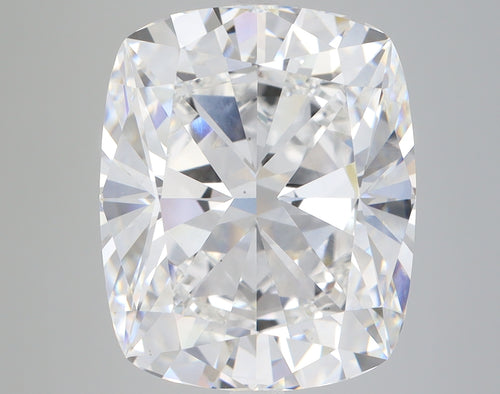
The 11.19 carat cushion below is the selection's reminder that shape and outline decide presence as much as weight does: it carries serious carats in a soft outline that reads gentler than its numbers.
When to spend more, and when this is enough
There is an honest case for paying for a D VVS1 specification, and it is not ours to make twice: our D VVS1 lab diamonds guide makes it properly, as the certainty case, the specification bought for its own sake. What belongs here is the other half of the ledger.
F VS2 is enough when the stone in front of you says so. The report reads colourless band colour and clarity settled under the loupe, and the stone, seen and chosen, is the only evidence that ever mattered.
At 15.9 carats, the largest stone in this selection is the highest priced in this guide, £17,450, or about 142 per cent, above the next highest listed price, while carrying the same F VS2 grades as the £580 pear.
What to ask when you view a stone
Three questions settle an F VS2 purchase faster than any amount of reading.
Where do the inclusions sit? Two VS2 stones with identical reports can wear their clarity differently, depending on whether the inclusions sit under the table or out at the edge where a setting claw will cover them. The report maps them; ask to be walked through it.
How does it face up beside its neighbours? Ask to see the stone next to one grade up and one grade down. Five minutes of that comparison teaches more than any chart, and it is a request any confident seller welcomes.
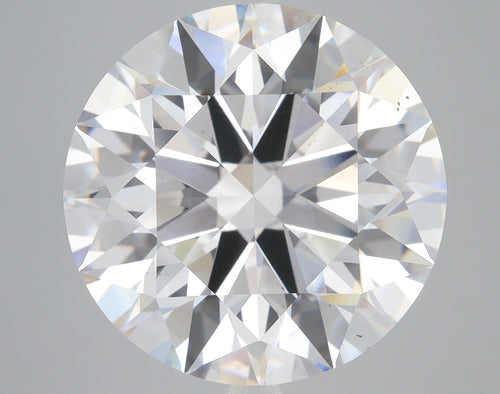
What does the cut grade actually say? The report's cut assessment is the closest thing to a promise about how the stone will behave in light. On the three ideal cut rounds in this selection, that promise is the quiet half of the price.
The 2.73 carat round below is the largest of the guide's small stones, and a fair one to put all three questions to.
Frequently Asked Questions
Is an F VS2 lab diamond a good diamond?
Yes, by the reading of the scales themselves. F is the third and final grade of the colourless band, and VS2 inclusions are defined as minor and found under ten times magnification. Whether a specific stone suits you is settled by seeing it, which we would encourage over any rule of thumb, and the prices in this guide are all checkable on their product pages.
What does F VS2 mean on a diamond report?
Two grades from two scales. F is a colour grade on the GIA D to Z scale, sitting third, behind D and E, at the colourless end. VS2 is a clarity grade, sixth of eleven, in the Very Slightly Included band, meaning a grader finds minor inclusions under ten times magnification. Together they describe a colourless band stone whose inclusions are a matter for the loupe.
Is F colour with VS2 clarity good enough for an engagement ring?
It is a commonly chosen combination for exactly that purpose, holding the colour grade inside the colourless band and the clarity grade inside the loupe's territory. The honest step is to view the specific stone, since VS2 stones vary in where their inclusions sit.
What is the difference between F VS2 and D VVS1?
Two philosophies. D VVS1 is the top of the colour scale paired with the third of the eleven clarity grades, bought for the certainty of the specification. F VS2 sits at the third colour grade and the sixth clarity grade, read together as a specification of its own. Our D VVS1 guide makes the certainty case in full; this guide reads the other pairing.
Are VS2 inclusions visible to the eye?
The grade is defined under ten times magnification, not by unaided sight, and stones vary. Some VS2 stones show nothing without a loupe; in others, a patient eye at close range may find something, particularly in larger stones with open tables. That is why we show the stone rather than promise a rule.
Do IGI and GIA grade F VS2 the same way?
Not any more. IGI continues to grade lab grown diamonds on the D to Z colour scale and the eleven grade clarity scale. GIA moved new colourless to near colourless lab grown submissions to Premium or Standard classifications from 1 October 2025, while earlier GIA reports carrying grades such as F VS2 remain valid. The differences between the certificates are covered in full in our certifications guide.
F VS2 is what the report looks like when both scales are read for wearing rather than for ranking: colour still in the colourless band, clarity still settled under the loupe. Whether that reading suits you is a question the stones themselves answer better than the letters do.
Our lab grown diamond collection below shows the current F VS2 stones with their report numbers, and our team will be glad to pull two stones side by side, this combination against any other, so the decision can be made with eyes rather than letters.
Prepared by the Juvetti editorial team and reviewed by Nanon of Juvetti. Product details were checked against the current Juvetti catalogue, and grading information was checked against GIA and IGI sources. Prices and availability change, so please check the current product page before deciding.