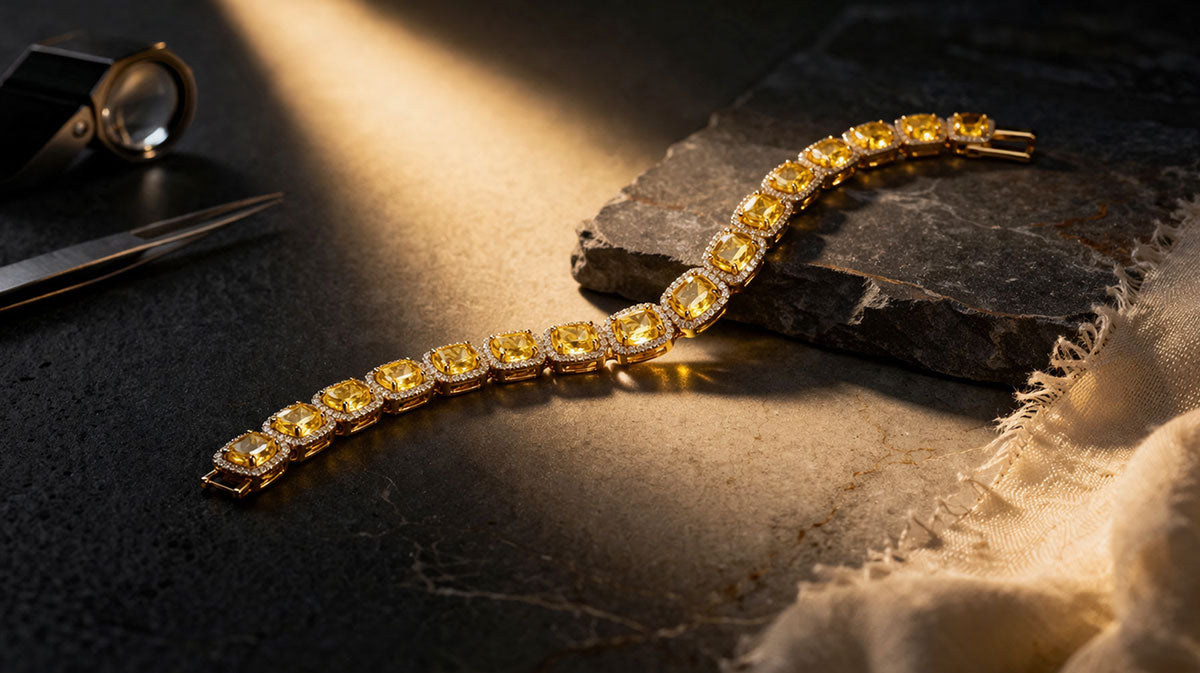
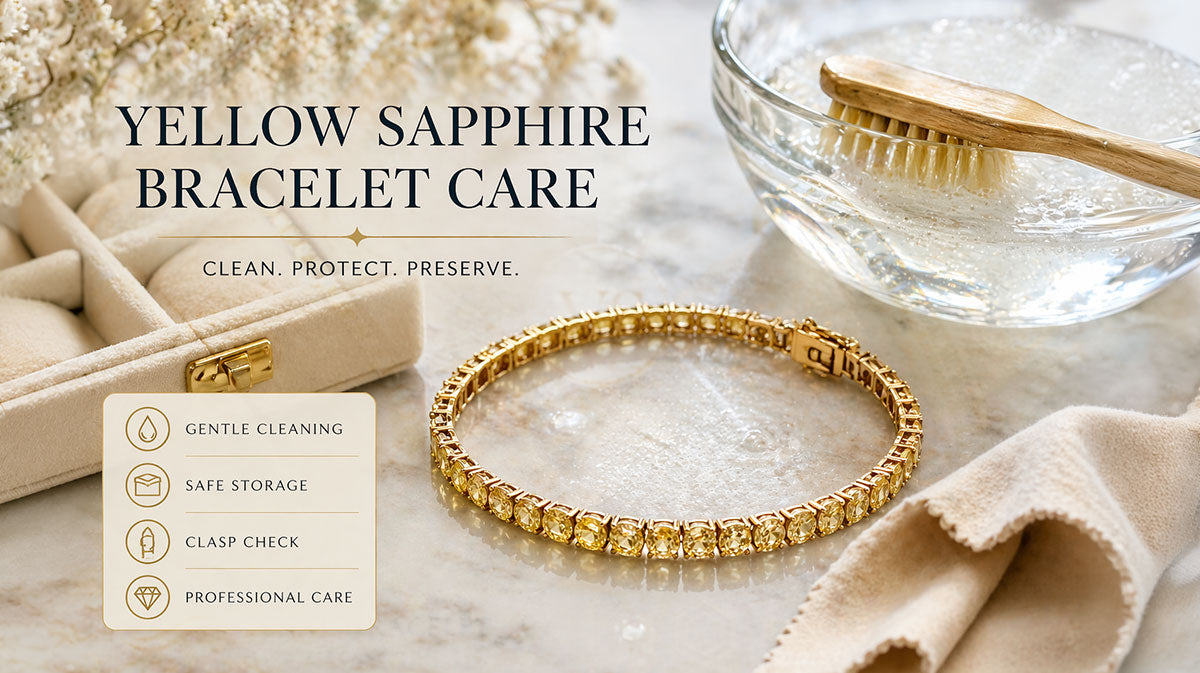
How to Clean and Care for Your Yellow Sapphire Bracelet at Home
Most people tend to fall into two categories when it comes to caring for fine jewellery. Some clean their pieces so frequently that they question whether they're causing damage, while others wear their bracelets daily without much worry until, in good light, they notice they no longer gleam as brightly. If either of these habits sounds familiar, this guide is for you.
The good news is that yellow sapphire is not a demanding gemstone. Rated Mohs 9 on the hardness scale, it is built for daily life, for wrists that wash up, apply hand cream, and reach into bags. It does not require a specialised regimen or expensive products. It rewards simple, consistent care and responds to attention in the most visible way possible: by looking exactly as it should.
That said, the gemstone is only part of the story. The setting and metal that secure it deserve equal care, and knowing what to avoid is as important as knowing what to do. This guide covers it all: how often to clean, how to do it at home in a few minutes, how to care for different metals, how to store and travel with your bracelet, and when it is worth visiting a professional.
Follow this guide and your yellow sapphire bracelet will look exactly as it should, brilliant, warm, and entirely itself, for years to come.
How Often Should You Clean Your Yellow Sapphire Bracelet?
Daily wear pieces accumulate skin oils, hand cream, soap residue, and environmental dust faster than you might expect. A bracelet worn most days benefits from a light clean every two to three weeks. This keeps brilliance consistent without over-handling the piece.
On the other hand, occasional wear pieces, which are kept for special events or specific outfits, should be cleaned before and after each major occasion rather than on a fixed schedule. This approach guarantees they look their best when worn and remain properly stored.
If you are still in the process of selecting your piece, our Yellow Sapphire Bracelet Buying Guide covers how setting type, stone quality, and metal choice all influence not only how your bracelet looks, but how straightforward it is to maintain long-term.
Here's a straightforward visual test worth trying: hold your bracelet in bright light, such as natural daylight or a strong lamp, and examine the stone closely. A pure yellow sapphire will display clarity and depth, while a film on it might make the colour seem dull or muted, as if something is blocking the view. If the stone looks less vibrant than usual, surface film is likely the cause rather than an issue with the stone itself. Remember, yellow sapphires maintain their colour over time.
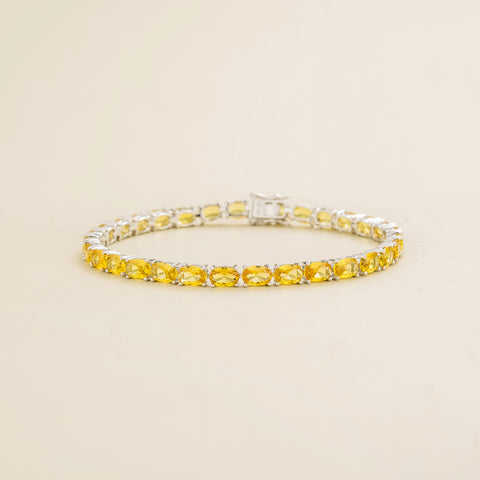
How to Clean a Yellow Sapphire Bracelet at Home
This is the practical core of yellow sapphire bracelet care. The process is simple, takes under twenty minutes, including soaking time, and uses nothing you need to purchase specially.
What You Will Need
-
A small bowl
-
Lukewarm water, not hot
-
A few drops of mild washing-up liquid or gentle hand soap
-
A soft-bristled brush, a baby toothbrush or a dedicated jewellery brush is ideal
-
A lint-free cloth or microfibre cloth for drying
-
A clean, flat surface to work on
The Cleaning Process - Step by Step
Follow these steps in order. Each stage has a purpose, and skipping ahead tends to produce a less satisfying result.
-
Prepare the solution by mixing a few drops of mild soap into a bowl of lukewarm water. Ensure the water feels comfortably warm to the touch, avoiding hot temperatures. Hot water can affect the adhesives used in certain applications and may induce thermal stress in treated stones.
-
Soak the bracelet in the solution for 10–15 minutes. This softens oils and residue that gather on the stones and in the setting's recesses, all without harsh scrubbing.
-
Brush gently. Using your soft-bristled brush, work carefully around each stone and along the setting, paying particular attention to the back of the bracelet where skin contact is greatest. For tennis bracelets, work along the line of stones in one direction rather than scrubbing back and forth. For bangles, pay close attention to the inner curve.
The structural differences between a tennis bracelet and a bangle also affect how each one wears, stacks, and suits different lifestyles. If you are weighing up which style suits you best, our guide to Yellow Sapphire Tennis Bracelet vs Bangle covers both styles across six dimensions, from flexibility and occasion range to investment value.
-
Rinse thoroughly under lukewarm running water, ensuring all soap residue is washed away. Leaving soap film on the stone surface can dull its restored brilliance. This step is more important than many realise.
-
Dry carefully by patting with a lint-free cloth instead of rubbing. Let it air dry for a few minutes before storing or wearing. Avoid using a hair dryer, as the heat is unnecessary and could harm the setting over time.
What to Avoid Entirely
The following are common causes of avoidable damage. Knowing what to avoid is as important as knowing what to do:
-
Harsh chemical cleaners - bleach and abrasive scrubs should never be used. While some traditional guides suggest using diluted ammonia, it can react with the solder points in gold settings, potentially weakening the bracelet’s structure over time. Stick to mild, pH-neutral soaps to ensure both the stone and the metal architecture remain secure and pristine.
-
Toothpaste - a frequently suggested home remedy, but far too abrasive for fine jewellery settings.
-
Hot water - extreme or sudden temperature changes can cause "thermal shock." While sapphire is tough, natural stones with microscopic inclusions can develop internal fractures if moved too quickly from icy water to hot water. Always use lukewarm water to ensure the stone and the metal expand and contract at a safe, gradual rate.
-
Ultrasonic cleaners at home - while professional ultrasonic equipment is calibrated and controlled, consumer devices can loosen prong settings and damage stones with natural inclusions. For lab-grown yellow sapphires, the risk is lower, but caution is still advised without professional guidance.
-
Paper towels or rough cloths - surface fibres can cause micro-scratches on the metal finish.
Caring for Different Metal Settings - Gold vs Platinum
The gemstone and the metal that holds it are two distinct materials, and each has its own character. Understanding your setting type helps you care for the whole piece, not just the stone.
Yellow Gold and Rose Gold Settings
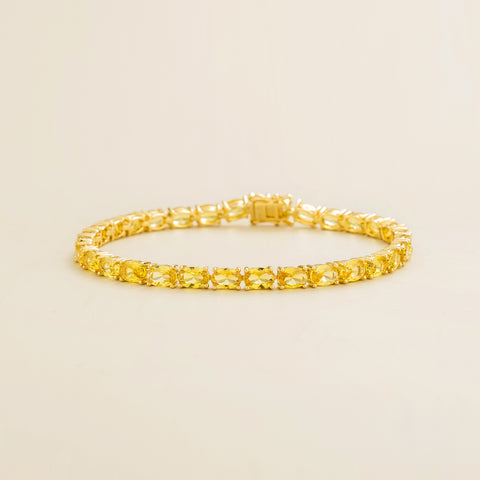
Yellow and rose gold are relatively soft metals. 18ct gold is durable enough but may develop fine surface scratches with daily wear, which is normal. Many wearers find the softened look attractive as it ages. For those who want to restore its original brightness, the cleaning method above will do just that.
Rose gold's hue results from its copper-alloy composition. It is not just a surface coating and cannot be removed through careful cleaning. Handle it the same way as yellow gold. A polishing cloth designed specifically for gold can restore surface shine between deeper cleans. Use it lightly and in one direction across the metal.
White Gold Settings
White gold usually features rhodium plating, a platinum-group metal that enhances hardness and imparts a bright, cool appearance. With regular wear, this plating naturally wears off, especially on areas like the inner surface of the bracelet, which experiences more friction. This process is normal and not a sign of poor quality. To preserve the plating, gentle cleaning at home is recommended, while harsh chemicals should be avoided, as they accelerate wear.
Re-rhodium plating is a straightforward professional procedure, typically recommended every 12–18 months for daily-wear white gold pieces. It is quick, inexpensive, and completely restores the bracelet to its original finish.
Platinum Settings
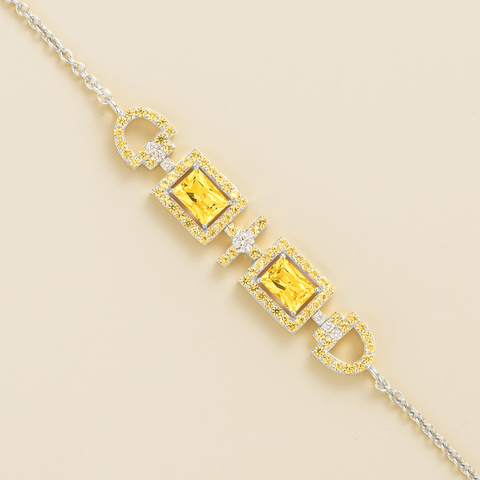
Platinum is the most durable setting metal and requires the least maintenance of the three. It does not plate, tarnish, or change colour over time.
Unlike gold, platinum naturally develops a patina over time, characterised by a delicate surface texture from micro-scratches, which many owners find attractive. This patina imparts a softer, more organic appearance, reflecting the piece's history of love and wear. For enthusiasts of the original high-polished look, a professional polishing can fully restore its shine.
Home cleaning follows the same method described above. Platinum is forgiving of consistent, gentle care.
Platinum and yellow sapphire are among the most durable combinations in fine jewellery. If you want a bracelet that demands almost nothing of you, this pairing delivers it.
Protecting the Clasp - The Most Vulnerable Part of Any Bracelet
Most care guides focus entirely on the stones and overlook the clasp. This is a significant omission. The clasp is the mechanical heart of the bracelet, as it bears the tension of the piece and is the point most likely to show wear before the stones or the main body.
What to Check Regularly
-
The clasp should open and close with a clean, secure click. Any looseness or resistance is an early warning sign worth addressing before it becomes a loss risk.
-
For box clasps with safety catches, check that the safety mechanism engages fully. Push it gently to confirm it holds before wearing.
How to Clean Around the Clasp
Use your soft-bristled brush to carefully clean around the clasp hinge and catch areas where residue and debris tend to gather. Rinse thoroughly, as trapping soap in the clasp mechanism can accelerate hinge corrosion.
What to Avoid
-
Pulling the clasp open repeatedly to test it. Operate it only when necessary.
-
Forcing a stiff clasp. If resistance develops, this is a signal for professional attention, not harder pressure.
When to act: If the clasp feels loose, does not click securely, or shows visible wear on the hinge, take the piece to a jeweller before wearing it further. A lost bracelet costs far more to replace than to repair a clasp.
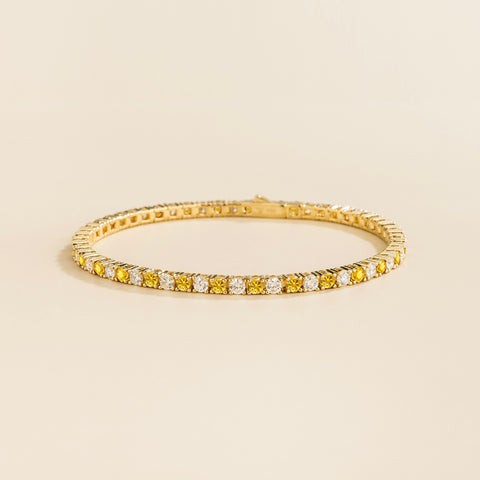
Storage: Protecting Your Bracelet Between Wears
The Fundamentals of Fine Jewellery Storage
Where and how you store a yellow sapphire bracelet directly affects how it looks the next time you reach for it.
-
Individual storage is essential - a yellow sapphire at Mohs 9 will scratch softer gemstones, and harder stones such as diamonds will scratch it. Store each piece separately in its own soft pouch or compartment.
-
Soft lining matters - velvet or microfibre compartments are ideal. Avoid plastic bags, which trap moisture and can cause tarnishing on metal settings over time
-
Away from direct sunlight - prolonged UV exposure is not a significant risk to sapphires, but it can affect certain metal finishes and any organic materials in the storage environment
-
Cool and dry - humidity accelerates tarnishing on gold alloys. A bathroom may be the most convenient storage location for many people, but it is genuinely the worst choice for fine jewellery. A bedroom drawer or jewellery box away from moisture is ideal
Storing Multiple Yellow Sapphire Pieces Together
If you are building a wider collection, a yellow sapphire bracelet alongside yellow sapphire earrings, a yellow sapphire necklace, or yellow sapphire rings, the same principles apply across every piece.
-
Use a jewellery box with individual, separated compartments rather than a single tray where pieces can move against each other
-
Drape necklaces and bracelets separately to prevent chain tangling and clasp damage from contact
-
If you travel with multiple pieces, a dedicated travel jewellery case with padded compartments keeps everything separated and immediately accessible
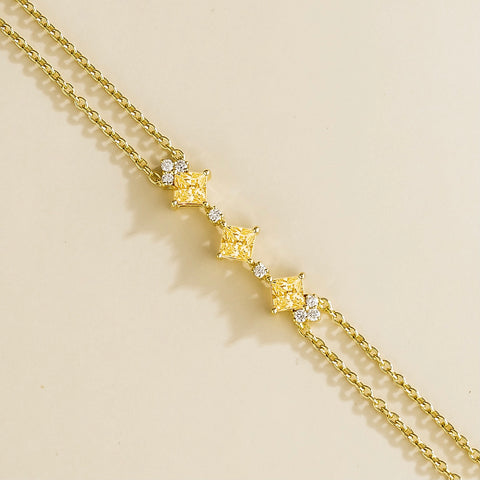
Travelling with Your Yellow Sapphire Bracelet
Travel poses a high risk to fine jewellery, not because of its fragility, but because the normal routines that safeguard it at home are interrupted. A bit of planning can greatly reduce this risk.
Packing Fine Jewellery Safely
-
Always keep fine jewellery in your carry-on luggage, never in checked bags. Pressure fluctuations, rough handling, and theft dangers make checked luggage entirely unsuitable for valuables.
-
Use a dedicated travel jewellery case with individual padded compartments, compact enough for carry-on, designed to prevent pieces from tangling or scratching one another during transit.
-
If a travel case isn't available, wrap each item separately in a soft microfibre cloth and store it in a small rigid container. A glasses case can be used as a handy substitute.
Wearing vs Packing on Travel Days
For short trips, wearing the bracelet is usually the easiest and safest option as it won't get lost in luggage and is clearly visible. For longer travels that include swimming, active outings, or beach visits, it's more practical to pack it securely.
Remove your jewellery before swimming, as chlorinated and salt water can deteriorate metal components over time. The risk of clasp failure in open water outweighs the feeling of security on land.
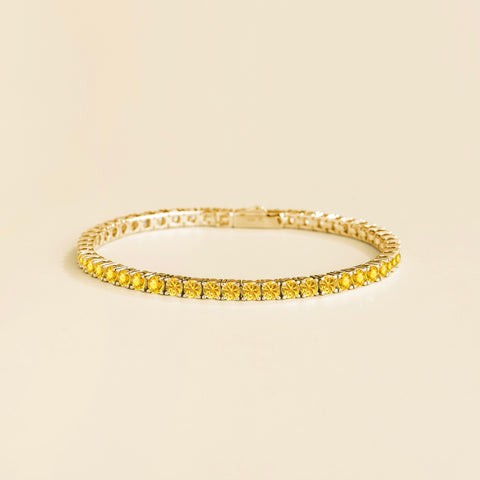
Humidity and Climate Considerations
-
High-humidity environments accelerate tarnishing of gold alloys. If the area is especially humid, store the bracelet in a zip-lock bag with a small silica gel sachet between uses.
-
Extreme cold does not harm yellow sapphires, but frequent and rapid temperature shifts, such as moving from strong air conditioning to extreme heat, should be avoided whenever possible.
When to Take Your Yellow Sapphire Bracelet to a Professional
Recommended Servicing Frequency
-
Daily-wear bracelets should undergo professional inspections every 6–12 months. These checks should include the prongs, clasp mechanism, and stone security, as these parts tend to wear out most quickly with regular use.
-
Occasional-wear bracelets: An annual inspection is sufficient. Having it checked before or after a significant event is a practical approach
-
White gold settings: Rhodium re-plating every 12–18 months for everyday wear, a quick and affordable process that fully restores the bracelet.
Warning Signs That Need Immediate Professional Attention
Do not continue wearing the bracelet if you notice any of the following:
-
A stone that moves or rocks in its setting - do not wear it until a jeweller has checked the prongs
-
A clasp that does not close securely - the loss risk is real and immediate
-
Visible prong wear or a bent prong - prongs thin with friction over time, and worn prongs do not hold stones securely
-
Cloudiness that does not resolve after home cleaning - this may indicate a deeper issue with the stone or setting that requires professional assessment
-
Any crack, chip, or visible surface damage - stop wearing it and consult a jeweller before the damage progresses
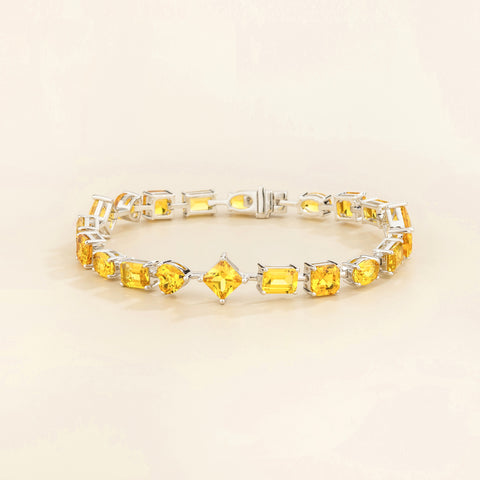
What a Professional Service Actually Involves
Many people hesitate to book a professional service because they are not sure what to expect. In practice, it is a straightforward process:
-
The jeweller will inspect each stone for security and each setting element for wear
-
The piece will be cleaned using professional ultrasonic and steam equipment, restoring a level of brightness that home cleaning cannot fully match.
-
Any minor repairs, such as prong tightening or clasp adjustments, are usually completed during the same appointment.
-
The result is a bracelet that looks, feels, and functions exactly as it did when first worn
Caring for Something Worth Keeping
There is a particular satisfaction in picking up a piece of jewellery and finding it exactly as you hoped, brilliant, clean, and entirely itself. The care described in this guide is not demanding. It takes minutes, uses nothing specialist, and makes a visible difference every time.
But beyond the practical, there is something worth acknowledging: looking after a yellow sapphire bracelet is a small, regular act of respect for something that marked a moment, carries meaning, or represents a considered investment in your own quality of life. It is not maintenance for its own sake. It is the difference between something that lasts and something that gradually fades.
If you are choosing a bracelet to mark one of those moments for someone else, our Yellow Sapphire Bracelet Gift Guide explores the meaning behind the gemstone, the occasions it suits best, and how to select a piece the recipient will genuinely treasure.
Juvetti's yellow sapphire bracelets are designed to be worn, loved, and kept for life. Explore the collection and find the piece worth caring for.

Frequently Asked Questions
Can I clean my yellow sapphire bracelet with an ultrasonic cleaner at home?
It is best to avoid consumer ultrasonic cleaners. While the sapphire itself is durable, the high-frequency vibrations of home units can cause stones to vibrate against their metal settings or against each other, leading to "girdle ruffling" (tiny chips) or loosening of the prongs. This is especially risky for tennis bracelets, where many stones are set closely together. For both natural and lab-grown sapphires, the gentle "soak and brush" method is significantly safer and achieves professional-level results without risking the integrity of the setting.
How often should I have my yellow sapphire bracelet professionally serviced?
For a bracelet worn daily, a professional inspection every 6–12 months is recommended. This allows a jeweller to check prong integrity, clasp security, and stone stability before minor wear becomes a real issue. Occasional-wear pieces can be serviced annually. White gold settings benefit from rhodium re-plating every 12–18 months to maintain their finish.
Can I wear my yellow sapphire bracelet in the shower or while swimming?
It's advisable to take off your bracelet before showering, swimming, or bathing. Soap and shampoo residue can accumulate rapidly, dulling its shine, and chlorinated or salt water can damage metal settings over time.
How should I store my yellow sapphire bracelet to prevent scratches?
Store your bracelet separately from other jewellery, preferably in a soft pouch or a lined compartment inside a jewellery box. Yellow sapphire, with a Mohs hardness of 9, can scratch softer gemstones, while harder stones like diamonds may scratch it. Avoid plastic bags, as they trap moisture. Keep it in a cool, dry place away from direct sunlight. While a bathroom cabinet may be convenient, it is the least suitable option.
Will the colour of my yellow sapphire fade over time?
Generally, no. Yellow sapphire is a highly stable gemstone. However, some natural yellow sapphires possess "unstable colour centres" that can cause the hue to lighten if kept in total darkness for long periods. If your stone appears slightly paler after being stored away, a few hours of exposure to natural daylight typically restores its full, vibrant warmth. If you notice a loss of brilliance, however, it is most likely a surface film of oils or soap residue, which the cleaning steps in this guide will easily resolve.