
How to Choose a Yellow Sapphire Ring You’ll Love for Life
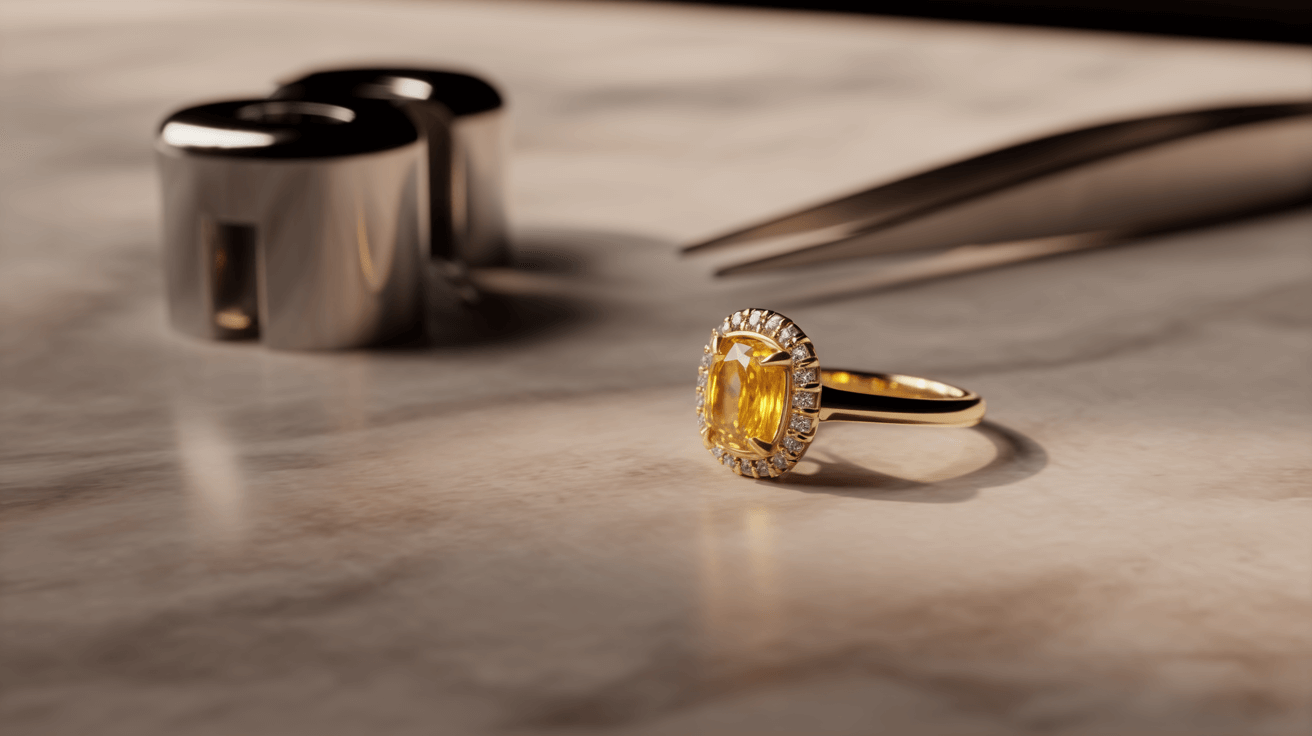
There's a particular quiet confidence that comes with choosing a coloured gemstone for a ring you'll wear every day. Not the predictable shimmer of a diamond, but something rarer - something that catches the light with warmth, intention, and a story uniquely your own. Yellow sapphire, with its honeyed glow and exceptional durability, has become the gemstone of choice for those who value beauty that feels both timeless and decidedly modern.
Yet choosing the right yellow sapphire ring can feel overwhelming. Should you prioritise carat weight or cut quality? Does colour intensity matter more than clarity? And how do you ensure you're investing in something truly exceptional, rather than simply expensive?
Here's the truth most jewellers won't tell you: colour matters more than carat. Cut matters more than origin. And purpose - your purpose - matters more than trends.
This isn't a guide designed to sell you the most expensive ring. It's a compass. By the end, you'll know exactly which yellow sapphire ring fits your hand, your lifestyle, and your values - without second-guessing yourself at the counter.
Start With Purpose: Why Are You Buying This Ring?
Before you evaluate a single stone, ask yourself the most important question: What role will this ring play in your life?
This isn't romantic fluff - it's strategic. The purpose of your ring dictates every decision that follows, from the durability of the setting to the size of the stone, from the metal choice to the budget you allocate. A ring chosen without purpose is a ring that disappoints six months later.
Engagement Ring vs Everyday Ring vs Statement Ring
The emotional and functional weight of a ring shifts dramatically depending on its role.
Engagement rings carry symbolic permanence. They're worn daily, often for decades. This means prioritising structural integrity, timeless design, and a stone that won't tire the eye. Yellow sapphire excels here: it ranks 9 on the Mohs hardness scale, making it one of the most durable gemstones for everyday wear. Its warmth brings joy without the expectation of tradition. Discover why so many couples are making this choice in our dedicated guide to Yellow Sapphire Rings for Engagement.
Everyday rings need to survive real life. If you're reaching for this ring every morning, opt for lower profiles, protective settings (bezel or halo), and stones with excellent clarity. A flawless 3-carat sapphire means nothing if it snags on knitwear or sits awkwardly on your hand during meetings.
Statement rings are theatre. They're allowed to be bold, dramatic, and occasionally impractical. Here, you can embrace larger carat weights, more adventurous cuts, and settings that prioritise visual impact over wearability. A statement ring doesn't apologise - it announces.
One-Time Purchase or Lifetime Piece?
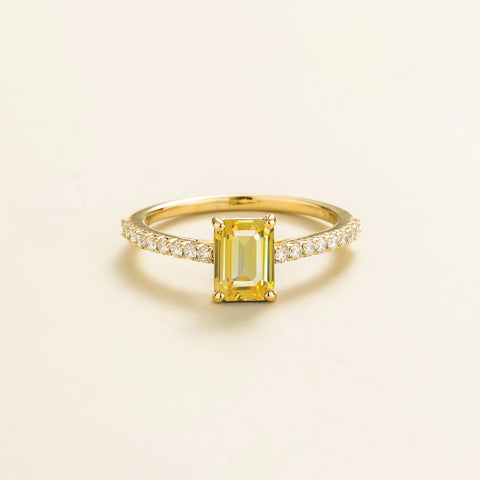
Are you buying a ring for now, or for always? If this is a lifetime piece - something you envision passing down or wearing at your daughter's wedding - invest in design timelessness over fleeting trends. Classic cuts (oval, cushion, emerald) endure better than hyper-modern geometric shapes. Simple settings age more gracefully than overly intricate metalwork.
Consider, too, your tolerance for maintenance. Heirloom-quality rings demand occasional professional cleaning, prong checks, and re-polishing. If that feels burdensome, choose a more forgiving design: bezel settings protect stones better than prongs, and platinum wears more slowly than white gold.
Matching the Ring to Your Lifestyle
Your ring should complement your life, not complicate it. For office wear and professional settings, look for refined elegance: medium carat weights (1.5–3 carats), low-profile settings, and colours that don't overwhelm. A golden yellow sapphire in a sleek solitaire setting communicates sophistication without distraction.
For active lifestyles - if you're a surgeon, a sculptor, a parent constantly washing small hands - durability trumps delicacy. Opt for protective settings, avoid raised prongs, and choose stones with fewer visible inclusions. For minimalist personalities, a single, superbly cut yellow sapphire in a simple band is perfection. For expressive, maximalist dressers, embrace larger stones, mixed metals, or halo designs that amplify presence.
Understanding Yellow Sapphire Colour: The #1 Value Factor
A poorly coloured 5-carat stone will always look inferior to a richly saturated 2-carat gem. Colour is the soul of the stone - the first thing the eye perceives, and the lasting impression it leaves.
The Yellow Colour Spectrum Explained
Yellow sapphires range from pale lemon to deep golden honey, and each hue creates a distinctly different visual effect.
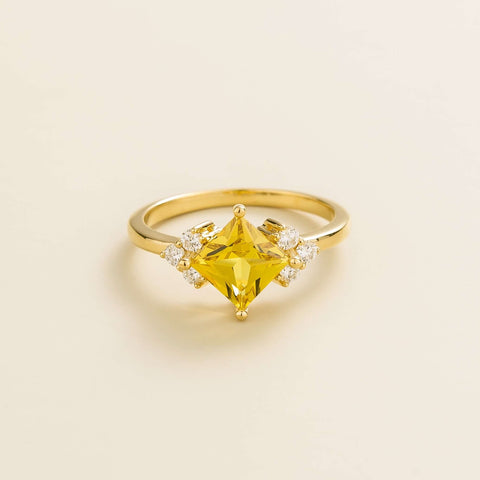
Lemon yellow is crisp, bright, and youthful. It has a cooler undertone - almost greenish in certain lights - and works beautifully in white gold or platinum settings. Golden yellow is the classic: warm, saturated, and universally flattering. It glows gorgeously in yellow or rose gold. Canary yellow sits at the pinnacle of intensity - vivid, electric, and rare. A true canary is unmistakable and commands premium prices. Champagne undertones introduce a softer, earthier quality, perfect for buyers seeking something less predictable. However, avoid stones that look murky rather than warm.
Which Yellow Looks Best on the Hand
Colour isn't just about the stone - it's about how the stone interacts with you. Warm skin tones (golden, olive, peachy undertones) are flattered by rich golden and canary yellows. Cool skin tones (pink, blue undertones) often look stunning with lemon or champagne yellows, which provide contrast without clashing.
Metal choice amplifies or softens colour. Yellow gold intensifies warmth. White gold or platinum creates contrast, making the yellow "pop" with modern crispness. Rose gold bridges both worlds, adding romantic warmth without overwhelming the stone. Try before you commit - a yellow that looks glorious under jewellery shop lighting may feel too intense or too pale in natural daylight on your actual hand.
Colour Consistency & Zoning: What to Avoid
Uniformity of colour separates exceptional sapphires from mediocre ones. Colour zoning refers to uneven distribution of hue within the stone - often visible as lighter or darker patches. When you tilt the ring, the colour should remain relatively consistent, not shift dramatically between pale and saturated areas.
Windowing occurs when a stone is cut too shallowly, creating a transparent "window" in the centre through which you can see straight through. Instead of brilliance, you get a washed-out, lifeless appearance. Always examine your stone under different lighting conditions - daylight, incandescent, and LED - before purchasing.
Cut Quality: Why It Matters More Than Carat
Carat weight is a number. Cut quality is an art. A masterfully cut 2-carat yellow sapphire will outshine a poorly cut 4-carat stone every time. Cut determines how light moves through the gem - how it dances, refracts, and ultimately, how it captivates.
Best Cuts for Yellow Sapphire Rings
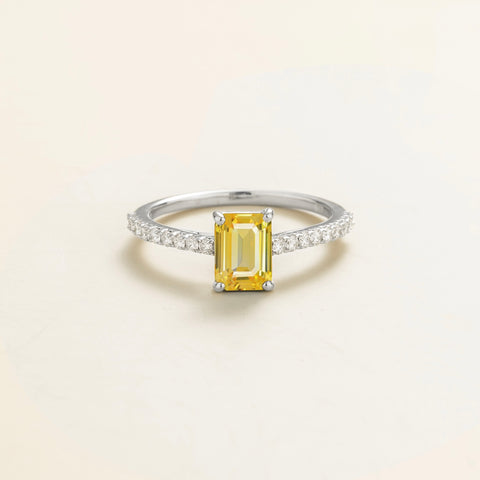
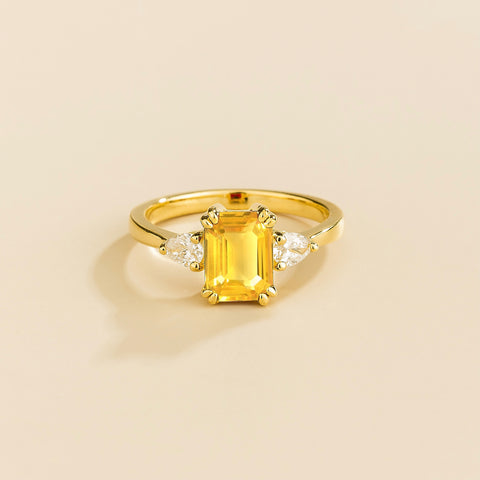
Oval cuts are the most popular for yellow sapphires. The elongated shape maximises face-up size, evenly distributes colour, and suits almost every hand shape. Cushion cuts bring a romantic, vintage sensibility - their larger facets create a warm, candlelit glow particularly suited to golden and canary yellows. Emerald cuts are for the purist: this step-cut style prioritises clarity and colour with a sophisticated, architectural quality. Round cuts are classic and versatile, offering exceptional sparkle paired beautifully with traditional solitaire settings.
Cuts That Make Yellow Sapphires Look Bigger
If visual presence matters - and let's be honest, it usually does - choose cuts that maximise surface area. Elongated shapes (oval, pear, marquise) create the illusion of greater size and have a flattering effect on the hand, making fingers appear longer and more elegant. A 2-carat oval can appear as substantial as a 2.5-carat round due to its elongated proportions.
Halo settings aren't technically a cut, but they're worth mentioning here. A halo of smaller diamonds or sapphires surrounding the centre stone significantly amplifies visual impact - often making a 1.5-carat sapphire appear closer to 2.5 or 3 carats.
Common Cutting Mistakes to Watch For
Over-deep stones are cut to preserve carat weight rather than beauty. An overly deep sapphire traps light inside rather than reflecting it to your eye - the result is a dark, lifeless appearance despite a theoretically impressive carat weight. Always ask for depth percentage specifications, ideally between 60–70% for most cuts.
Flat brilliance occurs when facets are poorly angled. Gently rock the ring under light - a well-cut sapphire should create dynamic flashes of colour and brightness. If it looks static, walk away. Asymmetry in fancy cuts (pear, marquise, heart) disrupts visual balance and always looks "off" no matter how beautiful the colour.
Carat Weight vs Visual Size: Avoiding Overpaying
Carat weight is seductive. It's a tangible, quantifiable metric in a purchase that otherwise feels abstract. But here's the truth: carat weight measures mass, not beauty.
Why Yellow Sapphires Look Larger Than Diamonds
Yellow sapphires are less dense than diamonds. This means that, carat for carat, a yellow sapphire has a larger physical volume and surface area. A 2-carat oval yellow sapphire can easily rival the visual impact of a 3-carat diamond, at a fraction of the cost. This is particularly noticeable in elongated cuts and makes yellow sapphire exceptional value for money.
Ideal Carat Ranges for Different Styles
For subtle elegance (0.8–1.5 carats): These sizes suit delicate hands, minimalist tastes, or buyers who prefer understated sophistication. A 1-carat yellow sapphire in a simple bezel setting is quietly powerful - refined without demanding attention.
For balanced presence (1.5–3 carats): The most popular range for engagement rings and statement everyday pieces. A 2-carat yellow sapphire strikes the ideal balance: substantial enough to be noticed, versatile enough to wear daily.
For bold statement pieces (3+ carats): You're making an entrance. These stones are dramatic and unapologetically eye-catching, best suited for special occasions or maximalist personal styles. For carats above 4, ensure the setting provides adequate structural support.
Wondering where to start for your budget? Explore our curated guide: Best Yellow Sapphire Rings Under £500 / £1,000: Affordable Luxury Picks.
Finger Proportion & Hand Shape Considerations
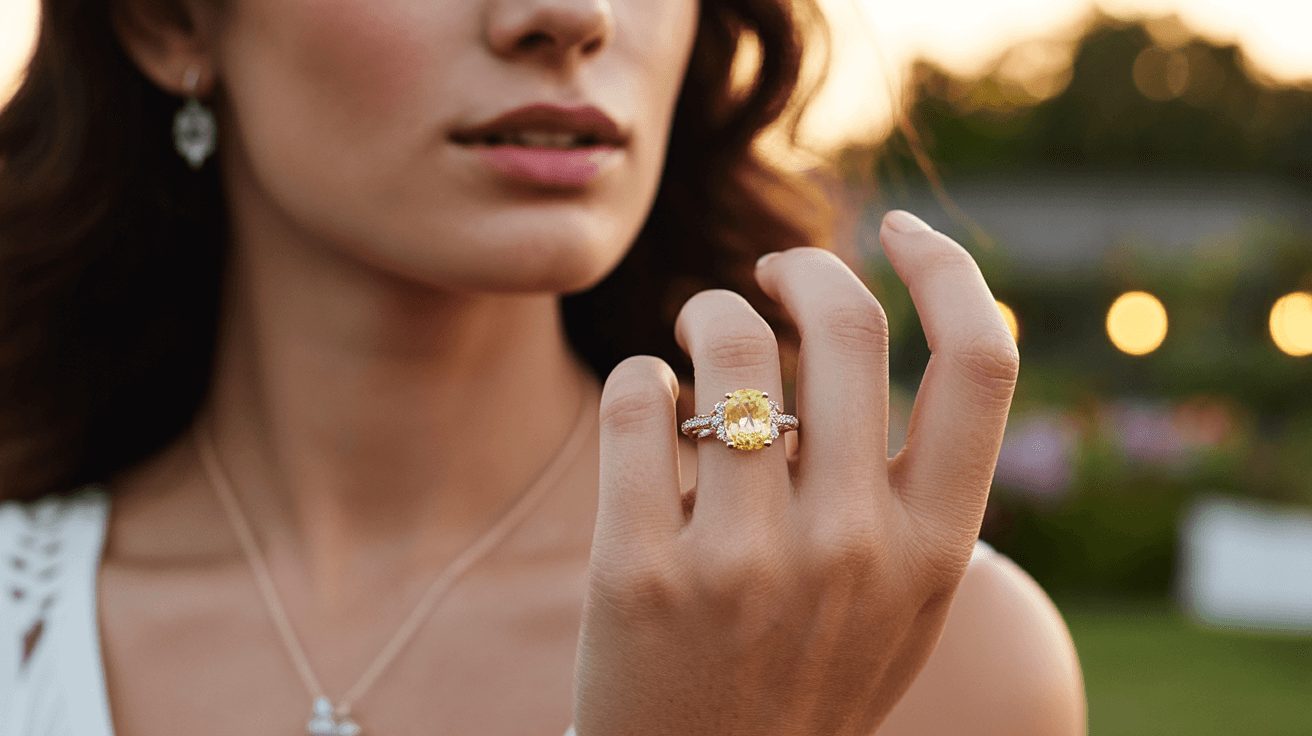
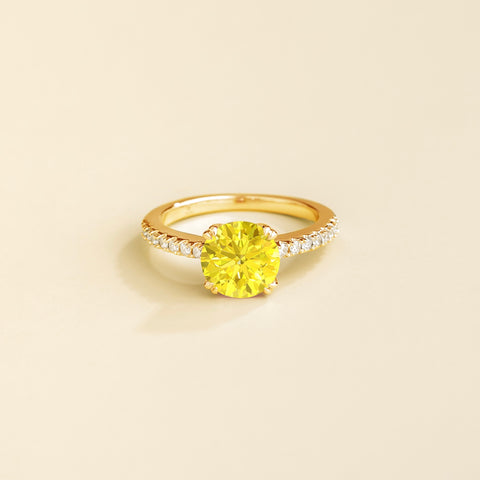
Your ring doesn't exist in isolation - it exists on your hand. For slender fingers, an elongated cut in 1.5–2.5 carats creates elegance without imbalance. For short fingers, ovals, emerald cuts, and marquise shapes create the illusion of length. For long fingers, you have enviable flexibility - rounds, cushions, and larger carat weights all work beautifully. Trust your instinct. If a ring feels "off" proportionally, it probably is.
Clarity: What Actually Matters in a Yellow Sapphire Ring
Clarity in yellow sapphires is where many buyers overspend unnecessarily. Unlike diamonds, coloured gemstones are judged more forgivingly. The question isn't "Is this stone flawless?" but rather, "Is this stone beautiful to my eye?"
Eye-Clean vs "Perfect on Paper"
Eye-clean is the golden standard for rings. It means that when you view the stone with the naked eye from a normal viewing distance, you cannot see inclusions. A VS (Very Slightly Included) yellow sapphire is often indistinguishable from a VVS or IF stone to the naked eye - yet the price difference can be substantial. Unless you're a collector seeking investment-grade rarity, prioritise eye-clean beauty over technical perfection, and redirect your budget towards superior colour or cut.
Inclusion Types You Can Accept
Silk inclusions (fine, needle-like rutile crystals) are common in yellow sapphires and often barely noticeable. In fact, subtle silk can enhance brilliance by scattering light softly throughout the stone. Fingerprint inclusions and crystals deep within the stone are also typically fine - yellow has a forgiving quality that absorbs and diffuses imperfections naturally.
What to avoid: surface-reaching fractures (which compromise durability), large dark crystals near the centre (which disrupt sparkle), and dense clouds of inclusions (which create a murky, lifeless appearance). If an inclusion is visible and distracting under normal viewing conditions, it will irritate you over time.
Setting Choices That Enhance or Conceal Clarity
Halo settings surround the centre stone with smaller diamonds or sapphires, drawing the eye outward and diffusing focus on any central inclusions - brilliant for maximising visual impact. Bezel settings encase the stone's girdle in metal, adding structural security. Prong settings are the most exposed - they showcase the stone fully, for better or worse, and allow maximum light entry and brilliance when the stone is eye-clean.
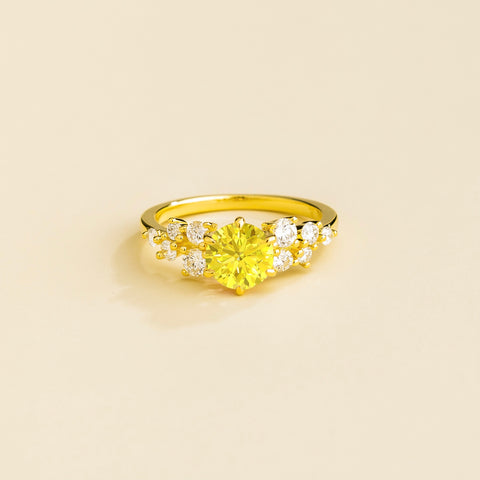
Yellow Sapphire as an Engagement Ring: Why It Works
Yellow sapphire is experiencing a renaissance as an engagement ring choice, and for good reason. It's not a compromise. It's a statement.
Durability for Daily Wear
At 9 on the Mohs hardness scale, yellow sapphire is second only to diamond in durability. You can wash your hands, type on a keyboard, travel, garden, and live your life fully without removing your ring. Compare this to softer gemstones like emerald (7.5–8), which require cautious handling, or opal (5.5–6.5), which is frankly impractical for daily wear. Yellow sapphire offers the beauty of colour with the resilience of a true heirloom stone.
Symbolism and Meaning in Relationships
Yellow sapphire has carried meaning across cultures for centuries. In Vedic tradition, it represents wisdom, prosperity, and joy - qualities most couples would welcome into a marriage. In Western tradition, yellow symbolises optimism, warmth, and new beginnings. For couples seeking something beyond the expected diamond, the yellow sapphire says: "We chose this intentionally."
Explore the full story behind this choice in our dedicated guide to Yellow Sapphire Rings for Engagement.
Why More Couples Are Choosing Yellow Sapphires
The shift is cultural, generational, and deeply personal. Millennials and Gen Z buyers reject cookie-cutter engagement rings - they want something distinctive that tells their story. Ethical considerations matter more than ever: many buyers are uncomfortable with the historical issues surrounding diamond mining, and lab-grown yellow sapphires offer a transparent, sustainable alternative without sacrificing beauty or quality.
Value is another factor. A 2-carat, high-quality yellow sapphire can cost significantly less than a 1-carat diamond, allowing couples to either save money or invest in superior cut, colour, and setting quality. Browse our full yellow sapphire rings collection to find your perfect match.
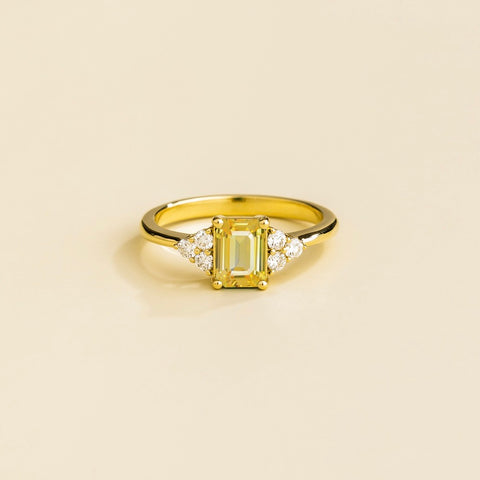
Natural vs Lab-Grown Yellow Sapphires: What You Need to Know
Both natural and lab-grown yellow sapphires are real sapphires - chemically, physically, and optically identical. The difference lies in origin, not authenticity.
Natural yellow sapphires form over millions of years deep within the Earth. They carry rarity, geological history, and for some buyers, a romantic notion of nature's patient artistry. Natural stones typically command higher prices due to scarcity and the costs associated with ethical sourcing.
Lab-grown yellow sapphires are created in controlled, sustainable energy-powered environments. They're atomically identical to natural sapphires - same hardness, same brilliance, same durability. They're also more affordable, environmentally gentler, and free from the ethical ambiguities that can shadow gemstone mining. At Juvetti, our lab-grown sapphires are cultivated by replicating the gemstone's natural birth conditions, resulting in stones of the highest grade.
The right choice depends entirely on what you value. If geological rarity matters, choose natural. If ethical transparency and maximising beauty within your budget matter more, lab-grown is exceptional. Neither is a compromise. Both are legitimate. Explore the full comparison in our article: Natural vs Lab-Grown Yellow Sapphire Rings: What's the Real Difference?
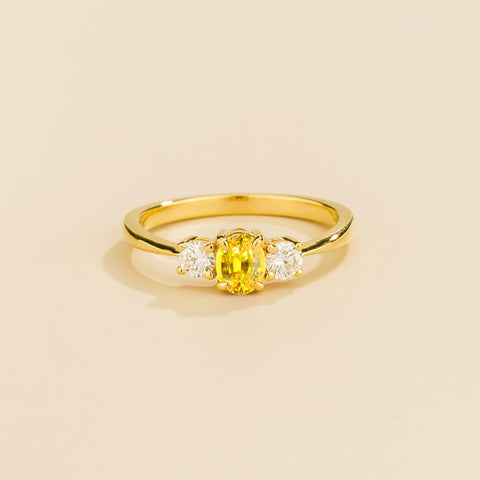
Certification, Trust & Buying Safely
In an industry where subjective beauty meets significant financial investment, trust is everything.
What Documentation Should a Yellow Sapphire Ring Have?
Gemstone certification from reputable laboratories (GIA, IGI, or equivalent) provides independent verification of your stone's characteristics: carat weight, colour, clarity, cut quality, and whether it's been treated. Heat treatment is industry-standard for natural sapphires and doesn't diminish value when disclosed. What matters is transparency. A reputable jeweller will always provide complete disclosure about any enhancements.
Hallmarking on the metal (for UK buyers, this includes the fineness mark, assay office mark, and sponsor's mark) ensures the purity of the gold or platinum used in your setting. Origin documentation, particularly for natural stones, adds provenance and can enhance value - especially for sapphires from renowned sources such as Ceylon (Sri Lanka) or Madagascar.
Buying Online vs In-Person
Online purchases offer convenience, a broader selection, and often better pricing. Look for: high-resolution images and videos showing the stone from multiple angles, detailed specifications beyond mere carat weight, transparent return policies, and responsive customer service. Avoid: vague descriptions without images to verify, missing certification, and sellers who won't answer specific technical questions.
For in-person purchases, bring a loupe (10x magnification), examine the stone under natural daylight, and don't rush. A reputable jeweller will never pressure you.
Red Flags When Buying a Yellow Sapphire Ring Online
Stock photography (generic images not of the actual stone you're purchasing) is unacceptable. Missing specifications - if a listing doesn't provide precise measurements, clarity grade, or treatment disclosure, walk away. Too-good-to-be-true pricing: a 3-carat vivid canary yellow sapphire for £200 is either an undisclosed lab-grown stone, heavily included, or a scam. Vague language around origin is a red flag. Reputable sellers know exactly what they're selling. No return policy suggests the seller knows buyers will be disappointed upon arrival. Trust your instincts - if something feels evasive or hurried, shop elsewhere.
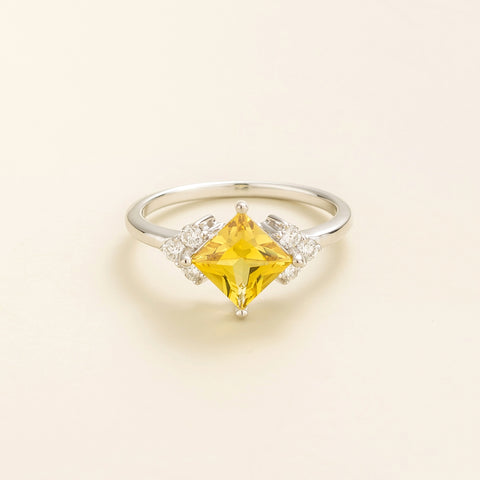
Common Mistakes Buyers Make (And How to Avoid Them)
Prioritising Carat Over Cut
It's tempting to focus on size - bigger feels better. But a poorly cut 3-carat stone will always disappoint compared to a masterfully cut 2-carat gem. Cut determines beauty. Carat determines ego. View stones in person or request high-quality videos. Observe how light moves through the gem - a well-cut sapphire will dance; a poorly cut one will sit dully.
Choosing Colour Blindly
Selecting a yellow sapphire based solely on online images - without considering how that colour interacts with your skin tone, metal choice, and personal aesthetic - often leads to buyer's remorse. If buying online, utilise generous return policies to test the stone in your actual environment, on your hand, in natural light, next to your wardrobe. If it doesn't feel right, return it without guilt.
Ignoring Setting Quality
A £2,000 sapphire in a £150 setting is a tragedy. The setting should honour the stone, both aesthetically and structurally. Budget holistically - if you spend 70% on the stone, allocate 30% to a well-made, secure setting. Poor craftsmanship in prongs, bezels, or shanks leads to lost stones and costly repairs.
Overpaying for "Natural" Without Reason
If you cannot visually or emotionally distinguish between a natural and lab-grown sapphire, paying a significant premium for "natural" is financially illogical - unless rarity itself holds personal value. Be honest about your priorities. Either choice is valid - just make it consciously.
Skipping Professional Appraisal Post-Purchase
Even certified stones deserve an independent appraisal, particularly for insurance purposes. After purchase, have your ring appraised by an independent gemologist (not affiliated with the seller). This provides peace of mind and ensures adequate insurance coverage.
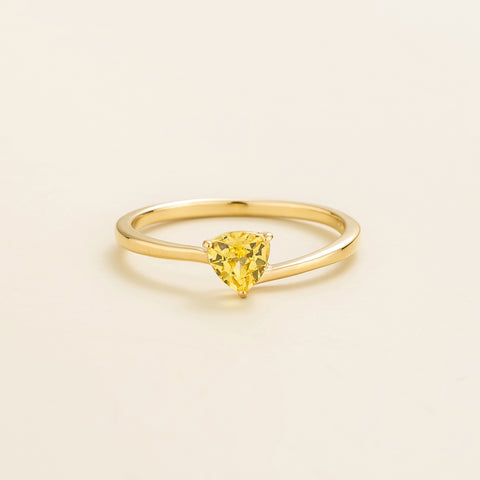
The Final Decision Checklist
Before you commit, ensure you can confidently answer "yes" to these questions:
-
Purpose: Does this ring match how I'll wear it - daily, occasionally, for special moments?
-
Colour: Is the yellow hue flattering on my skin, harmonious with my chosen metal, and appealing in various lighting?
-
Cut: Does the stone sparkle dynamically under movement and light? Is it well-proportioned, symmetrical, and free from windowing?
-
Carat & Visual Size: Does the stone look substantial on my hand without overwhelming it? Am I prioritising visual impact over carat weight on paper?
-
Clarity: Is the stone eye-clean, or are inclusions distracting? Have I considered how the setting might enhance perceived clarity?
-
Origin: Have I consciously chosen between natural and lab-grown based on my values, not external pressure?
-
Metal & Setting: Does the metal complement the stone's colour? Is the setting secure, well-crafted, and proportionate?
-
Lifestyle Fit: Can I wear this ring comfortably in my daily life without constant worry or maintenance?
-
Certification & Trust: Do I have proper documentation? Am I confident in the seller's transparency and expertise?
-
Budget Alignment: Have I invested strategically in the factors that matter most - colour and cut - rather than superficial metrics like carat weight alone?
If any answer is uncertain, pause. A perfect yellow sapphire ring is worth waiting for.
Conclusion
The "perfect" yellow sapphire ring isn't defined by carat weight, price tag, or trends - it's defined by how it makes you feel when you glance down at your hand. By understanding colour, respecting cut quality, balancing size with proportion, and aligning your choice with your values, you'll find not just a ring, but a piece that resonates deeply and endures beautifully.
Yellow sapphire is intentional luxury. It's for those who know themselves well enough to choose differently - and confidently. Explore the full Juvetti yellow sapphire rings collection, or browse our wider yellow sapphire jewellery collection for necklaces, earrings, and bracelets crafted with the same ethical excellence.
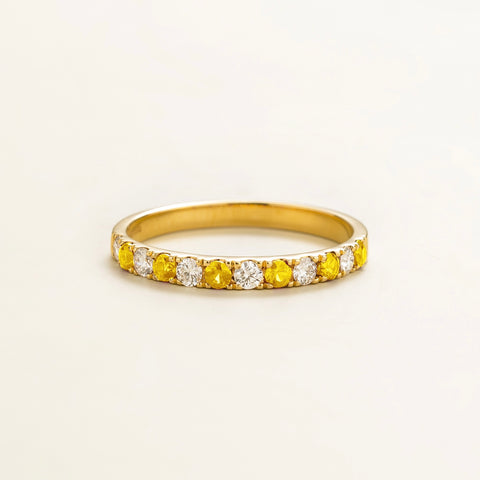
Frequently Asked Questions
What colour yellow sapphire is best for rings?
The best colour depends on personal preference and skin tone. Golden yellow is universally flattering and classic. Canary yellow is vivid and bold. Lemon yellow suits modern, minimalist aesthetics. Try different hues against your skin and preferred metal to find what resonates most naturally.
Does a yellow sapphire look bigger than a diamond?
Yes, carat for carat. Yellow sapphire is less dense than diamond, meaning it has a larger physical surface area for the same weight. A 2-carat yellow sapphire often appears similar in size to a 2.5-carat diamond, particularly in elongated cuts such as ovals.
Is lab-grown yellow sapphire real?
Yes. Lab-grown yellow sapphires are chemically, physically, and optically identical to natural sapphires. They are not imitations - they are real sapphires created in controlled environments rather than mined from the Earth.
How do I care for a yellow sapphire ring?
Yellow sapphires are low-maintenance. Clean with warm, soapy water and a soft brush. Avoid harsh chemicals and extreme temperatures. For detailed care instructions, read our dedicated guide: How to Clean and Care for Your Yellow Sapphire Ring at Home.
What's a good budget for a yellow sapphire ring?
Budgets vary widely depending on carat, colour quality, origin, and setting. For expert recommendations at accessible price points, explore our curated guide: Best Yellow Sapphire Rings Under £500 / £1,000: Affordable Luxury Picks.