Natural vs. Lab-Grown Yellow Sapphire Rings: What's the Real Difference?
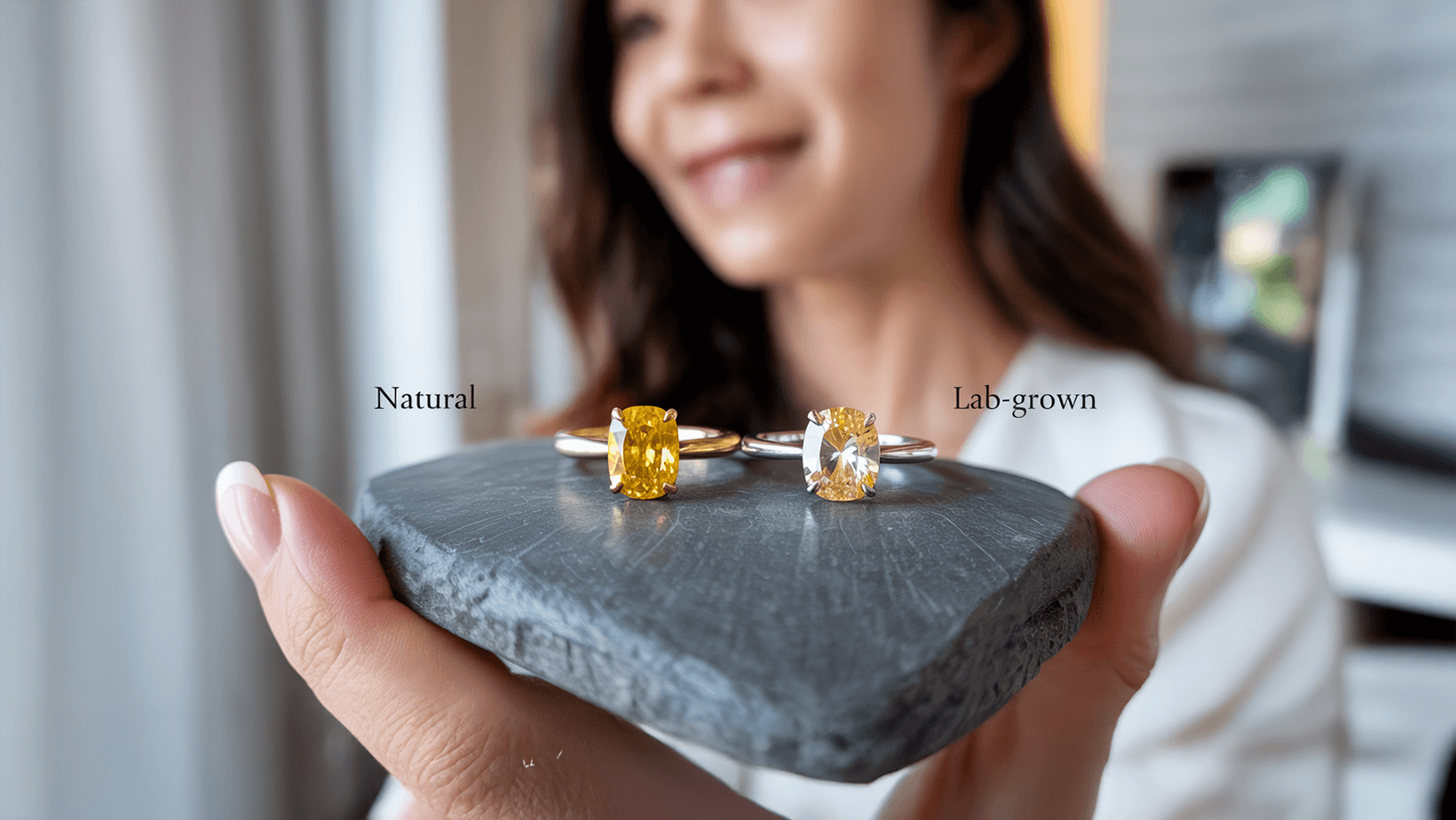
Picture this: you're standing before a jewellery display, mesmerised by two seemingly identical yellow sapphire rings.
Both catch the light with the same warm, honey-golden brilliance. Both seem to whisper promises of elegance and sophistication. Yet one was born deep within the earth over millions of years, whilst the other emerged from a laboratory in months.
How could you possibly tell the difference and more importantly, does it matter?
This moment of wonder captures exactly what countless ring buyers experience today.
Yellow sapphire rings have surged in popularity, their sunny disposition offering a refreshing alternative to traditional choices.
But as these radiant gems gain favour across engagement and luxury markets, an important question emerges: natural or lab-grown?
The answer isn't simply about which sparkles more beautifully, both do, identically. Instead, this decision touches the very heart of what jewellery means to you: sustainability, authenticity, investment value, and personal symbolism.
Whether you're selecting an engagement ring to symbolise your love story or choosing a statement piece that will become part of your signature style, understanding the fundamental differences between these options empowers you to choose with confidence.
Let's embark on this journey together, exploring the fascinating origins, distinctive characteristics, and unique advantages of each path, helping you discover which yellow sapphire ring will become your perfect match.
What Are Natural Yellow Sapphire Rings?
When you slip on a natural yellow sapphire ring, you're wearing a piece of Earth's ancient history.
These magnificent stones represent one of nature's most remarkable achievements, corundum crystals that developed their sunny disposition through millions of years of geological processes.
How They're Formed in Nature
Natural yellow sapphires begin their journey deep within the Earth's crust, where aluminium oxide crystals slowly form under intense heat and pressure. What makes them particularly special for ring buyers is their rarity.
Yellow sapphires represent only a small fraction of all sapphires found in nature.
The golden colouration occurs when trace elements like iron become incorporated into the crystal structure during formation, creating the warm, honey-like tones that make yellow sapphire rings so captivating.
This natural rarity translates directly into the exclusivity of yellow sapphire rings.
When you choose a natural stone, you're selecting something that took millennia to create and may never be replicated exactly again.
Mining Origins: Sri Lanka, Madagascar, Thailand
The most prized natural yellow sapphires for rings come from legendary mining regions, each contributing unique characteristics to the finished stones.
Sri Lankan yellow sapphires, sourced from the famous Ratnapura district, are renowned for their exceptional clarity and brilliant golden hues, qualities that make them particularly stunning in engagement ring settings.
Madagascar has emerged as another premier source, producing yellow sapphires with excellent colour saturation that creates remarkable brilliance in ring settings.
Thai yellow sapphires, whilst often deeper in tone, offer rich, intense colours that work beautifully in vintage-inspired ring designs.
Whilst Juvetti specialises in lab-grown alternatives, understanding these natural origins helps appreciate the geological wonder that laboratory technology now replicates with stunning precision.
Ring-Specific Qualities: Colour Range, Brilliance, Inclusions
Natural yellow sapphires destined for rings display an impressive spectrum of golden tones, from pale champagne to deep amber.
This natural variation means each ring possesses a unique character, some stones exhibit subtle colour zoning that creates depth and movement, whilst others display uniform saturation that maximises brilliance.
The inclusions found in natural yellow sapphires, often called "nature's fingerprints," can enhance a ring's beauty when properly positioned.
Skilled gem cutters work with these natural features to optimise light reflection, ensuring your yellow sapphire ring captures and reflects light in the most flattering way possible.
Price Drivers for Yellow Sapphire Rings
Several factors influence the cost of natural yellow sapphire rings. Colour intensity and saturation play the most significant role: vivid, evenly distributed yellow tones command premium prices.
Clarity affects pricing significantly, with eye-clean stones (those appearing flawless to the naked eye) being most desirable for rings where the stone will be closely examined.
Carat weight impacts pricing exponentially rather than linearly, a 3-carat natural yellow sapphire ring might cost significantly more per carat than a 1-carat ring of similar quality. The cut quality also influences price, as expert cutting maximises the stone's natural brilliance and fire, making it more suitable for prominent ring settings.
What Are Lab-Grown Yellow Sapphire Rings?
Lab-grown yellow sapphire rings offer the same stunning beauty as their natural counterparts, but with a modern origin story.
These gems are created through sophisticated scientific processes that replicate the conditions under which natural sapphires form, resulting in stones that are chemically, physically, and optically identical to mined sapphires.
How Lab Sapphires Are Created
The creation of lab-grown yellow sapphires involves three primary methods, each producing gems suitable for exquisite rings.
The Czochralski method involves melting aluminium oxide in a crucible and slowly drawing a crystal from the melt, creating large, high-quality stones perfect for statement rings.
The flux method dissolves raw materials in a molten solution, allowing crystals to grow slowly over months. This process often produces sapphires with exceptional clarity, making them ideal for engagement rings where brilliance is paramount.
Hydrothermal synthesis recreates the high-pressure, high-temperature conditions found deep in the Earth, growing crystals in specialised chambers.
This method can produce yellow sapphires with natural-looking inclusions and colour characteristics that closely mimic their mined counterparts.
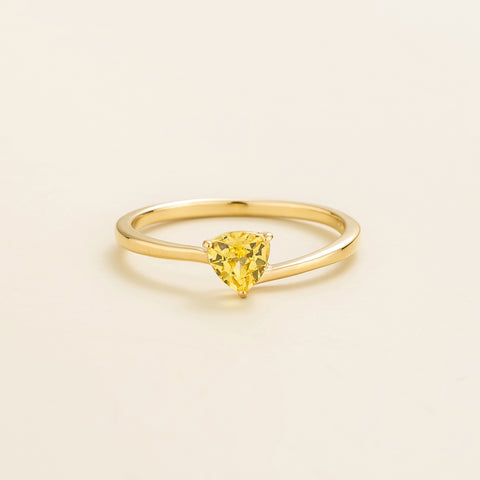
How Lab Sapphires Are Used in Rings
One significant advantage of lab-grown yellow sapphires in ring applications is their consistency.
These stones often display more uniform colour distribution and fewer inclusions than natural stones, making them excellent choices for matching sets or rings where perfect symmetry is desired.
The controlled growing environment also allows for larger, cleaner stones at more accessible price points, opening up possibilities for dramatic ring designs that might be prohibitively expensive with natural stones of similar size and quality.
Visual & Physical Similarity to Natural Stones
Lab-grown yellow sapphires possess the same hardness (9 on the Mohs scale), refractive index, and optical properties as natural sapphires.
In a finished ring setting, most people, including many jewellery professionals, cannot distinguish between natural and lab-grown yellow sapphires without specialised equipment.
Both types exhibit the same brilliant lustre, fire, and scintillation that make yellow sapphire rings so captivating.
The crystal structure is identical, meaning they interact with light in the same way, producing the same golden sparkle that draws admirers to these magnificent rings.
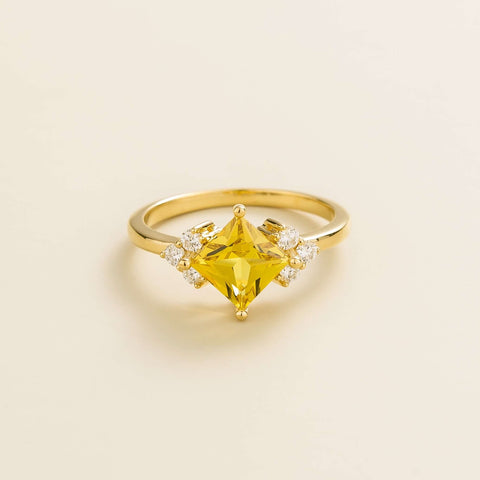
Cost Advantages When Choosing a Lab-Grown Ring
Lab-grown yellow sapphire rings typically cost 30-50% less than comparable natural stone rings, making luxury accessible to a broader range of buyers.
This price advantage becomes more pronounced with larger stones, a 2-carat lab-grown yellow sapphire ring might cost less than a 1-carat natural sapphire ring of similar quality.
This cost efficiency allows ring buyers to either stay within budget whilst choosing a larger stone, or allocate more resources to the ring setting, creating a more elaborate design with premium metals and accent stones.
Key Differences Between Natural and Lab-Grown Yellow Sapphire Rings
Whilst natural and lab-grown yellow sapphires share fundamental similarities, several key differences affect ring buyers' decisions. Understanding these distinctions helps you choose the option that best aligns with your priorities and values.
Visual Appearance in Finished Rings: Can You Tell the Difference?
In most ring settings, distinguishing between natural and lab-grown yellow sapphires requires gemological equipment and expertise.
Both types display the same golden brilliance, light refraction, and optical properties that make yellow sapphire rings so stunning.
However, subtle differences may exist upon close examination. Natural yellow sapphires often display slight colour variations or zoning that can create unique depth and character.
Lab-grown stones tend to show more uniform colouration, which some buyers prefer for its consistency, whilst others value the individuality of natural stones.
The setting and cut quality often influence appearance more than the stone's origin. A well-cut lab-grown yellow sapphire in an expertly crafted ring setting can outshine a poorly cut natural stone in a basic setting.
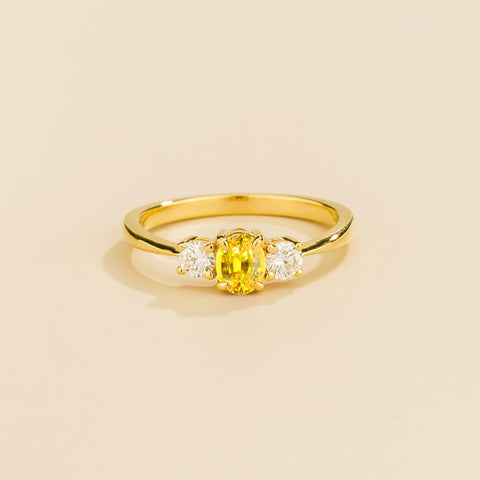
Durability for Daily Wear and Long-Term Use
Both natural and lab-grown yellow sapphires offer exceptional durability for ring wear.
To keep them looking their best, learn exactly how to properly clean and care for your yellow sapphire ring at home.
With a hardness of 9 on the Mohs scale, both types resist scratching and maintain their polish through years of daily wear, crucial qualities for engagement rings and frequently worn statement pieces.
The chemical composition is identical, meaning both types withstand exposure to cleaning solutions, temperature changes, and everyday wear equally well. This makes both options excellent choices for rings intended for regular use rather than occasional wear.
Price Comparison: Natural vs Lab-Grown Rings
The price difference between natural and lab-grown yellow sapphire rings reflects rarity rather than quality. Natural stones command premium prices due to their geological rarity and the mining expertise required to discover and extract them.
A high-quality 1-carat natural yellow sapphire ring might range from £1,200 to £3,200, depending on colour intensity and clarity. A comparable lab-grown yellow sapphire ring would typically cost £480 to £1,440, offering significant savings without compromising beauty or durability.
For larger stones, the price gap widens considerably. A 3-carat natural yellow sapphire ring of fine quality could cost £12,000 or more, whilst a lab-grown equivalent might range from £2,400 to £4,800.
If you’d like to see exactly what’s available at more approachable price points, explore our expert guide to the best yellow sapphire rings under £500 and £1000.
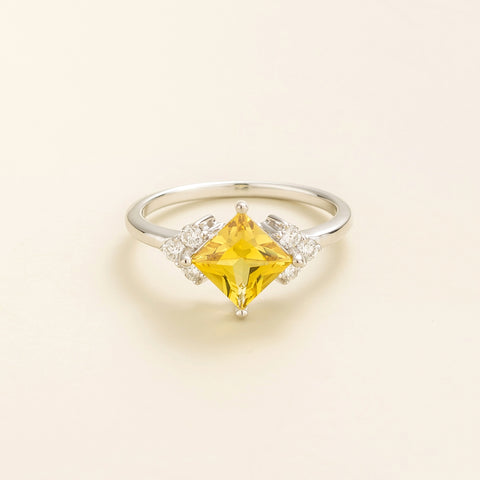
Ethical and Environmental Factors
Environmental and ethical considerations are increasingly shaping ring buyers' decisions.
While natural yellow sapphire mining, especially in regions like Sri Lanka, is generally less environmentally disruptive than large-scale diamond or gold mining, it still involves land disturbance, water use, and potential ecological impact.
Much of Sri Lanka’s sapphire mining is small-scale and traditional, often family-run, and can provide meaningful income to local communities.
However, standards of "responsible mining" can vary widely, and formal oversight or third-party certification is not always present.
Lab-grown yellow sapphires offer a different ethical profile.
They require no mining, eliminating concerns about land disruption, habitat loss, or variable mining conditions. While the laboratory growing process is energy-intensive, ongoing technological improvements are making it increasingly efficient.
At Juvetti, we grow our gemstones using renewable energy sources, significantly reducing the carbon footprint compared to traditional mining and even some lab-grown alternatives.
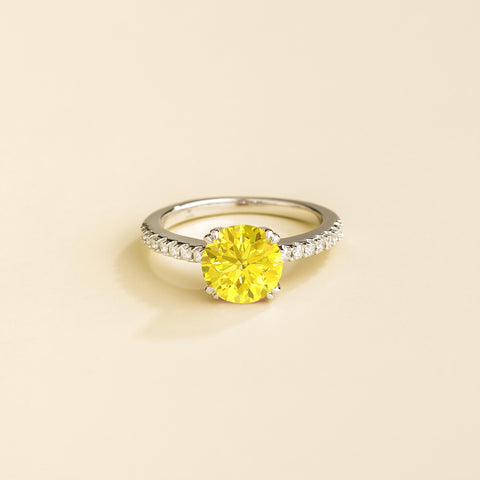
At Juvetti, we focus exclusively on lab-grown yellow sapphire rings, working with suppliers who meet our strict ethical and environmental standards.
Our commitment to laboratory-created stones ensures every ring in our collection offers exceptional beauty whilst supporting sustainable jewellery practices.
Certification & Traceability for Rings
Reputable certification becomes crucial for both types of yellow sapphire rings.
Natural stones should come with certificates from recognised laboratories like GIA, AGL, or IGI, confirming their natural origin and quality characteristics.
Lab-grown yellow sapphires should be disclosed and certified as laboratory-created. Leading certification bodies provide specific lab-grown gemstone reports, ensuring transparency and proper identification.
Pros and Cons of Each Option for Ring Buyers
Choosing between natural and lab-grown yellow sapphire rings involves weighing various factors against your personal priorities.
Both options offer compelling advantages whilst presenting specific considerations that might influence your decision.
Why Choose a Natural Yellow Sapphire Ring
Natural yellow sapphire rings carry the romance of geological time, each stone represents a unique miracle of nature that took millions of years to create.
This natural origin often holds deep emotional significance for ring buyers, particularly those choosing engagement rings to symbolise once-in-a-lifetime love.
Investment potential represents another consideration.
Natural yellow sapphire values have historically maintained and appreciated, especially high-quality stones from premier sources.
Whilst jewellery should primarily be chosen for beauty and meaning rather than investment potential, natural stones currently offer better long-term value retention.
The exclusivity factor appeals to many ring buyers.
Knowing that your natural yellow sapphire is genuinely one-of-a-kind, with its specific combination of inclusions, colour characteristics, and origin story, creates a sense of owning something truly irreplaceable.
For buyers who value traditional craftsmanship and heritage, natural yellow sapphire rings connect them to centuries of jewellery-making tradition and the expertise of miners and craftspeople who brought these gems from the earth to the ring setting.
When Natural Stones Might Be a Drawback
Budget constraints represent the primary challenge with natural yellow sapphire rings.
The premium pricing might limit options for buyers working within specific budgets, potentially requiring compromises on stone size, quality, or setting elaborateness.
Ethical concerns about mining practices weigh heavily on some buyers' minds.
Whilst responsible sourcing has improved significantly, some individuals prefer avoiding any mining-related environmental impact entirely.
Limited availability of specific sizes or quality grades can frustrate buyers with precise requirements.
Natural stones are subject to what nature provides, which might not always align with design visions or size preferences.
Why Choose a Lab-Grown Yellow Sapphire Ring
Lab-grown yellow sapphire rings offer exceptional value, allowing buyers to achieve their dream ring vision without budget constraints limiting their choices.
The cost savings can be redirected toward premium ring settings, accent stones, or simply kept as savings for other priorities.
The consistency and clarity of lab-grown stones particularly appeal to buyers who prefer perfection in their jewellery.
These rings often display flawless clarity and perfect colour saturation that would be extremely rare and expensive in natural stones. At Juvetti, our lab-grown yellow sapphire rings exemplify this perfection, offering exceptional beauty at accessible prices.
Environmental consciousness drives many modern ring buyers toward lab-grown options. These stones offer peace of mind regarding ecological impact whilst delivering identical beauty and durability to natural alternatives.
Availability advantages mean you can typically find lab-grown yellow sapphires in any size, quality grade, or specific colour tone you desire, making it easier to execute precise design visions.
When Lab-Grown Might Not Be Ideal
Resale value currently favours natural stones significantly. If future resale value matters to you, natural yellow sapphire rings generally maintain value better than lab-grown alternatives, though this market dynamic may evolve.
Some buyers feel that lab-grown stones lack the emotional connection and romantic appeal of natural gems.
The knowledge that a stone was created in months rather than over millennia may diminish its symbolic significance for specific individuals.
Market perception still varies, with some traditional jewellery buyers viewing natural stones as more prestigious or "real," despite identical physical properties.
This perception may influence social or family acceptance of the choice.
How to Choose the Right Yellow Sapphire Ring for You
Selecting the perfect yellow sapphire ring involves balancing practical considerations with emotional preferences.
The right choice depends on your circumstances, values, and vision for how this ring will fit into your life.
Factors to Consider: Budget, Sentiment, Sustainability
Budget considerations extend beyond the initial purchase price. Consider your overall jewellery budget and how a yellow sapphire ring fits into your broader collection goals. If you're choosing an engagement ring, factor in wedding band costs and any future jewellery purchases you might want to make.
Sentimental value varies significantly among individuals. Some find deep meaning in owning a natural stone formed over geological time, whilst others appreciate the modern innovation and ethical considerations of lab-grown alternatives.
Neither choice is inherently more meaningful, the significance comes from what resonates with your values.
For a comprehensive framework covering colour, cut, carat, clarity, and setting - every decision that defines an exceptional ring - read our guide on how to choose the perfect yellow sapphire ring.
Sustainability priorities help guide your decision. If environmental impact is a primary concern, lab-grown yellow sapphires offer a clear advantage.
If supporting traditional mining communities and preserving geological heritage matters more, responsibly sourced natural stones might align better with your values.
Ring Styles that Complement Yellow Sapphire Stones
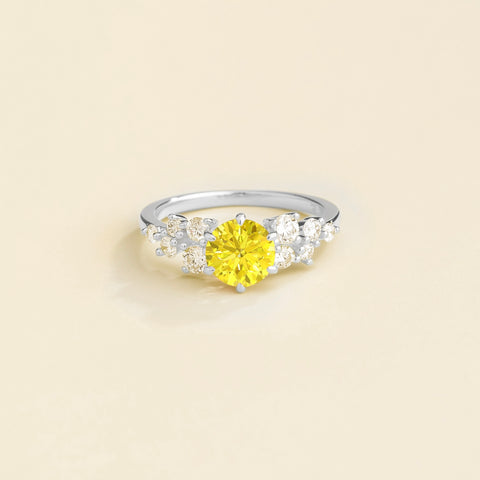
Yellow sapphires' warm golden tones suit various ring styles beautifully.
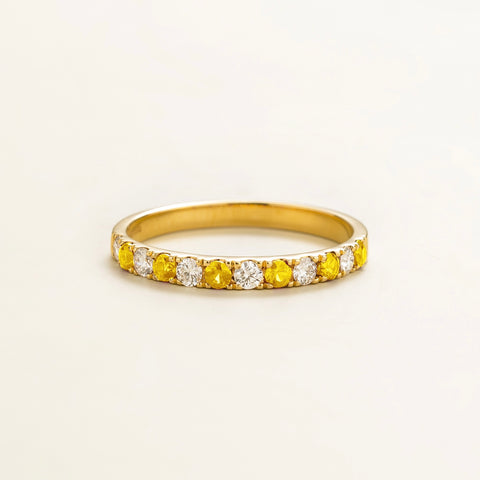
Classic solitaire settings allow the stone's natural beauty to take centre stage, whilst vintage-inspired designs with milgrain details and side stones complement the romantic warmth of yellow sapphires perfectly.
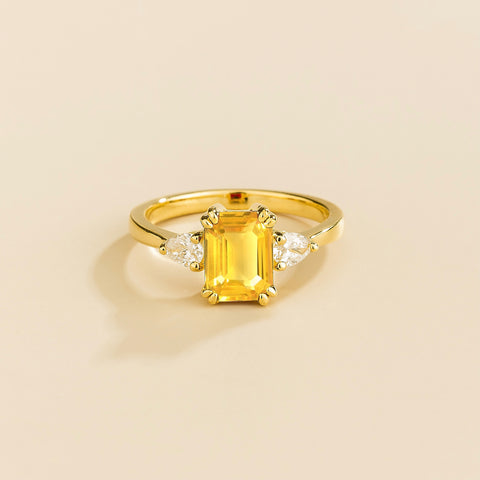
Three-stone rings work exceptionally well with yellow sapphires, either as centre stones flanked by diamonds or as matching stones in a trilogy setting.
Halo designs amplify the centre stone's brilliance and can make more petite yellow sapphires appear larger and more dramatic.
Art deco styles particularly suit yellow sapphires, with geometric patterns and bold lines enhancing their sophisticated appeal.
For those preferring modern aesthetics, tension settings, and contemporary designs, yellow sapphires are showcased in striking, minimalist presentations.
Choosing Cut, Clarity, and Carat
Cut quality profoundly impacts how your yellow sapphire ring performs in different lighting conditions.
Oval and cushion cuts particularly suit yellow sapphires, maximising their warm brilliance whilst offering excellent finger coverage.
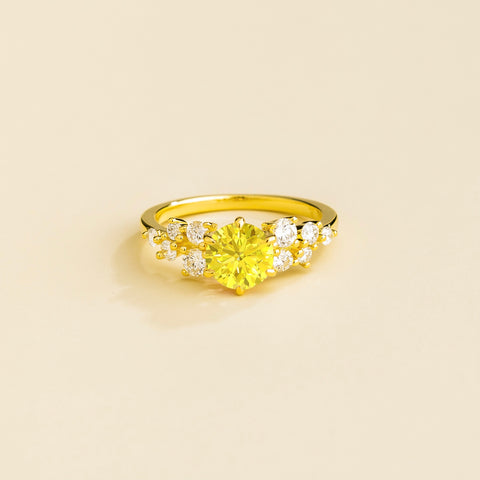
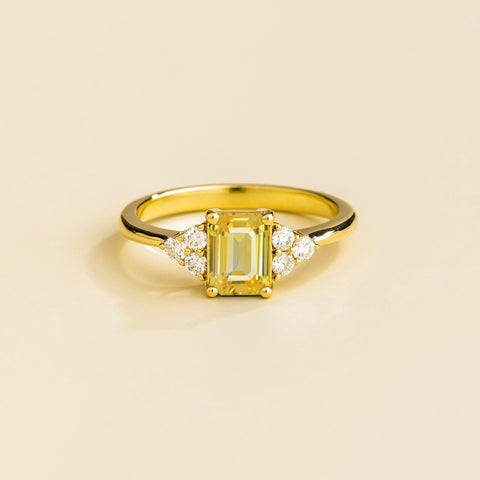
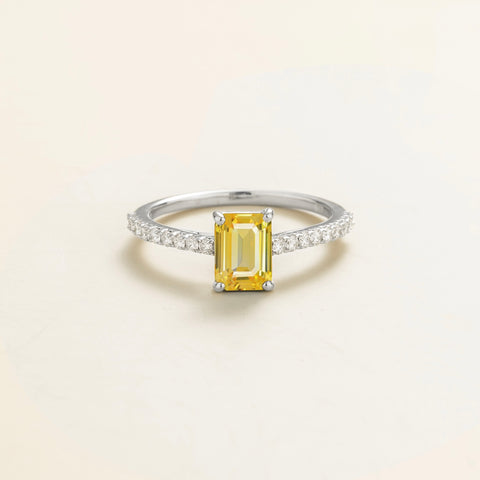
Round brilliant cuts provide maximum sparkle, whilst emerald cuts offer sophisticated elegance with their step-cut faceting.
Clarity requirements for yellow sapphire rings depend partly on the stone's size and setting style.
For engagement rings or prominent statement pieces, eye-clean clarity ensures the stone appears flawless to casual observation.
Smaller stones or those in busy settings can accommodate slight inclusions without affecting overall beauty.
Carat weight selection should balance visual impact with practical considerations.
A 1-2 carat yellow sapphire provides substantial presence without overwhelming most hands, whilst larger stones create dramatic statement pieces suitable for special occasions or confident personalities.
Best Metal Pairings for Yellow Sapphire Rings
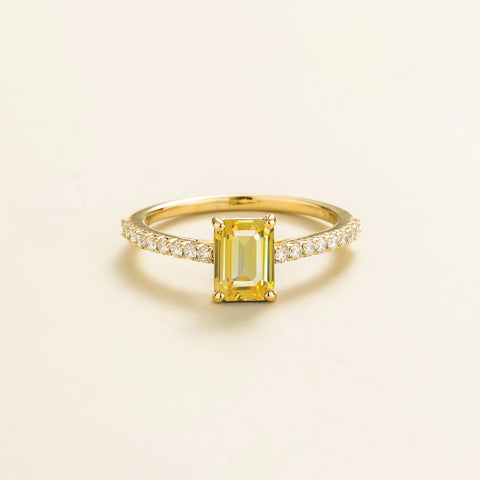
Yellow sapphires pair beautifully with various precious metals, each creating different aesthetic effects.
Yellow gold creates a harmonious, warm composition that enhances the stone's golden tones, making it appear more vibrant and saturated.
White gold and platinum provide sophisticated contrast, making yellow sapphires appear more intense whilst creating an elegant, contemporary look.
These cooler metals work particularly well in modern ring designs and complement both warm and cool skin tones.
Rose gold offers a romantic, vintage-inspired pairing that creates beautiful warmth without overwhelming the yellow sapphire's natural colour.
This combination works exceptionally well in romantic or bohemian-style settings.
At Juvetti, our jewellery experts specialise in helping customers discover the perfect lab-grown yellow sapphire ring design.
We'll help you visualise different metal combinations and settings, ensuring your ring complements both the stone's brilliant beauty and your personal style preferences.
Ring Occasions: Engagement, Birthstone, Statement Jewellery
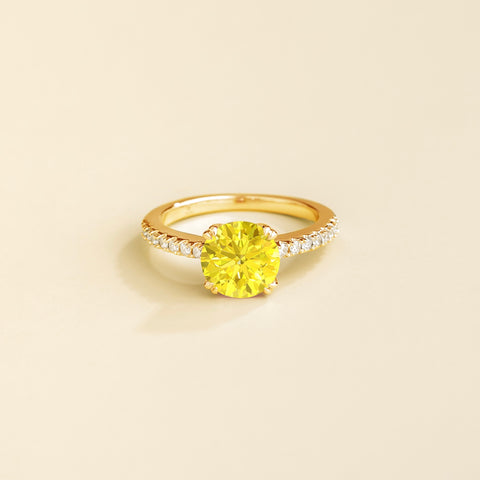
Yellow sapphire engagement rings have gained popularity as couples seek alternatives to traditional diamonds.
September babies particularly appreciate yellow sapphire engagement rings, combining birthstone significance with engagement symbolism in one meaningful piece.
Statement rings featuring yellow sapphires suit various occasions, from cocktail parties to professional settings where you want to add sophisticated colour.
The versatility of yellow sapphires makes them suitable for both day and evening wear.
Anniversary rings often feature yellow sapphires to represent the golden years of marriage or to commemorate special milestones.
The warm, optimistic energy of yellow sapphires symbolises joy, prosperity, and continued happiness in relationships.
Certification, Grading, and Buying Safely
Protecting your investment in a yellow sapphire ring requires understanding certification, recognising quality indicators, and choosing reputable sources. Proper documentation ensures you receive exactly what you're paying for, while also providing important information for insurance and future reference.
What Certifications Should Come With Yellow Sapphire Rings
Legitimate yellow sapphire rings should include certificates from recognised gemological laboratories.
For natural stones, GIA (Gemological Institute of America) reports provide the most widely accepted authentication, detailing the stone's natural origin, treatment status, and quality characteristics.
AGL (American Gemological Laboratories) specialises in coloured gemstone certification and provides detailed information about yellow sapphires' geographic origin, which can be important for premium stones from renowned sources like Sri Lanka or Madagascar.
IGI (International Gemological Institute) offers reliable certification for both natural and lab-grown yellow sapphires, clearly distinguishing between the two and providing detailed quality assessments.
For lab-grown yellow sapphires, certificates should explicitly state "laboratory-grown," "synthetic," or "created" to ensure complete transparency.
Reputable dealers never attempt to pass lab-grown stones as natural.
| Feature | Natural Yellow Sapphire Rings | Lab-Grown Yellow Sapphire Rings |
|---|---|---|
| Origin | Formed over millions of years in Earth’s crust (Sri Lanka, Madagascar, Thailand) | Created in months using advanced lab processes (Czochralski, Flux, Hydrothermal) |
| Uniqueness | Every stone is one-of-a-kind, with natural inclusions and colour zoning | Consistent clarity, colour, and size - perfect for matching jewellery sets |
| Price | Premium - rarity and mining costs drive higher value | 30–50% more affordable, especially for larger carat sizes |
| Durability | Hardness 9 (Mohs), excellent for daily wear | Identical hardness & brilliance - equally durable |
| Ethics & Sustainability | Supports traditional mining communities, but involves land/water use | Eco-friendly, no mining required, lower carbon footprint (especially with renewable energy) |
| Symbolism | Romance of geological time, investment value, heritage | Modern innovation, accessibility, and conscious luxury |
How to Avoid Common Scams or Misrepresented Rings
Several red flags indicate potentially problematic yellow sapphire ring purchases.
Prices significantly below market rates often indicate quality issues, treatment disclosure problems, or misrepresentation of the stone's origin or characteristics.
Sellers who refuse to provide certification, seem evasive about a stone's origin, or pressure you to buy quickly should be avoided. Legitimate dealers welcome questions and provide time for consideration.
Heat treatment is common and acceptable in yellow sapphires, but should be disclosed. Untreated stones command premium prices, so verify treatment status matches the price point and your expectations.
Be cautious of sellers who don't clearly distinguish between natural and lab-grown stones, or who use ambiguous terms like "created in nature's laboratory" that could mislead buyers about the actual origin.
Where to Buy Ethical & Authenticated Yellow Sapphire Rings
Established jewellery retailers with strong reputations provide the safest purchasing environment for yellow sapphire rings.
Look for businesses that disclose stone origins, provide proper certification, and offer return policies that allow professional verification.
Juvetti maintains the highest standards for lab-grown yellow sapphire rings, working exclusively with laboratory partners who meet our rigorous ethical and quality requirements.
Our focus on lab-grown stones ensures full transparency. Every ring is crafted with traceable, laboratory-grown gemstones, and we offer certification upon request to verify their origin giving you confidence in your sustainable choice.
Professional appraisers can verify ring authenticity and value for insurance purposes, providing independent confirmation of your purchase's quality and characteristics.
Online purchases require extra diligence. Choose established platforms with robust return policies, clear photography, and detailed descriptions.
Video consultations can help evaluate stones remotely whilst ensuring you're comfortable with your choice before finalising the purchase.

Final Thoughts
The choice between natural and lab-grown yellow sapphire rings isn't about finding the "best" option, it's about discovering which aligns perfectly with your values, budget, and vision for this special piece of jewellery.
Both choices offer genuine beauty, exceptional durability, and the warm, golden brilliance that makes yellow sapphire rings so captivating.
Lab-grown yellow sapphire rings offer identical beauty, combining modern innovation, ethical advantages, and accessibility to open luxury jewellery to a broader range of buyers.
Natural yellow sapphire rings connect you to Earth's ancient history and geological wonder, offering unique character and traditional value that appeals to those who cherish natural rarity and heritage.
Whether you're drawn to the innovation of modern science or the romance of geological time, understanding both options helps you make an informed choice.
At Juvetti, we're passionate about the future of sustainable luxury-our expertly curated collection showcases the finest lab-grown yellow sapphire rings, each selected for exceptional quality, ethical sourcing, and breathtaking beauty.
Ready to explore the stunning world of lab-grown yellow sapphire rings? Browse
Ready to explore the stunning world of lab-grown yellow sapphire rings? Browse Juvetti's yellow sapphire rings collection to discover how these ethically created golden gems can illuminate your jewellery collection with their timeless warmth and brilliant fire.
Latest Article Update: 27.02.2026