
What to Look for When Buying a Lab Grown Diamond Necklace
A significant portion of consumers purchasing lab-grown diamond necklaces online make avoidable buying errors by overlooking certification or misinterpreting value factors, potentially missing opportunities to save hundreds of pounds.
Selecting your piece requires a grasp of quality indicators, certification standards, and transparent pricing.
This comprehensive lab grown diamond necklace buying guide equips you with the essential knowledge to evaluate quality, assess fair pricing, and identify trustworthy retailers, helping you shop smart and invest confidently in a piece that delivers both beauty and value for years to come.
Understand the Basics of Diamond Quality for Necklaces
Why the 4Cs Matter More (or Less) for Necklaces
When evaluating lab created diamond necklace options, understanding how the traditional 4Cs (cut, colour, clarity, and carat) apply specifically to necklace stones will guide your purchasing decisions more effectively than generic diamond advice.
Cut quality becomes paramount in necklaces because it directly impacts how light reflects from stones positioned away from direct viewing angles.
Unlike engagement rings, where you examine the stone closely, necklace diamonds are typically viewed from a distance, making superior cut grades essential for maximum sparkle and fire.
Colour considerations for necklace purchases differ significantly from other jewellery types. Since necklace stones are often smaller and viewed against skin and clothing rather than isolated inspection, slight colour variations become less noticeable.
This means you can choose a lower colour grade without sacrificing visual appeal, redirecting your budget toward superior cut quality or larger carat weights that provide more dramatic impact.
Clarity requirements for lab grown diamond necklaces are generally more forgiving than for statement pieces like engagement rings. Slight inclusions that might be concerning in a 2-carat solitaire ring become virtually invisible in necklace applications, especially in designs featuring multiple smaller stones. Focus your clarity budget on ensuring stones are "eye-clean" rather than pursuing flawless grades that add cost without noticeable benefit in necklace settings.
Carat Weight and Stone Size Per Style
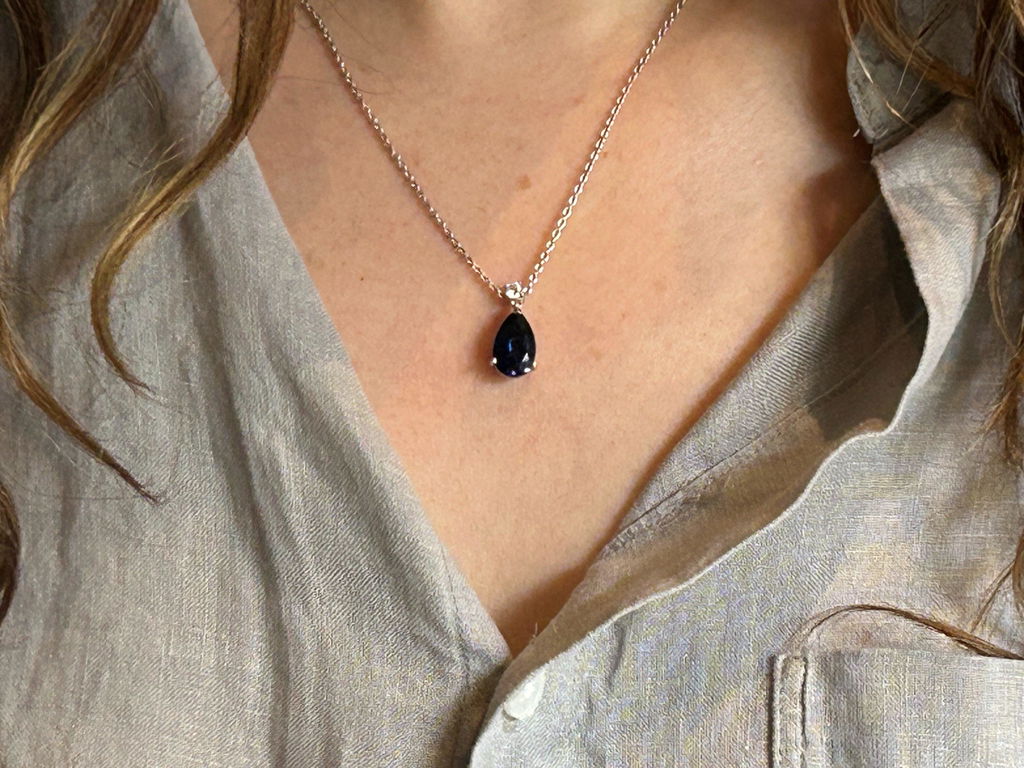
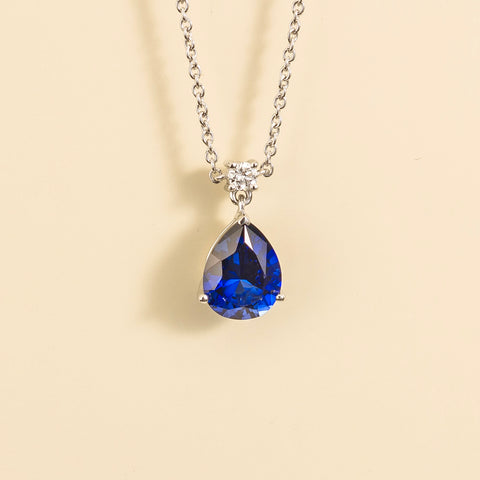
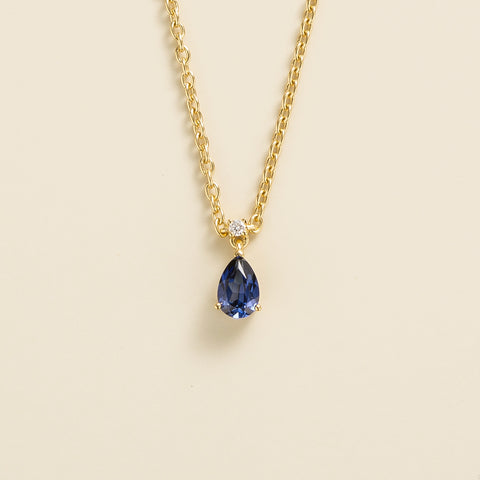
Different necklace styles require strategic approaches to carat weight distribution, which impacts both aesthetics and value. Solitaire pendants typically feature centre stones ranging from 0.25 to 2 carats, with 0.50 to 1 carat representing the sweet spot for balanced elegance and impact.
Larger centre stones create dramatic focal points but require proportional chain weights and secure settings to prevent the necklace from appearing front-heavy or uncomfortable during wear.
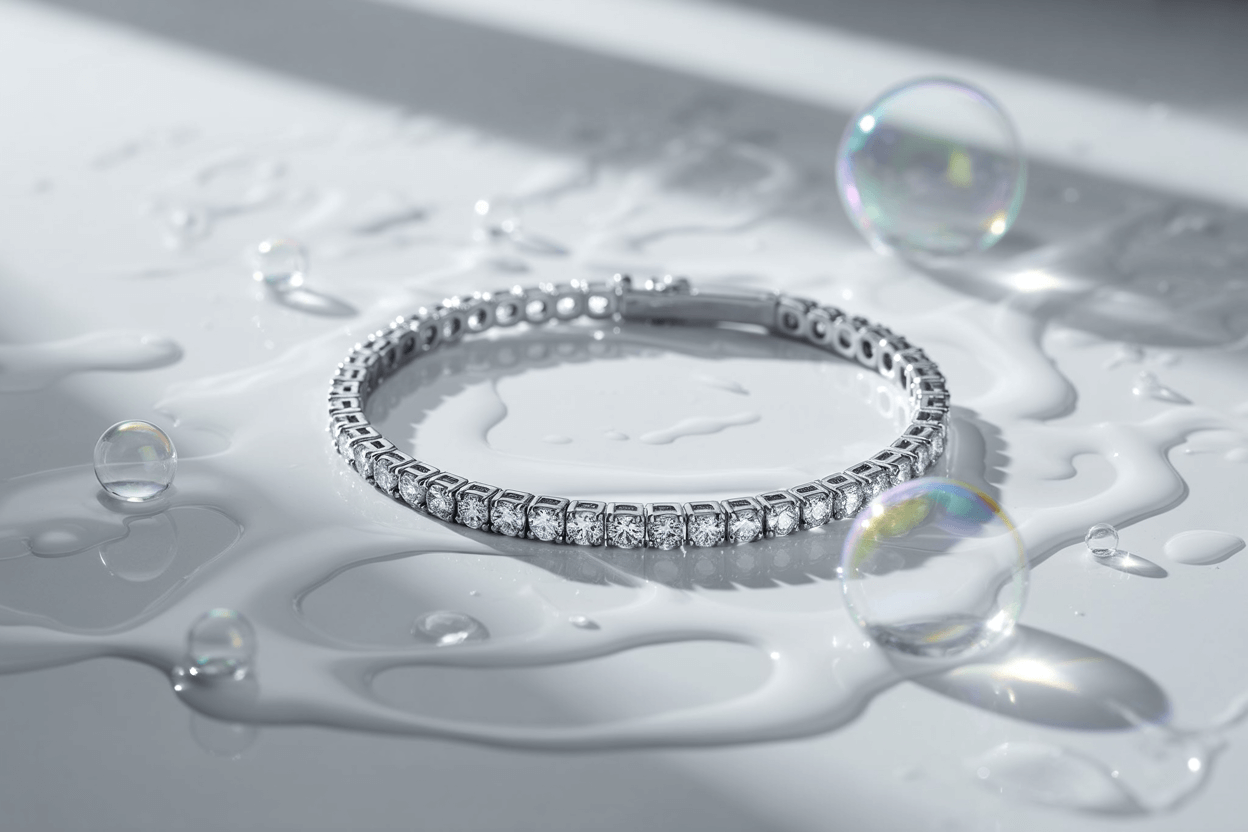
Tennis necklaces present unique considerations where total carat weight spreads across multiple stones, typically ranging from 1 to 15 total carats, depending on length and individual stone sizes.
What to look for when buying a lab grown diamond necklace in tennis style involves ensuring consistent stone sizing and quality throughout the piece, as variations become noticeable when stones sit adjacent to each other.
Premium tennis necklaces feature graduated sizing that creates a visual flow while maintaining consistent sparkle.
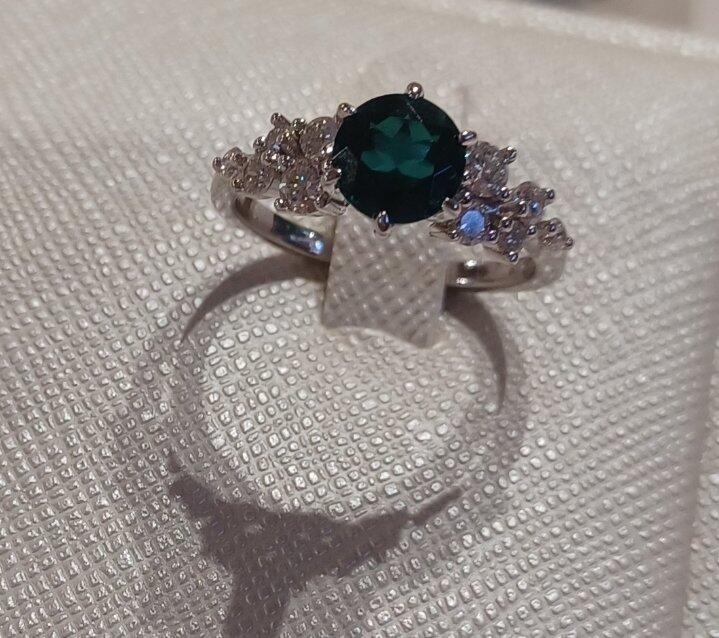
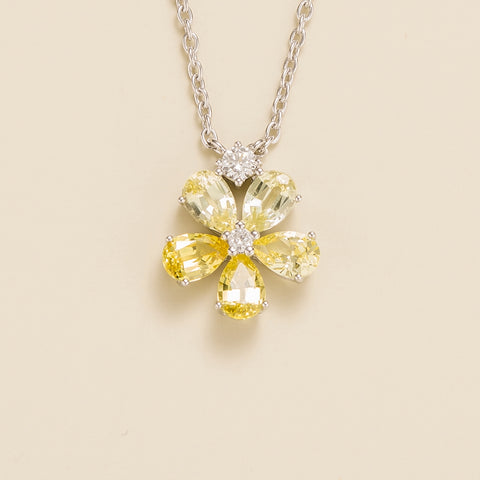
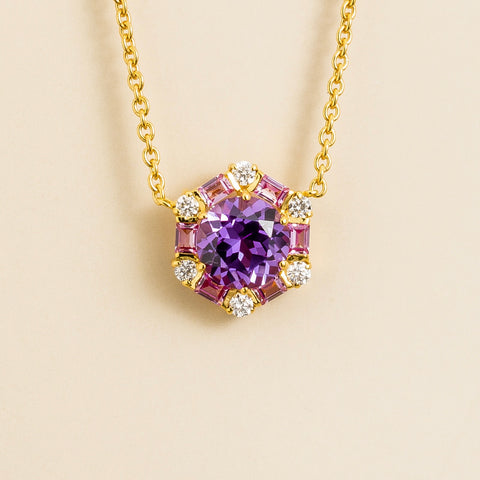
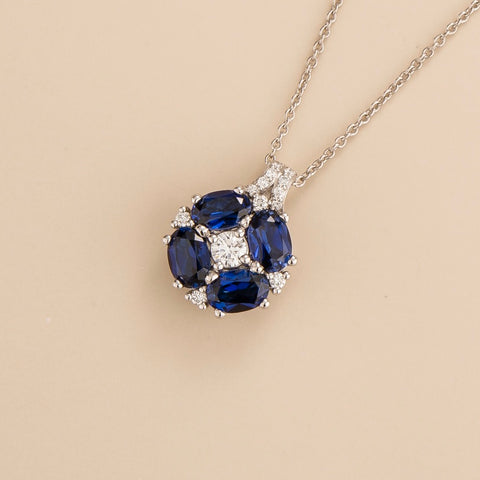
Halo and cluster designs allow smaller centre stones to appear larger by surrounding them with accent diamonds, making them excellent value propositions for buyers seeking maximum visual impact within specific budgets.
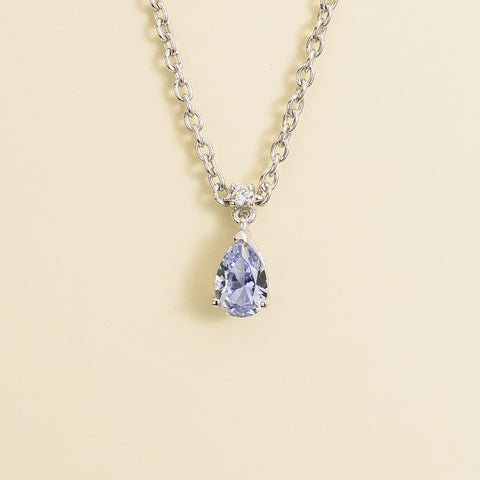
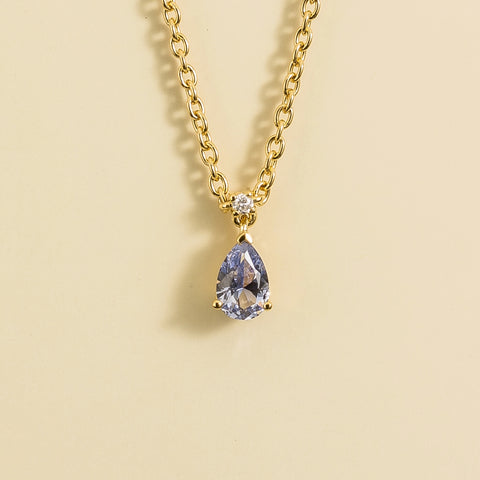
Explore different necklace settings such as prong, bezel, and halo styles for sapphires
These styles often utilise centre stones ranging from 0.25 to 0.75 carats, surrounded by smaller stones totalling an additional 0.50 to 1.50 carats, creating an impressive overall presence while keeping individual stone costs manageable.
Certification and Authenticity
Why You Should Always Ask for a Grading Report
Professional certification provides the most essential protection when purchasing a lab-created diamond necklace, offering independent verification of quality claims and ensuring you receive precisely what you're paying for.
Reputable grading institutes like the Gemological Institute of America (GIA) and International Gemological Institute (IGI) provide detailed reports documenting each stone's precise characteristics, including the 4Cs, fluorescence levels, and confirmation of laboratory origin.
Most legitimate certification labs, such as GIA and IGI, typically issue grading reports for stones starting at 0.15 carats.
However, in fine jewellery, it’s most common to certify stones that are 0.50 carats and above, as these represent a more significant investment and are more likely to be individually valued for insurance.
Smaller accent stones, particularly those under 0.30 carats, are usually not certified individually.
This is standard industry practice and should not be a concern. For larger centre stones, however, a proper grading certificate serves as both a mark of quality and important documentation for insurance, making it an essential part of any meaningful jewellery purchase.
Certification authenticity can be verified through the issuing laboratory's online databases using report numbers, providing an additional layer of security against fraudulent documentation.
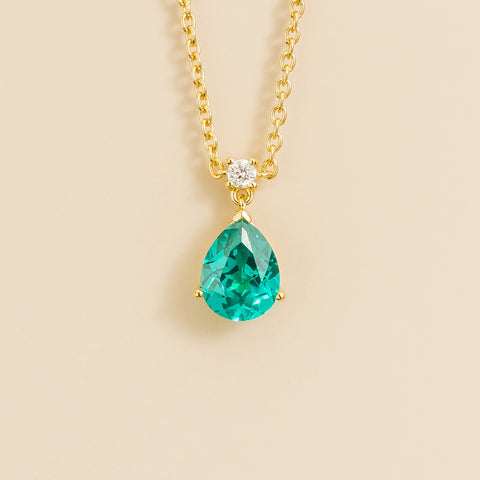
Reputable retailers, such as Juvetti, will proactively provide certification details and encourage verification.
Common Tricks in Low-End Retailers
Awareness of misleading marketing tactics protects buyers from costly mistakes when shopping for lab grown diamond necklaces.
Vague terminology like "diamond-like," "lab-created gems," or "simulated diamonds" often indicates stones that are not diamonds but rather cubic zirconia or other diamond simulants with significantly lower value and different optical properties.
These deceptive descriptions exploit buyer confusion between lab grown diamonds and diamond alternatives.
Another red flag involves retailers claiming "certification included" without specifying the certifying authority or refusing to provide certification details before purchase.
Legitimate sellers readily share specific grading report information and encourage buyers to research certification standards.
Some disreputable retailers create their own "certificates" or utilise unrecognisable grading services that lack industry credibility.
Pricing that seems unusually low compared to certified competitors often indicates quality compromises or misrepresented specifications.
When evaluating lab grown necklace options before purchase, compare similar certified pieces from multiple retailers to establish fair market pricing baselines that help identify too-good-to-be-true offers.
Assessing Value and Price Fairness
How to Compare Two Necklaces with the Same Specs
Effective comparison shopping for lab grown diamond necklaces requires looking beyond basic specifications to understand factors that justify price differences between seemingly similar pieces.
Chain construction quality significantly impacts both durability and price, with solid gold chains commanding premium pricing over hollow or filled alternatives.
Weight becomes a crucial comparison factor, heavier chains generally indicate superior construction and longevity, though comfort considerations may influence your preferences.
Metal purity also significantly affects pricing, with 18-karat gold necklaces typically costing more than 14-karat alternatives due to their higher gold content.
However, 14-karat gold offers superior durability for daily wear, whilst 18-karat provides richer colour saturation. Understanding these trade-offs helps evaluate whether pricing differences reflect genuine value or unnecessary premiums.
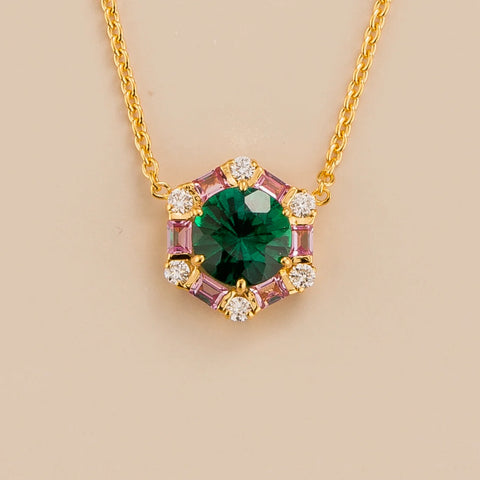
While pricing can vary depending on design exclusivity and brand positioning, Juvetti’s premium reflects our commitment to fine craftsmanship, ethically sourced materials, and thoughtful, end-to-end service, values that set us apart for those who prioritise quality and integrity.
Why Setting and Craftsmanship Influence Value
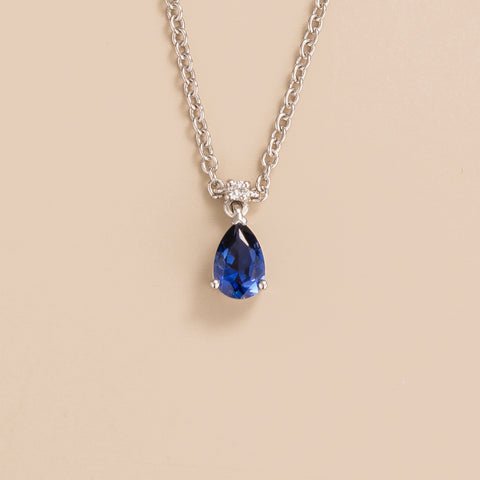
Professional setting work represents a significant portion of the necklace's value, extending far beyond basic stone mounting.
Secure prong setting requires precise techniques that ensure stones remain safely mounted whilst allowing maximum light penetration for optimal sparkle. Inferior setting work creates long-term risks, including stone loss and premature wear, which can be more costly to repair than the initial savings from choosing cheaper alternatives.
Chain integration quality affects both aesthetics and durability, with seamless connections between pendant settings and chains indicating superior craftsmanship.
Premium manufacturers invest in precise tolerances and finishing work that creates smooth, comfortable wear whilst maintaining structural integrity over years of use. These quality differences become apparent through extended wear and professional inspection.
Clasp mechanisms vary dramatically in terms of security and ease of use, with premium necklaces featuring robust spring-ring or lobster clasps that operate smoothly while maintaining a secure closure.
Higher-end pieces often include safety chains or additional security features that justify increased pricing through enhanced peace of mind during wear.
Questions to Ask Before You Buy
About Return Policies, Resizing, and Warranties
Before committing to any lab grown diamond necklace purchase, particularly online transactions, establish a clear understanding of return policies that protect your investment if the piece doesn't meet expectations.
Reputable retailers typically offer 30-day return windows for unworn pieces, though custom or personalised items may have different policies.
Ensure return policies cover scenarios including dissatisfaction with appearance, sizing issues, or certification discrepancies.
Warranty coverage represents another crucial consideration that varies significantly between retailers.
Comprehensive warranties should cover manufacturing defects, structural integrity issues, and metal corrosion for reasonable periods following purchase.
Some premium brands extend warranty coverage to include professional cleaning and minor repairs, adding value that justifies higher initial pricing through reduced long-term ownership costs.
About the Source, Production, and Supply Chain
Even within the lab grown diamond market, production standards and sourcing transparency vary significantly between manufacturers and retailers.
Responsible buyers should enquire about laboratory locations, energy sources used in production, and labour standards throughout the supply chain.
Some producers utilise renewable energy sources and maintain superior environmental standards that align with ethical purchasing values while creating sustainable lab-grown diamond jewellery.
Supply chain transparency extends to metal sourcing, with ethically minded brands like Juvetti utilising recycled precious metals that reduce environmental impact while maintaining quality standards.
Understanding these practices helps buyers align purchases with personal values whilst supporting responsible business practices throughout the jewellery industry.
Summary: How to Buy with Confidence
Successful lab grown diamond necklace purchasing requires a systematic evaluation of quality indicators, certification standards, and retailer credibility that protects your investment while ensuring satisfaction with your choice.
Always insist on proper certification from recognised laboratories, such as GIA or IGI, for any significant stone, understanding that this documentation provides both quality assurance and valuable protection for insurance and resale purposes.
Ask comprehensive questions about return policies, warranties, and sourcing practices that reveal retailer credibility and alignment with your values.
Shop with brands that demonstrate transparency in pricing, certification, and production practices, ensuring your purchase supports responsible business practices whilst delivering exceptional beauty and value.
Frequently Asked Questions
What is the most important thing to check before buying a lab grown diamond necklace?
The most important consideration is proper certification from recognised gemological laboratories such as GIA or IGI, especially for stones of 0.5 carats or larger, as this is the industry standard for individual grading. Certification provides independent verification of the diamond’s quality and ensures you’re getting exactly what you paid for. In addition, always verify the retailer’s credibility by checking customer reviews, return policies, and transparency about sourcing and production.
Is IGI certification enough for lab grown diamonds?
Yes, IGI certification is more than sufficient for lab‑grown diamonds. In fact, IGI leads the global market with approximately 65 % of lab‑grown stones graded, whereas GIA, though highly respected, especially in the U. S certifies far fewer lab diamonds. The most important thing is choosing a recognised, reputable lab.
How can I tell if a necklace is overpriced?
Compare similar certified pieces from multiple retailers to establish fair market pricing, paying attention to chain weight, metal purity, and craftsmanship quality that justify price differences. Research current market rates for lab grown diamonds of similar specifications through reputable online retailers and industry resources. Be wary of prices significantly below market rates, as these often indicate quality compromises or misrepresented specifications. Consider total value including warranty coverage, return policies, and customer service quality when evaluating pricing fairness.
How do I verify my lab grown diamond necklace certification is authentic?
Verify the authenticity of your certification through the issuing laboratory's official website using the report number provided with your necklace. Both GIA and IGI maintain online databases that allow for immediate verification of report details and authenticity. Compare the certificate details exactly with the database information, checking for any discrepancies in specifications or formatting. Legitimate certificates include security features and unique identifiers that prevent counterfeiting. Authentic sellers encourage verification and provide all necessary information for checking certification validity.
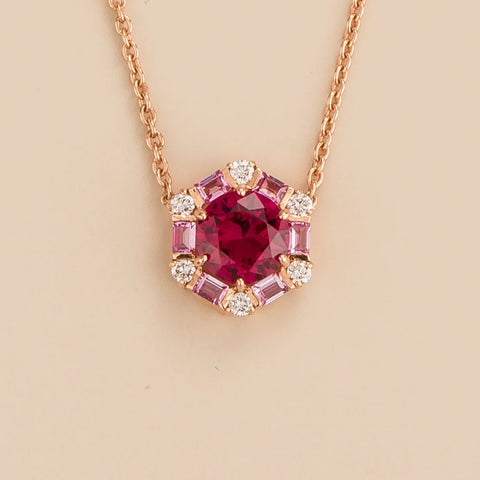
Find Your Perfect Lab Grown Diamond Necklace with Confidence
Ready to make an informed purchase? At Juvetti, every necklace comes with comprehensive certification, transparent sourcing information, and detailed care instructions to ensure your complete satisfaction. Our commitment to ethical production and exceptional craftsmanship means you can shop with confidence, knowing your investment supports responsible practices whilst delivering the beauty and quality you deserve.